“Medium format” once conjured waist-level viewfinders, roll film and bulky studio cameras. Today it describes something far more specific: a digital sensor roughly 44 × 33 mm — about 1.7 times the area of a full-frame chip — carrying 102 million pixels. The question people keep asking is simple: why would anyone need 102 megapixels when a 24-megapixel camera already prints a crisp A3? The answer has little to do with bragging rights and a lot to do with what professionals actually do with the files.
What “medium format” means in the digital era
In digital photography, formats are defined by sensor size, not by nostalgia. A full-frame (35 mm) sensor measures 36 × 24 mm. The cameras most people call “medium format” today — the Fujifilm GFX and Hasselblad X systems — use a smaller, crop version of the format at 44 × 33 mm. Above that sits true “645” medium format at 53.4 × 40 mm, the size used by Phase One’s 150-megapixel digital backs.
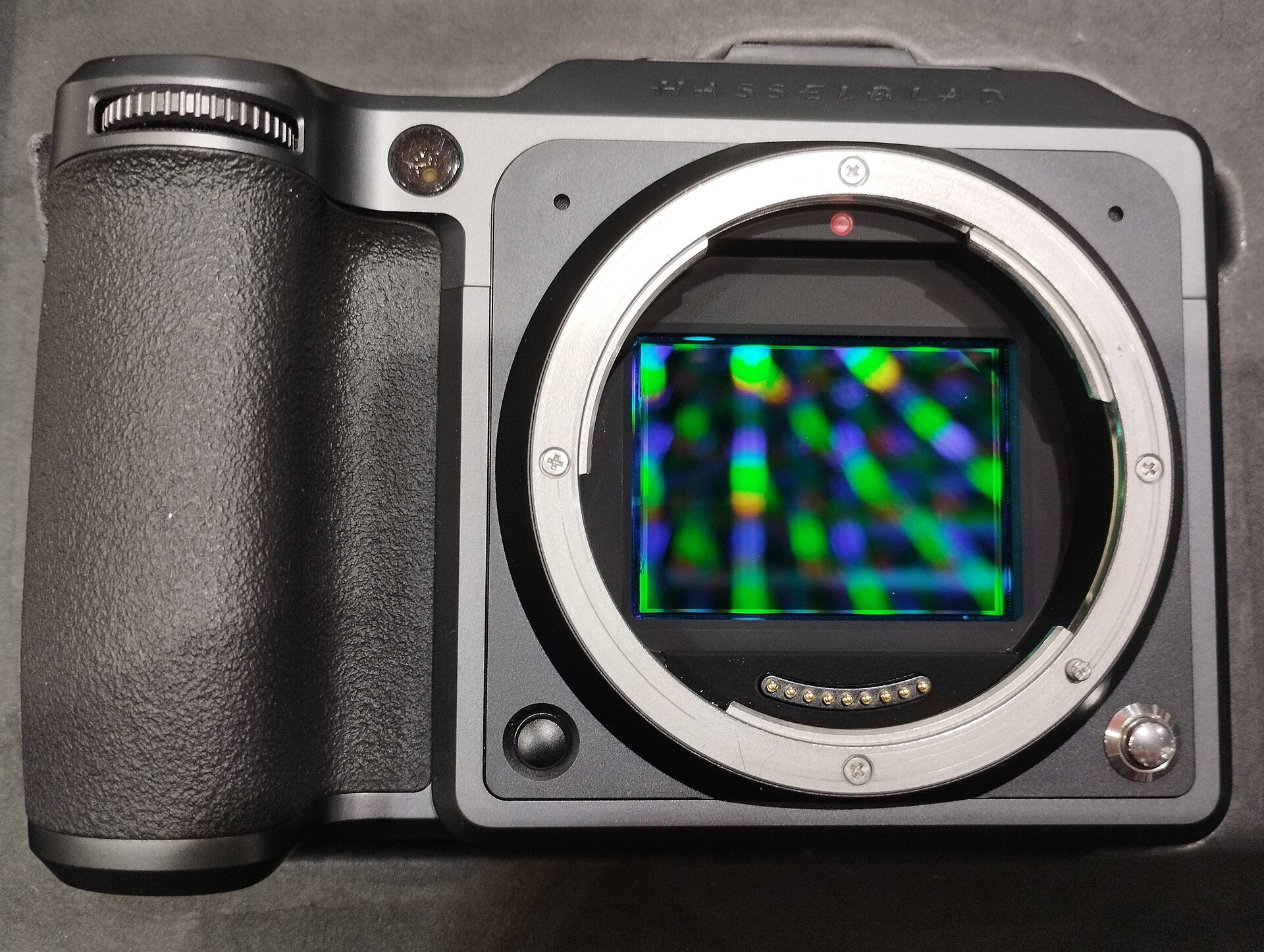
Fujifilm’s 102-megapixel chip is a back-illuminated Sony IMX461 CMOS sensor measuring 43.8 × 32.9 mm, with a native resolution of 11,648 × 8,736 pixels in a 4:3 ratio. Each photosite is only 3.76 µm across. There is nothing mystical about the “102” figure: it is simply what you get when you lay that many 3.76-micrometre pixels across a 44 × 33 mm wafer. The interesting question is why engineers settled on that number — and the answer is balance between resolution, dynamic range and noise.
Where the 102MP sensor came from
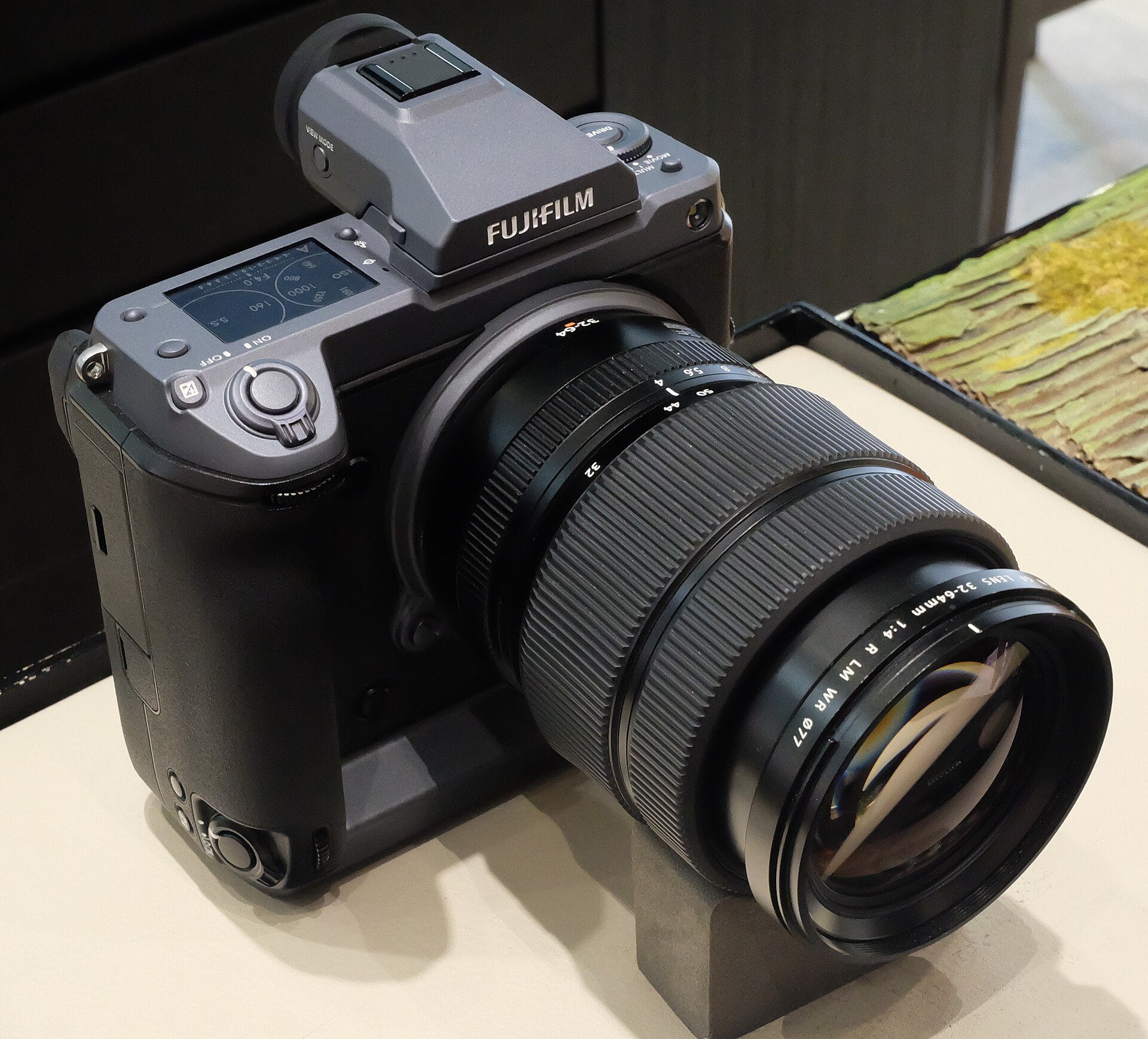
The landmark camera was the Fujifilm GFX100, announced in May 2019 and shipped the following month at $9,999 body-only. It was the first medium-format mirrorless camera to combine a 102-megapixel back-illuminated sensor with on-sensor phase-detection autofocus and five-axis in-body stabilisation — the features that made such a high-resolution sensor genuinely usable handheld. Hasselblad answered with the X2D 100C in 2022, a 100-megapixel body in the same 44 × 33 class, later refreshed as the X2D II 100C. Fujifilm pushed the format further with the GFX100 II in 2023, adding 8K video to the same sensor. Above all of them sits Phase One’s IQ4, a 150-megapixel back built on the larger 53.4 × 40 mm sensor.
Why 102 megapixels, in practice
Strip away the marketing and the megapixel count maps onto three concrete jobs.
- Large prints. At 11,648 × 8,736 pixels, a 102MP file prints 300 ppi at roughly 39 × 29 inches, and a very respectable 58 × 44 inches at 200 ppi. That is gallery-wall territory without upscaling.
- Cropping. A single 102MP frame holds roughly four 24-megapixel frames inside it. Commercial shooters can capture one wide composition and deliver multiple tight crops for different layouts.
- Tonal depth. The sensor records 16-bit colour, which means smoother gradients, gentler skin tones and far more latitude when recovering shadows in a raw file.
There is also the so-called “medium format look”: because the sensor is physically larger, you get shallower depth of field at a given framing and focal length, plus a smoother transition from sharp to out-of-focus. That quality — more than raw sharpness — is why many portrait and fashion photographers pay the premium.
Who actually needs it — and who doesn’t
102 megapixels is a working tool for a specific set of people: advertising and commercial photographers who deliver to billboards and packaging, high-end editorial and fashion studios, fine-art landscape shooters making large gallery prints, and archivists reproducing paintings where fine texture matters. For all of them the headroom is the point, not a nice-to-have.
For everyone else, it is mostly overhead. A single uncompressed raw file can exceed 200 MB, burst speeds are modest, the native lens selection is smaller than full-frame, and the bodies are larger and heavier. If your images end on a phone screen or a social feed, a 24-megapixel camera is already more than you can display.
The trade-offs
High resolution is not free. 102MP files demand fast cards, generous storage and a capable computer. Hand-holding was once a real problem at these pixel densities — any tremor shows up at 100% zoom — but modern in-body stabilisation (rated up to 5.5 stops in the GFX100) and fast processors have largely tamed it. The remaining cost is workflow: more data, slower editing, bigger archives.
Conclusion
102-megapixel medium format sensors exist not because a bigger number looks better on a spec sheet, but because large prints and aggressive crops genuinely demand the headroom. They are a precision instrument for a niche of working professionals — and for everyone else, a fascinating demonstration of what happens when engineers stop compromising.
FAQ
Is 102 megapixels overkill?
For web, social media and small prints, yes. For large gallery prints, heavy cropping and fine-art reproduction, it is precisely the point of the format.
What’s the difference between 100MP and 102MP?
Mostly rounding. Fujifilm’s 11,648 × 8,736 sensor is about 101.8 megapixels; Hasselblad’s 44 × 33 sensor is quoted at 100. They are the same class of chip.
Are medium format cameras better than full frame?
Not better — different. Medium format wins on resolution, tonality and the shallower-depth-of-field look; full frame wins on speed, autofocus, lens choice and price.
Related Posts
Video-Optimized Sensors: 8K and High Frame Rates Explained
For years, the image sensor inside your camera was designed…
Backside-Illuminated (BSI) vs Frontside-Illuminated Sensors: What’s the Difference?
Scroll through the spec sheet of any modern camera or…
Camera Dynamic Range Explained: What Stops Really Mean (and Why They Matter)
Every photographer has hit the same wall: a scene the…