For years, the image sensor inside your camera was designed first and foremost to take still photographs. Video was a feature that rode along on that hardware. That is no longer true. Today’s most advanced sensors are built from the silicon up to move frames — fast. Two numbers dominate the conversation: 8K resolution and high frame rates. Together they are reshaping everything from cinema cameras to the chips hidden inside industrial machine-vision systems.
What Makes a Sensor Video-Optimized?
A video-optimized sensor is judged by how quickly it can read out an entire frame, not just by how many pixels it has. Recording 8K UHD means digitizing 7680 × 4320 pixels — roughly 33.2 megapixels — many times every second. At 30 frames per second that is nearly a billion pixels per second of raw throughput before compression. Hitting those speeds requires stacked architectures, banks of high-speed analog-to-digital converters (ADCs), and fast off-chip interfaces. Resolution, frame rate, and dynamic range are the three numbers that tell you whether a sensor was truly built for motion.
The 8K Resolution Race
8K is four times the resolution of 4K, and the sensors that capture it have arrived across the market. Sony’s flagship Alpha 1 pairs a 50.1-megapixel stacked CMOS sensor with internal 8K/30p recording. Canon brought 8K to its mirrorless line with the EOS R5 series, whose stacked, back-illuminated sensor is engineered for fast readout. The push extends well beyond consumer cameras. In June 2024, Sony Semiconductor Solutions announced the IMX901, a global-shutter stacked CMOS sensor with 8K horizontal resolution and about 16.41 effective megapixels aimed at industrial inspection and wide-angle machine vision. Gpixel’s GCINE4349 goes further: a full-frame 8K backside-illuminated sensor that reads out 8192 × 6000 pixels at up to 120 fps — and 4K at 240 fps.
High Frame Rates and Readout Speed
Frame rate is a readout problem. To deliver 120 fps at 8K, a sensor has to clear and digitize every photosite in about 8 milliseconds. Sony’s IMX901 manages 134 fps at 10-bit readout (91 fps at 12-bit) for its 8K horizontal output, while Gpixel’s stacked BSI design reaches 120 fps in 8K and 240 fps in 4K. In consumer bodies, the story is the same trade-off: the 12.1-megapixel Sony A7S III trades resolution for 4K/120p and exceptional low-light sensitivity, while the higher-resolution Alpha 1 also tops out at 4K/120p. High frame rates are what make slow motion possible — and they only exist because the underlying silicon can physically move the data out fast enough.
Stacked, Back-Illuminated, and Global Shutter Designs
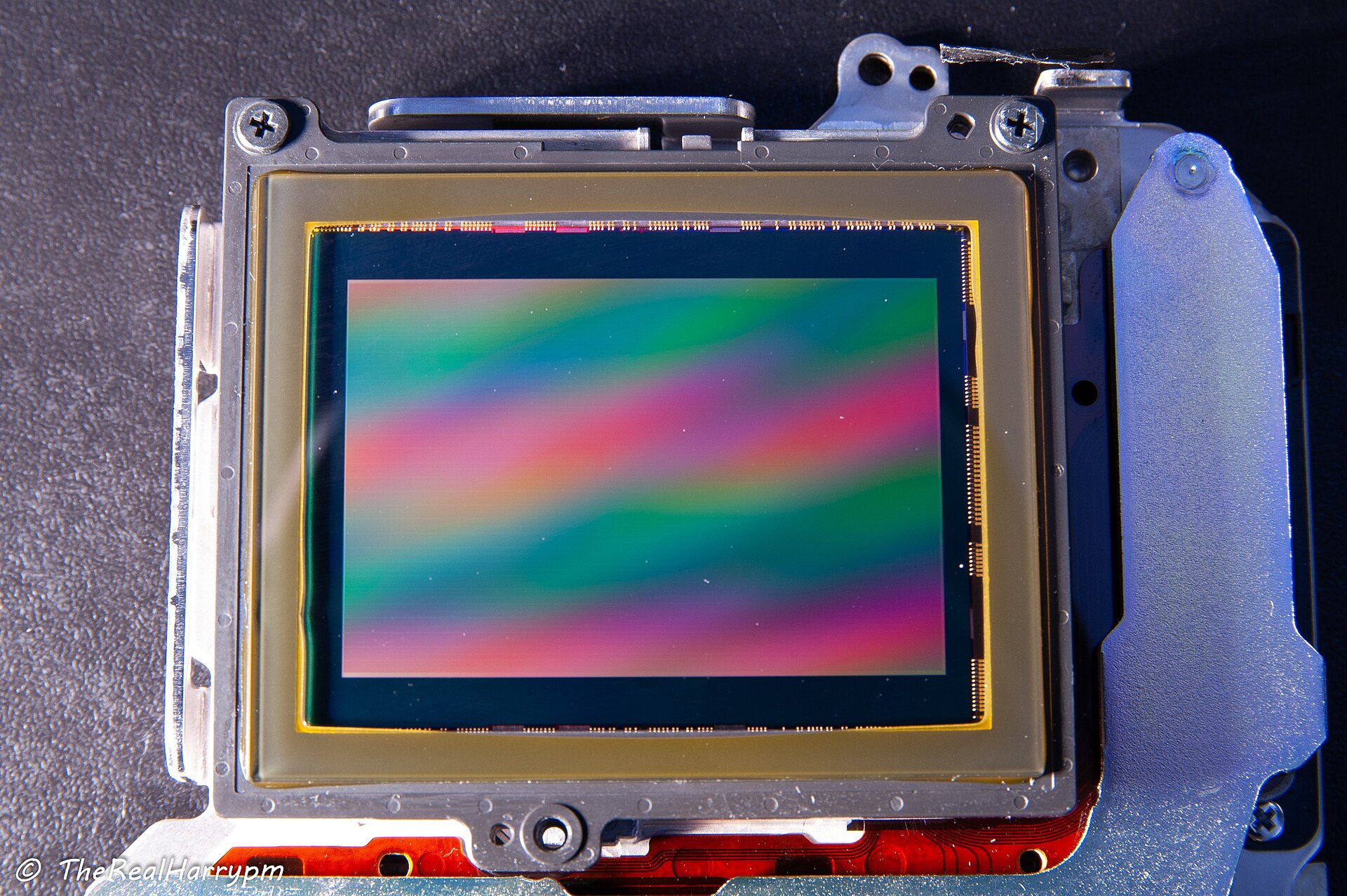
Three architectural ideas separate a modern video sensor from an old one. Backside illumination flips the photodiode above the wiring layer so more light reaches each pixel. Stacking bonds the pixel layer to a separate logic die packed with ADCs and memory, dramatically increasing readout speed. Global shutter exposes and reads every pixel at once, eliminating the “jelly” wobble of rolling shutter on fast-moving subjects. Canon’s LI5030SA is a full-frame 5.7K global-shutter sensor reaching 60 fps, and the 48-megapixel CMOSIS CMV50000 brought 8K global-shutter readout to machine vision as early as 2016. These technologies cost more and often add noise — which is why they first appeared in industrial and cinema hardware before trickling down.
What This Means for Buyers
If you shoot mostly stills, a video-optimized sensor is overkill you will simply never notice. But if you record motion, read the spec sheet differently: look at readout speed and rolling-shutter distortion, not just the “8K” badge. A camera that oversamples 8K down to crisp 4K often looks better than one that captures native 4K from a line-skipped sensor. Also consider heat and recording limits — high frame rates and 8K both stress the sensor and the processor, which is why so many cameras throttle recording duration. Resolution gets the marketing, but readout speed is what actually determines whether the footage holds up.
Conclusion
Video-optimized sensors are the new front line of imaging. Stacked, back-illuminated, and increasingly global-shutter designs have pushed 8K and high frame rates from prototype labs into products you can buy — and into the industrial cameras that quietly inspect the world around you. Whether you need 8K/120p or are perfectly served by 4K/60p, the same principle applies: the sensor’s ability to read out a frame quickly is the spec that quietly decides how good your video really is.
FAQ
Do I actually need 8K, or is 4K enough?
For most creators, 4K remains the practical sweet spot. 8K earns its keep when you need to crop heavily, deliver to large displays, or future-proof footage. The bigger practical benefit is often 8K oversampling, which produces sharper, lower-noise 4K.
What is the difference between rolling and global shutter?
A rolling shutter reads the sensor row by row, so fast movement can skew vertical lines. A global shutter captures every pixel at the same instant, removing that distortion — at the cost of extra circuitry, more noise, and typically a lower frame rate or higher price.
Why do high-frame-rate cameras often have fewer megapixels?
Fewer, larger pixels read out faster and gather more light per frame. That is why the 12-megapixel Sony A7S III can do 4K/120p with excellent low-light performance, while very high-megapixel sensors must work harder to reach the same frame rates.
Related Posts
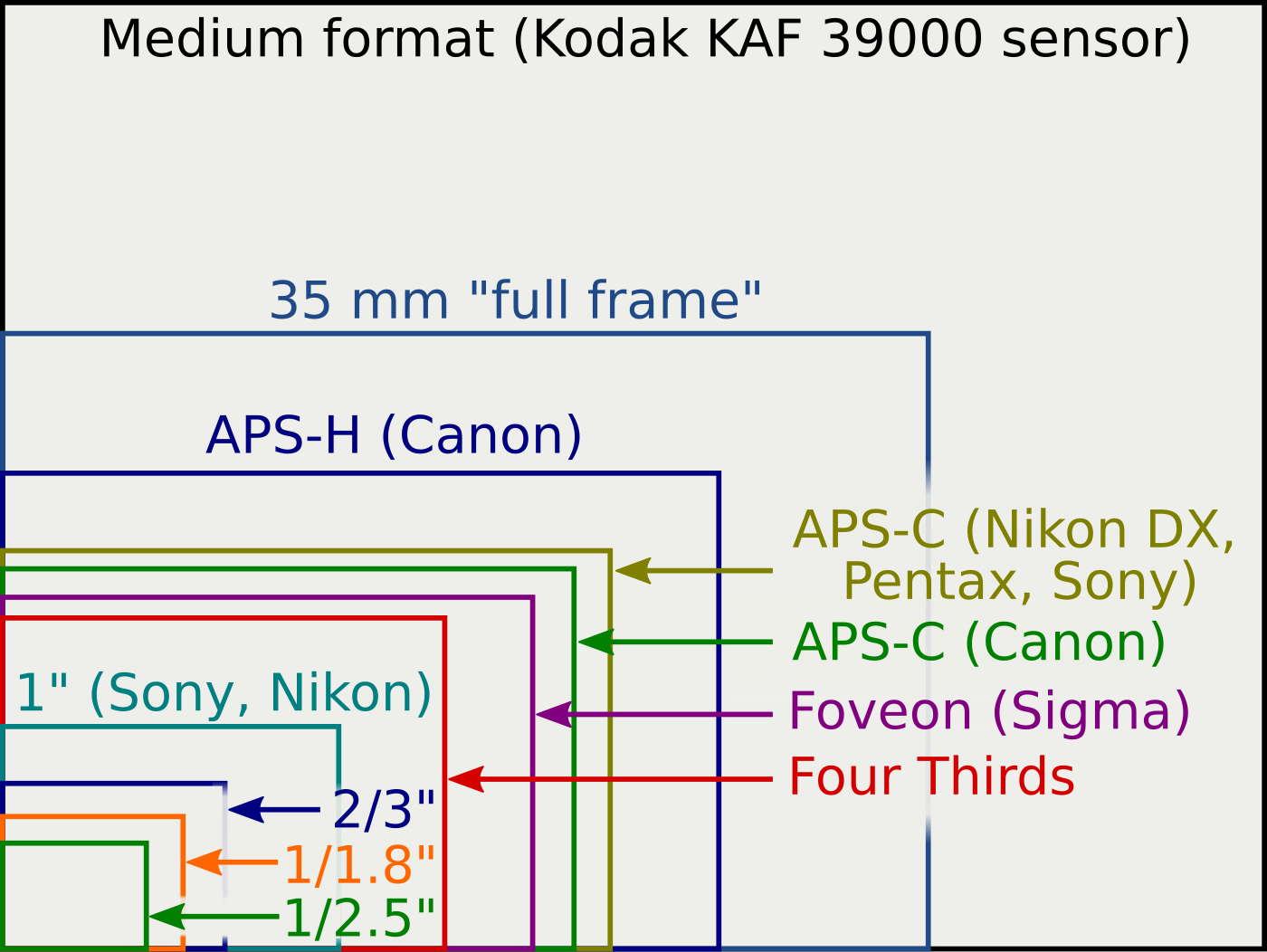
Full-Frame vs APS-C vs Micro Four Thirds: Sensor Sizes Compared
Every digital camera is built around one component that shapes…
Weather Sealing in Cameras Explained: IP Ratings, Seals & Limits
"Weather sealing" is one of the most heavily marketed —…
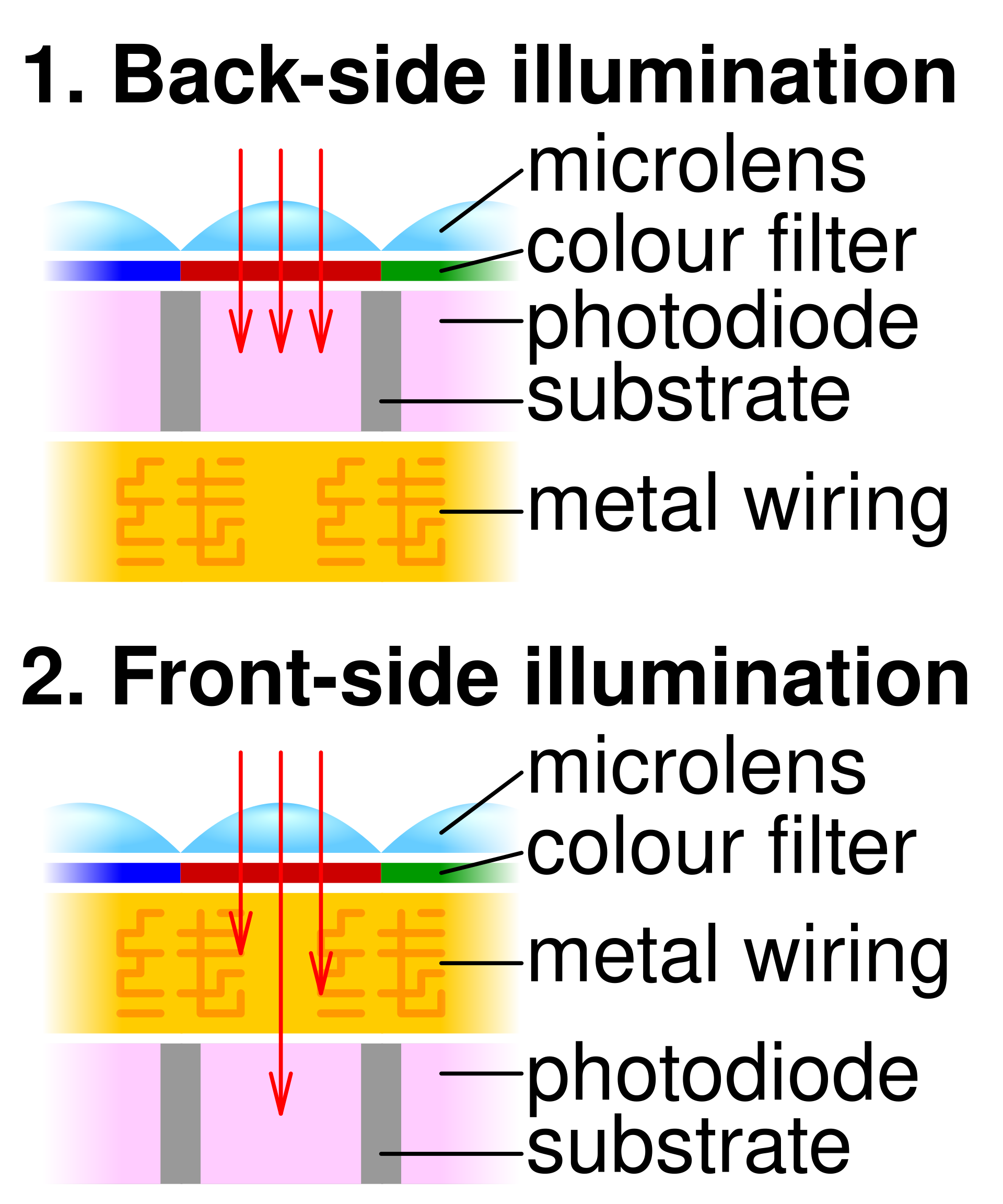
Backside-Illuminated (BSI) vs Frontside-Illuminated Sensors: What’s the Difference?
Scroll through the spec sheet of any modern camera or…