Disclosure: This article contains affiliate links. If you buy through them, we may earn a commission at no extra cost to you.
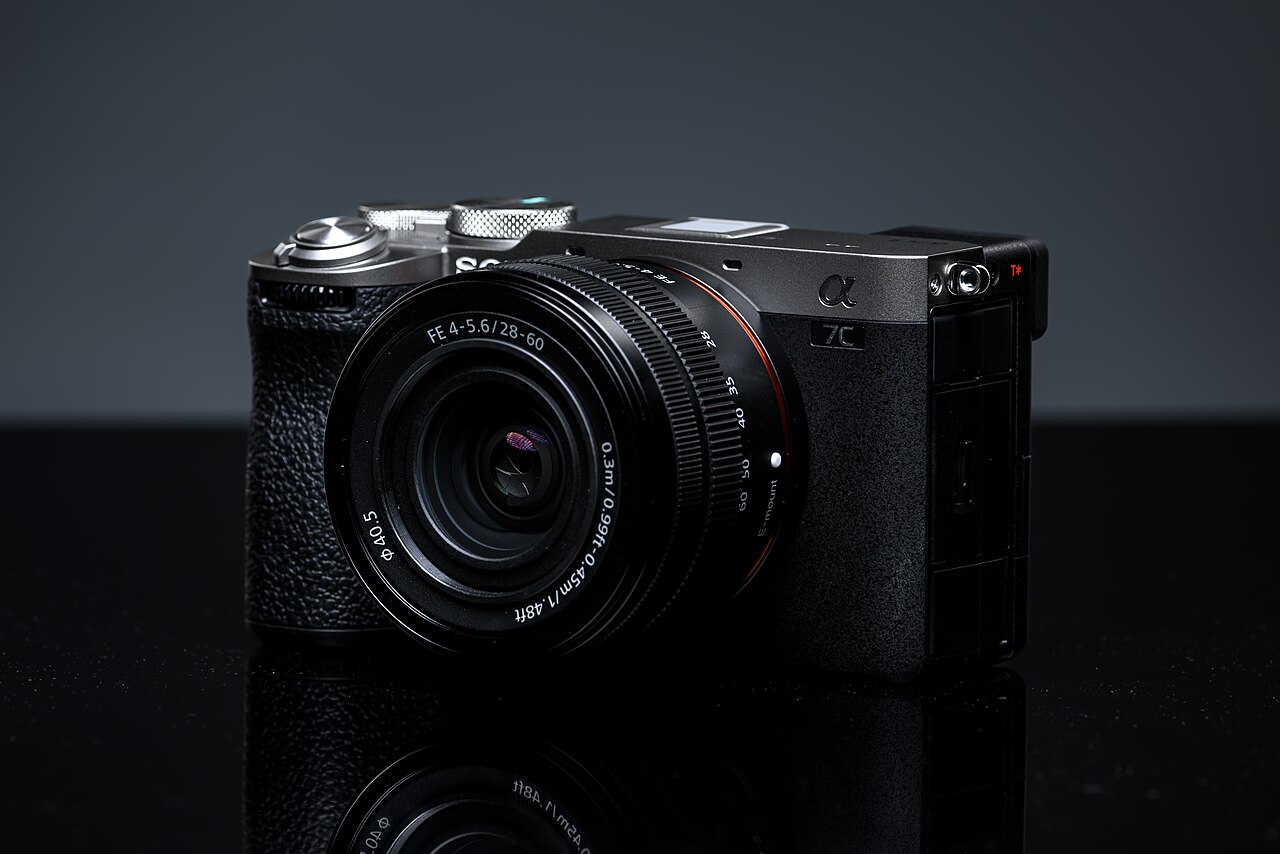
The Sony a7C II answers a question a lot of photographers keep asking: do you really need a big camera body to get full-frame image quality? Sony’s answer is no. The a7C II takes the 33-megapixel sensor, BIONZ XR processor, and AI-driven autofocus from the full-size a7 IV and squeezes them into a rangefinder-style body that weighs just 514 g — barely more than many APS-C cameras. It’s the most compelling travel-and-hybrid camera Sony has made for everyday shooters.
What Makes the Sony a7C II Special
- 33.0MP full-frame sensor — the same back-illuminated Exmor R CMOS used in the a7 IV, for detailed stills and strong low-light performance.
- Dedicated AI processing unit — real-time subject recognition for humans, animals, birds, insects, cars/trains, and aircraft.
- 759-point phase-detection autofocus covering roughly 94% of the frame, sensitive down to EV −4.0.
- 5-axis in-body stabilization rated up to 7.0 stops — a big jump over the original a7C’s 5.0 stops.
- 10-bit 4K video — full-width 4K/30p oversampled from 7K, plus 4K/60p in Super35, with S-Log3 and S-Cinetone.
- 10 fps continuous shooting with AF/AE tracking.
Image Quality
The 33MP Exmor R sensor is a proven performer. It delivers a native ISO range of 100–51,200 (expandable to 50–204,800) with roughly 15 stops of dynamic range in RAW, so you can pull shadow detail and protect highlights in post. Files are 7008 × 4672 pixels, giving you real room to crop. Sony also pairs the sensor with its BIONZ XR engine and an improved auto-exposure algorithm that reads face and skin areas to keep exposure consistent, plus Creative Look presets for a film-like look straight out of camera.
Autofocus & Speed
The star of the show is the AI processing unit. It powers Sony’s Real-time Tracking and subject recognition, so the camera locks onto an eye and stays glued to it — even if your subject turns around or briefly leaves the frame. In practice it feels instant, and it works in light as dim as EV −4.0. For stills you get up to 10 fps with continuous AF/AE, which is plenty for street, travel, and family shooting. There’s also focus breathing compensation for smoother video focus pulls.
Video
The a7C II records 4K/30p using the full sensor width, oversampled from 7K for extra sharpness, and 4K/60p in a 1.5× Super35 crop. Everything is captured internally in 10-bit 4:2:2, and you get S-Log3, S-Cinetone, and user LUTs for a grading-friendly workflow, plus Full HD at 120p for slow motion. Active Mode combines IBIS with electronic stabilization for remarkably steady handheld footage, and AI-based auto-framing keeps you centered while you walk and talk.
Design & Handling
The body is compact — 124 × 71 × 63 mm and 514 g — with a dust- and moisture-resistant magnesium alloy chassis. You get a 2.36M-dot OLED viewfinder (0.70× magnification, selectable 60/120fps refresh) and a fully articulated 3-inch touchscreen, so vloggers can flip it forward. There’s a single UHS-II SD slot (a common trade-off at this size), plus a newly added front control dial, Sony’s much-improved touch menu, and the NP-FZ100 battery rated for about 540 shots on the LCD.
Full Specifications
| Specification | Sony a7C II |
|---|---|
| Sensor | 33.0MP full-frame Exmor R BSI CMOS (7008 × 4672) |
| Processor | BIONZ XR + dedicated AI processing unit |
| Lens mount | Sony E |
| Autofocus | 759 phase-detect points, 94% coverage, EV −4.0 |
| Subject recognition | Human, Animal/Bird, Insect, Car/Train, Airplane |
| Image stabilization | 5-axis sensor-shift, up to 7.0 stops |
| Continuous shooting | Up to 10 fps with AF/AE |
| ISO range | 100–51,200 (expandable 50–204,800) |
| Shutter | 1/4000s mechanical; 1/8000s electronic |
| Viewfinder | 2.36M-dot OLED, 0.70×, 120fps |
| Rear LCD | 3.0″ 1.03M-dot vari-angle touchscreen |
| Video | 4K/30p full-width; 4K/60p Super35; 10-bit 4:2:2; FHD 120p |
| Media | Single UHS-II SD slot |
| Battery | NP-FZ100, approx. 540 shots (CIPA) |
| Connectivity | Wi-Fi 5, Bluetooth 4.2, USB-C |
| Dimensions | 124 × 71 × 63 mm |
| Weight | 514 g (body only) |
Sony a7C II vs the Rivals
| Feature | Sony a7C II | Canon EOS R8 | Sony a7 IV |
|---|---|---|---|
| Resolution | 33MP | 24MP | 33MP |
| Sensor | Full-frame BSI CMOS | Full-frame CMOS | Full-frame BSI CMOS |
| Burst (AF/AE) | 10 fps | 6 fps mech / 40 fps e-shutter | 10 fps |
| IBIS | 7.0 stops | None (lens only) | 5.5 stops |
| Video | 4K/60p (1.5× crop), 10-bit | 4K/60p full-width, 10-bit | 4K/60p (1.5× crop), 10-bit |
| Viewfinder | 2.36M-dot, 0.70× | 2.36M-dot, 0.70× | 3.69M-dot, 0.78× |
| Card slots | 1× UHS-II SD | 1× UHS-II SD | 2 (CFexpress A/SD + SD) |
| Battery (CIPA) | 540 | 290 | 580 |
| Weight | 514 g | 461 g | 659 g |
The Canon EOS R8 undercuts the a7C II on price and shoots full-width 4K/60p, but it drops in-body stabilization entirely. The Sony a7 IV adds dual card slots and a larger viewfinder, but you carry roughly 145 g more and lose the a7C II’s AI subject recognition. If compact size plus stabilization plus AI autofocus is your priority, the a7C II is the sweet spot.
Verdict
The Sony a7C II is the full-frame camera for people who don’t want to lug a full-frame-sized camera around. It delivers the a7 IV’s image quality, better stabilization, and newer AI autofocus in a body small enough to take everywhere. The compromises — a single card slot, a smaller viewfinder, and a 1/4000s mechanical shutter — are exactly the kind of trade-offs most travel and hybrid shooters will happily accept. If you want full-frame detail and reliability in a genuinely compact package, this is one of the best buys in its class.
What Amazon Buyers Say
The Sony a7C II currently holds a 4.7 out of 5 stars rating from 224 global ratings on Amazon, with the vast majority of buyers praising its image quality, compact size, and autofocus.
| Star rating | Share of reviews |
|---|---|
| 5 stars | 85% |
| 4 stars | 8% |
| 3 stars | 2% |
| 2 stars | 1% |
| 1 star | 4% |
“This is a beast of a hybrid camera in a small body! … The photo quality is sharp, the focus tracking is very fast and you can even adjust the tracking response speed in the menu.”
“The 33MP sensor delivers incredible detail and dynamic range. Colors come out rich but natural, and the files hold up beautifully when editing.”
“Fast auto focus with eye tracking, especially able to get sharp photos of static object at speed 1/20s.”
“The A7Cii is absolutely perfect for my needs and given it’s incredible value for a FF ML body, it allowed me to invest in ‘better’ glass.”
Read all customer reviews on Amazon
FAQ
Is the Sony a7C II good for video?
Yes. It records 10-bit 4:2:2 4K internally (4K/30p full-width oversampled from 7K, and 4K/60p in a 1.5× crop), plus S-Log3, S-Cinetone, user LUTs, and Active Mode stabilization — a strong hybrid package for content creators.
Does the a7C II have dual card slots?
No. It has a single UHS-II SD slot. If you need redundant dual-card recording for paid work, the full-size Sony a7 IV is the better fit.
Is the a7C II weather-sealed?
The body uses a dust- and moisture-resistant magnesium alloy design, which is typical of Sony’s mid-range and above. It’s not fully waterproof, so avoid shooting in heavy rain.
What lens mount does it use?
It uses the Sony E-mount, which gives you access to a huge ecosystem of full-frame FE lenses from Sony, Sigma, Tamron, and many others.
Related Posts
Sigma 18-50mm f/2.8 DC DN Contemporary Review: The Compact APS-C Zoom That Does It All
Disclosure: This article contains affiliate links. If you buy through…

Best Cameras for Landscape Photography (2025 Buying Guide)
Landscape photography is a test of patience and detail. The…
Sony a9 III Review (2026): The World’s First Full-Frame Global Shutter Camera
Disclosure: This article contains affiliate links. If you buy through…