CES 2026 (January 6–9, Las Vegas) was a quiet show for the traditional camera giants. Sony, Canon, and Nikon saved their big mirrorless announcements for later in the year, and none of the familiar names staged a major camera launch on the show floor. Instead, the most interesting imaging gear came from unexpected directions: a robot-vacuum company’s first action camera, gimbals with built-in tracking cameras, and drones that can take off from water. Here is our roundup of the camera innovations that stood out.
Dreame Leaptic Cube: a thumb-sized 8K action camera
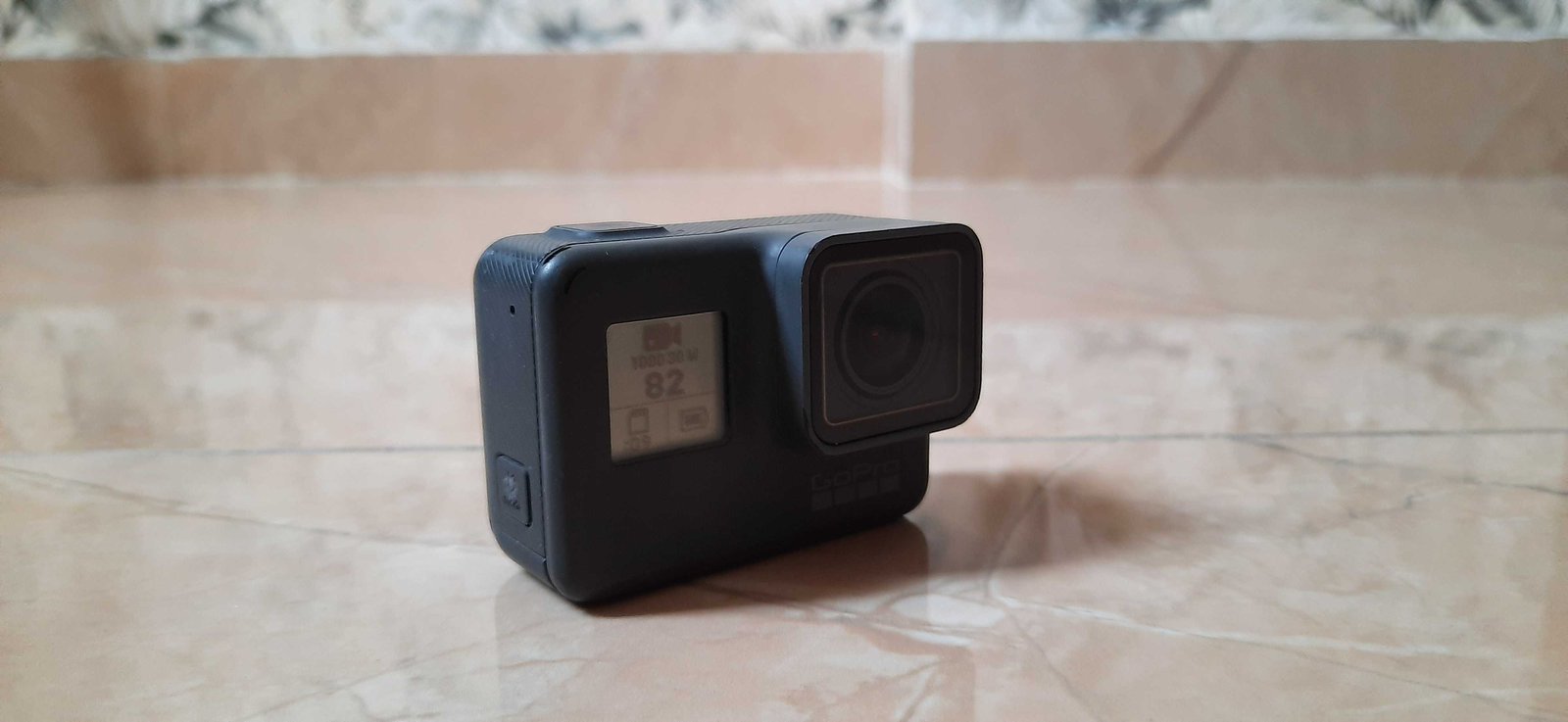
The biggest surprise of the show came from Dreame — a brand best known for robot vacuums. The Leaptic Cube is its first action camera, and it skips a generation on specs: 8K/30fps video in 10-bit, 4K/60fps HDR, a 4K “Hyper-Night” low-light mode, and 50MP stills, all captured by a large 1/1.3-inch CMOS sensor. That sensor is among the biggest in any flagship action camera today, and it is substantially larger than the 1/1.9-inch chip inside the GoPro Hero 13 Black.
It is also a modular camera. The lens module detaches from the main body and mounts magnetically, so you can place it in tight spots while monitoring the feed on a separate 2.27-inch display pod from up to 30 meters away. Dreame pairs the hardware with a 4nm Qualcomm-based AI processor (48 TOPS) that handles real-time 8K encoding, gyro-based AI stabilization, pre-recording, voice and gesture control, and an “AI Scene Optimization” mode that recognizes scenes such as city nights and fireworks and adjusts the image accordingly. Pricing lands at $439.99 (64GB) and $459.99 (128GB), with a North American rollout planned for 2026.
Hohem iSteady MT3 series: gimbals with built-in tracking cameras
Hohem’s new iSteady MT3 and MT3 Pro are mirrorless-camera gimbals with a clever trick: each has a built-in camera that is not for recording — it is for watching your subject. Select a person, and the gimbal automatically keeps them framed while you focus on moving the camera. The standard MT3 (1.4kg payload, $329) tracks people, while the MT3 Pro (2.5kg payload, $449) can also follow pets, vehicles, and arbitrary objects, and adds a detachable 1.4-inch touchscreen remote that shows a live feed and controls the gimbal wirelessly. Both go up for pre-order in the US on January 20.
Cameras that swim and fly: HOVERAir AQUA and Antigravity A1
Zero Zero Robotics’ HOVERAir AQUA is a waterproof self-flying camera designed to take off from and land directly on water. Rated IP67, it floats, shoots 4K at up to 100fps through a hydrophobic lens and a 1/1.28-inch sensor, and can hit 55 km/h to keep up with watersports. More than ten autonomous flight modes include “Snorkel” (camera pointed straight down) and “Mount” (fixed-position filming), and an optional Lighthouse wearable doubles as a controller and tracking beacon. It earned a CES 2026 Innovation Award Honoree. For aerial creators, the Antigravity A1 showed 360-degree 8K capture in a roughly 249-gram package, flown with Vision goggles and a motion-based Grip controller.
AI for birdwatchers and long-range shooters
On the quirky-but-useful side, Birdbuddy’s 2 Mini smart bird feeder camera identifies birds by sight and sound — think “Shazam for birdsong” — in 2K with slow-motion and both horizontal and vertical framing. And RocX, a handheld tracking camera from Farseer (built by ex-DJI engineers), pairs a 50x zoom with AI subject tracking for long-distance wildlife, sports, and event capture.
The bigger picture: smartphones and on-device AI
Smartphone imaging also advanced at the edges. Honor teased a Robot Phone concept with a pop-up gimbal camera, while Lenovo and Motorola leaned on Sony LYTIA sensors in new foldables — the razr packs a triple 50MP array with a 3x periscope telephoto. Goertek even showed AI earbuds with dual 12MP cameras. Samsung’s CES 2026 presence, meanwhile, was dominated by displays and AI-home announcements rather than camera hardware.
The through-line across all of it is the same: larger sensors, heavier on-device AI processing, and modular or wearable form factors — with innovation arriving from brands outside the traditional camera industry.
Conclusion
CES 2026 will not be remembered for a new flagship mirrorless body. It will be remembered as the year action cameras crossed into 8K, gimbals learned to watch the subject, and cameras learned to swim and fly on their own. For anyone who shoots video or wildlife, the most interesting 2026 hardware may not come from the names you expect.
FAQ
Were there any major mirrorless cameras from Sony, Canon, or Nikon at CES 2026?
No. None of the familiar camera brands staged a major camera launch at the show; their big 2026 announcements (such as Canon and Sony’s May 13 reveals) came months later.
What was the most notable action camera at CES 2026?
The Dreame Leaptic Cube — the first 8K action camera, with a 1/1.3-inch sensor, a modular design, and AI stabilization, priced at $439.99–$459.99.
When will these CES 2026 cameras go on sale?
Hohem’s iSteady MT3 series hits US pre-order on January 20, 2026; the Dreame Leaptic Cube is slated for a 2026 North American launch; and HOVERAir AQUA availability is still to be confirmed.
Image credits: featured image “GoPro Hero 8 Black and Hero 11 Black” by Benlisquare, CC BY-SA 4.0; inline action camera photo by GautamSudhanshu, CC BY-SA 4.0, both via Wikimedia Commons.
Related Posts
8K Video Adoption in 2026: Where It Actually Stands
Eight years after the first 8K televisions reached store shelves,…
The Rise of Global Shutter Sensors: Sony a9 III and the End of Rolling Shutter
For more than two decades, nearly every digital camera you…

Smartphone Camera Trends for 2026: Bigger Sensors, Variable Aperture, and AI
For years, the smartphone camera race was defined by a…