When you buy an interchangeable-lens camera, you are not just buying a body — you are committing to a lens system, and the mount is its foundation. It determines how close the glass can sit to the sensor, how wide the light path can be, which lenses fit, and whether your existing collection carries forward. For mirrorless shooters today, four mounts dominate: Canon RF, Sony E, Nikon Z, and Fujifilm X. Each takes a different approach to the two numbers that matter most — flange distance and throat diameter. Here is how they compare.
Why Flange Distance and Throat Diameter Matter
Flange focal distance is the gap between the metal lens mount and the image sensor. In the DSLR era that gap had to be long enough for a flipping mirror — Canon EF sat at 44 mm and Nikon F at 46.5 mm. Mirrorless bodies remove the mirror, so all four mounts here slash that distance, letting designers place rear elements close to the sensor. That reduces optical aberrations, enables compact wide-angle designs, and makes room for faster apertures.
Throat (inner) diameter is the width of the opening the light travels through. A wider throat allows larger rear elements and more light to reach the corners of the frame, improving edge-to-edge sharpness — and together the two numbers shape which lenses each system can realistically produce.
Canon RF Mount
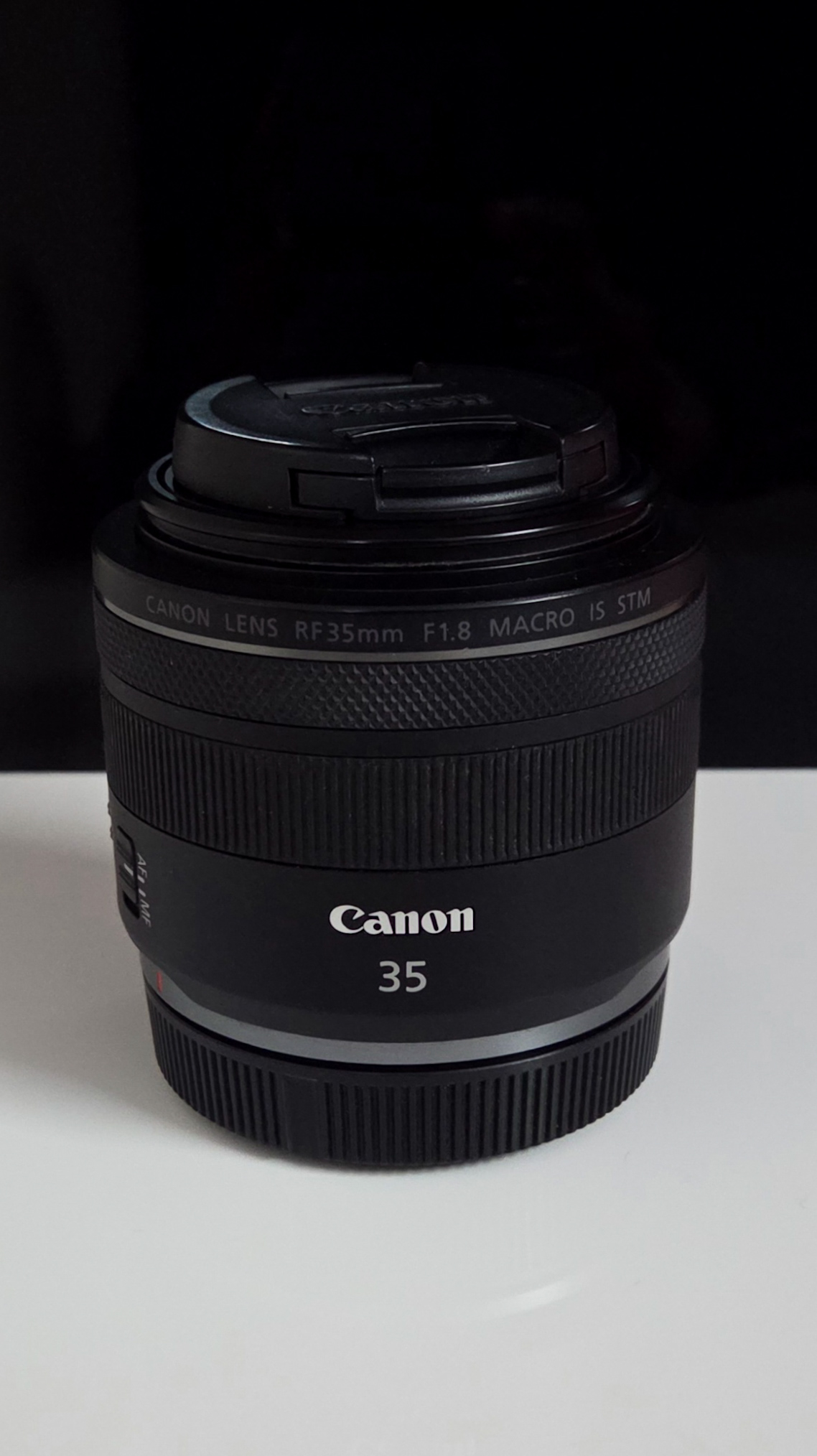
Canon introduced the RF mount in September 2018 with the EOS R. It keeps the EF mount’s 54 mm inner diameter but drops the flange distance to 20 mm and upgrades the interface to 12 electrical contacts. That combination enabled standout RF lenses such as the 28–70 mm f/2L and 85 mm f/1.2L. EF and EF-S lenses adapt with full autofocus via the EF-EOS R adapters, including a control-ring version, giving existing Canon shooters a clean migration path.
Sony E Mount
Sony’s E mount is the veteran of the group. It arrived in 2010 with the NEX cameras for APS-C, then extended to full-frame with the A7 in 2013 as “FE.” The flange distance is 18 mm and the inner diameter 46.1 mm. Sony opened the mount’s specifications to third-party makers early, which produced the largest lens ecosystem in mirrorless — native Sony glass plus extensive Sigma, Tamron, Samyang, and Viltrox options. One bayonet spans APS-C and full-frame, so FE glass mounts directly on compact APS-C bodies and E lenses work on full-frame bodies with an automatic crop.
Nikon Z Mount
Nikon launched the Z mount in 2018 alongside the Z6 and Z7. It is the widest full-frame mount in the industry at 55 mm inner diameter, with the shortest flange at 16 mm and 11 electrical contacts. Those extremes are why Nikon could ship the NIKKOR Z 58 mm f/0.95 “Noct.” Legacy F-mount glass adapts through the FTZ / FTZ II, which adds 30.5 mm of spacing — the difference between the 46.5 mm F flange and the 16 mm Z flange. That short flange also makes the Z mount a favourite for adapting vintage lenses.
Fujifilm X Mount
Fujifilm’s X mount debuted in 2012 with the X-Pro1 and is the group’s APS-C specialist. It measures 44 mm across with a 17.7 mm flange distance and 10 contacts, and it serves only APS-C sensors (23.6 × 15.6 mm). Fujifilm has never produced a full-frame camera on the X mount — shooters wanting a larger sensor move to Fuji’s separate GFX medium-format system. What the X mount lacks in size it makes up for in maturity: more than a decade of XF and XC lenses and compact rangefinder-style bodies.
Side-by-Side Comparison
| Mount | Introduced | Flange | Inner Ø | Sensor formats |
|---|---|---|---|---|
| Canon RF | 2018 | 20 mm | 54 mm | Full-frame + APS-C (RF-S) |
| Sony E | 2010 | 18 mm | 46.1 mm | APS-C + full-frame (FE) |
| Nikon Z | 2018 | 16 mm | 55 mm | Full-frame + APS-C (DX) |
| Fujifilm X | 2012 | 17.7 mm | 44 mm | APS-C only |
Which Mount Is Right for You?
If you want the deepest lens pool and the easiest third-party choices, Sony E leads. If you prize optical headroom and adapter versatility, Nikon Z‘s 55 mm / 16 mm combination is the most flexible. Canon RF suits shooters with an EF collection who want the smoothest upgrade path plus Canon’s unique fast RF primes and zooms. Fujifilm X is the choice for a compact, dial-driven APS-C kit with no full-frame ambitions. Bodies come and go; the mount — and the lenses you gather around it — is the real long-term decision.
Conclusion
Canon RF, Sony E, Nikon Z, and Fujifilm X all do the same fundamental job, but the numbers underneath them shape real-world image quality and lens choice. Understanding flange distance and throat diameter turns a confusing spec sheet into a clear buying signal. Pick the mount that matches the lenses you actually want to shoot.
FAQ
Can I adapt lenses between these mounts? Adapters only work from a longer flange to a shorter one. EF lenses adapt to RF, and F lenses to Z, with ease. Sony E glass will not adapt to Fujifilm X, because the 18 mm versus 17.7 mm flange leaves only 0.3 mm of room — not enough for a sturdy adapter.
Which mount has the most lenses? Sony E, thanks to a decade-plus head start and an open third-party ecosystem spanning Sigma, Tamron, Samyang, and others.
Do these mounts share full-frame and APS-C? Canon RF, Sony E, and Nikon Z each use one bayonet across full-frame and APS-C (RF-S, E, and DX). Fujifilm X is APS-C only.
Image credits: Featured image (Sony E-mount body with exposed sensor) by Franz van Duns; Canon RF 35mm f/1.8 Macro IS STM lens by Gannu03 — both via Wikimedia Commons, CC BY-SA 4.0.
Related Posts
Sensor Cleaning and Camera Maintenance: The Complete Guide
Every photographer eventually notices them: faint dark spots that appear…

Global Shutter vs Rolling Shutter: What’s the Difference and Why It Matters
Every digital camera turns light into an image using a…
Mirrorless Camera Design: How Removing the Mirror Changed Cameras
For most of the twentieth century, the single-lens reflex (SLR)…