Press the shutter halfway and a modern camera can lock focus on a fast-moving subject in a small fraction of a second. That speed is largely the work of phase detection autofocus, or PDAF — a focusing method that measures distance optically instead of by trial and error. In this guide we’ll unpack how it works, why it’s faster than the alternatives, and how it evolved from the mirrors of a DSLR into the quad-pixel sensors inside today’s smartphones.
What phase detection actually means
Phase detection focuses by comparing two slightly different views of the same scene. Light enters through the lens and is split into two paths — roughly speaking, one sampling the left side of the aperture and one the right. Each path produces its own image. When the subject is in focus, the two images line up perfectly. When it’s out of focus, one image is shifted relative to the other, and the direction and size of that shift tell the camera two things at once: which way to move the lens, and by how much.
Because the camera computes the exact correction in a single measurement, it can drive the lens straight to the in-focus position in one motion. Contrast-detection autofocus, by comparison, has to hunt: it nudges the lens back and forth looking for the position of maximum contrast. Phase detection is faster precisely because it doesn’t have to search.
How the phase difference is measured
In a traditional DSLR, phase detection happens in a dedicated autofocus module below the mirror box. The main reflex mirror is partially transparent: most of the light reflects up to the viewfinder, but a small portion passes through to a secondary mirror that bounces it down into the AF sensor. There, pairs of tiny line sensors — each pair forming one AF point — capture two offset views of a subject and feed them to a small processor that calculates the shift, typically using cross-correlation.
A single line sensor detects detail in only one orientation. A cross-type sensor stacks two line sensors at right angles so it can detect both horizontal and vertical detail, making it far more reliable — which is why manufacturers advertise how many cross-type points a camera has. Entry-level DSLRs historically offered just one cross-type point in the center, while higher-end bodies placed them across the frame.
Moving phase detection onto the sensor
A dedicated AF module has a big limitation: it only works when the mirror is down. When a DSLR’s mirror lifts for live view or video, or on a mirrorless camera that has no mirror at all, there’s nothing to bounce light into the AF sensor. The solution is on-sensor phase detection, which embeds phase-detection photodiodes directly in the imaging sensor itself.
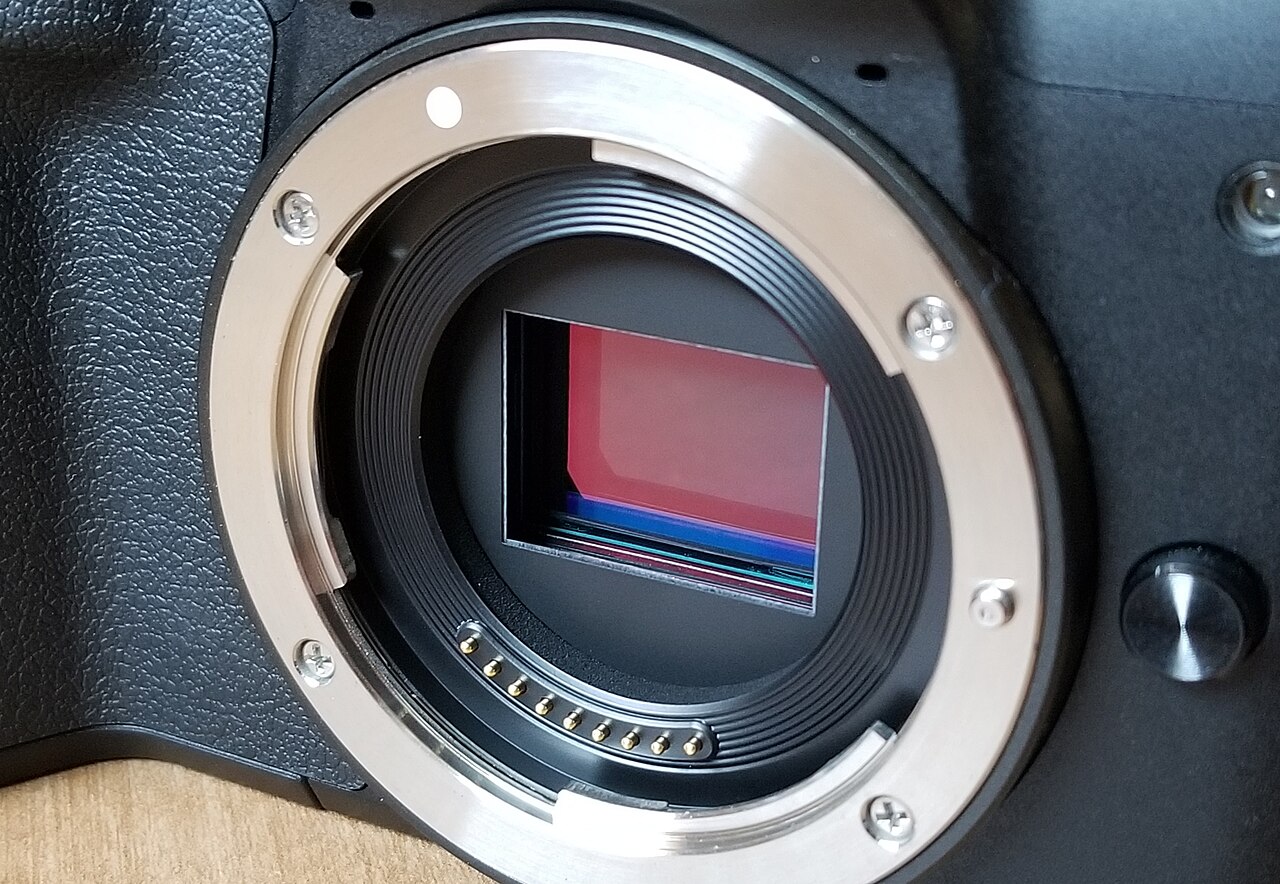

The trick is masking. Individual pixels — or pairs of pixels under a shared microlens — are masked so that one only receives light from the left side of the lens and the other only from the right. This turns imaging pixels into phase-detection pairs while the sensor continues to capture the picture.
Dual-pixel autofocus takes this further by splitting every single pixel into two sub-photodiodes, so the entire sensor contributes to focusing. It’s fast and works across the whole frame, but the classic left/right split leaves a weak spot: purely horizontal detail produces no phase difference, so dual-pixel systems can hunt on horizontal lines.
The quad-pixel era: QPD, Octa PD, and Super QPD
The fix for the horizontal-line blind spot is to split each pixel four ways instead of two. A 2×2 arrangement of photodiodes under a single microlens measures phase in both horizontal and vertical directions at once — the on-sensor equivalent of a DSLR’s cross-type points, extended across the entire sensor. Three implementations dominate the smartphone market today:
- OmniVision QPD (Quad Phase Detection) uses 100% of pixels for focusing and pairs them with an on-chip remosaic engine that converts the quad-pixel data back into a standard Bayer pattern. It appears in sensors such as the 50-megapixel OV50A and 200-megapixel OVB0A.
- Sony Octa PD applies the dual-pixel idea to all four photodiodes of a Quad Bayer group, yielding eight phase-detection sites per cluster. Its standout feature is reading phase information from long, medium, and short exposures simultaneously during HDR capture, which keeps autofocus reliable in high-contrast scenes — a reason it underpins sensors used in Google’s Pixel phones.
- Samsung Super QPD removes the insulating walls between the four photodiodes in a quad group. On ultra-small 0.56-micrometre pixels, that physically captures more photons and improves the signal-to-noise ratio, and it pairs with Tetra²pixel binning and Dual Vertical Transfer Gate to make the 200-megapixel ISOCELL sensors in Galaxy S Ultra phones practical.
Why phase detection wins
Speed is the headline benefit — a single measurement tells the lens exactly where to go — but the advantages run deeper. Because phase-detection pixels read distance every frame, the camera can continuously track a moving subject, which is why today’s mirrorless cameras and phones hold focus on faces, eyes, and animals as they move. It’s also silent and smooth enough for video, and the large photodiode area of on-sensor designs gathers more signal, which helps autofocus hold up in dim light where contrast detection often stalls.
The technology keeps evolving. In mid-2026 Sony announced the LYTIA 610, a roughly 64-megapixel 1/2-type sensor whose RB2×2 on-chip-lens structure combines 1×1 lenses for resolution with 2×2 lenses for autofocus on a single sensor — a sign that the line between imaging pixels and focusing pixels is only getting blurrier.
Conclusion
Phase detection autofocus is the reason a camera can go from “nothing is sharp” to “locked on” in milliseconds. Whether it’s a cross-type AF point behind a DSLR mirror or a wall-less quad-pixel cluster on a phone sensor, the principle is the same: measure the phase difference between two views of the scene, and the camera knows exactly how far to turn the focus ring. The next time you nail a shot of a moving subject, that’s the physics working for you.
FAQ
What’s the difference between phase detection and contrast detection autofocus? Phase detection measures an optical offset and moves the lens directly to the correct position in one step. Contrast detection moves the lens back and forth until it finds the position of maximum contrast, which is slower and can “hunt.”
Why do some autofocus points work better than others? Cross-type points combine two line sensors at right angles so they can lock onto both horizontal and vertical detail. A single-orientation line sensor can fail on detail running parallel to it.
Does my phone use phase detection autofocus? Yes — essentially all modern smartphones use some form of on-sensor phase detection, usually in a 2×2 or dual-pixel configuration built into the image sensor.
Why does dual-pixel autofocus struggle with horizontal lines? Its left/right photodiode split can only detect phase differences along one axis. Horizontal detail produces no usable offset, so the camera may fall back to a slower search.
Related Posts
High-Resolution Camera Technology 2026: From 200MP Sensors to Computational Photography
In 2026, "more megapixels" no longer means "a better camera."…
Stacked CMOS Sensors Explained: How They Work and Why They Matter
APS-C CMOS image sensor. Photo: Friedrich Haag, CC BY-SA 4.0,…
Camera Sensor Crop Factor Explained: Full Frame, APS-C and More
When you shop for a camera or lens, two phrases…