For a long time, “AI in photography” meant a desktop editor that could erase a lamppost from a holiday snapshot. In 2026 the picture looks very different. Machine learning has migrated out of the post-processing suite and into the camera itself — into dedicated AI processors, autofocus systems, sensor pipelines, and even the metadata that proves a photograph is real. AI is no longer a feature bolted onto a camera; it is becoming the camera’s brain.
A dedicated chip for the eye
The clearest sign of the shift is hardware. Sony’s flagship Alpha 1 II pairs its BIONZ XR image processor with a dedicated AI processing unit. The result is Real-time Recognition AF that can track humans, animals, birds, insects, cars, trains, and aircraft — plus a new “Auto” mode that identifies the subject for you instead of asking you to pick a subject type first. Sony reports meaningful gains in eye detection, on the order of 50% better for birds and roughly 30% for people and animals.
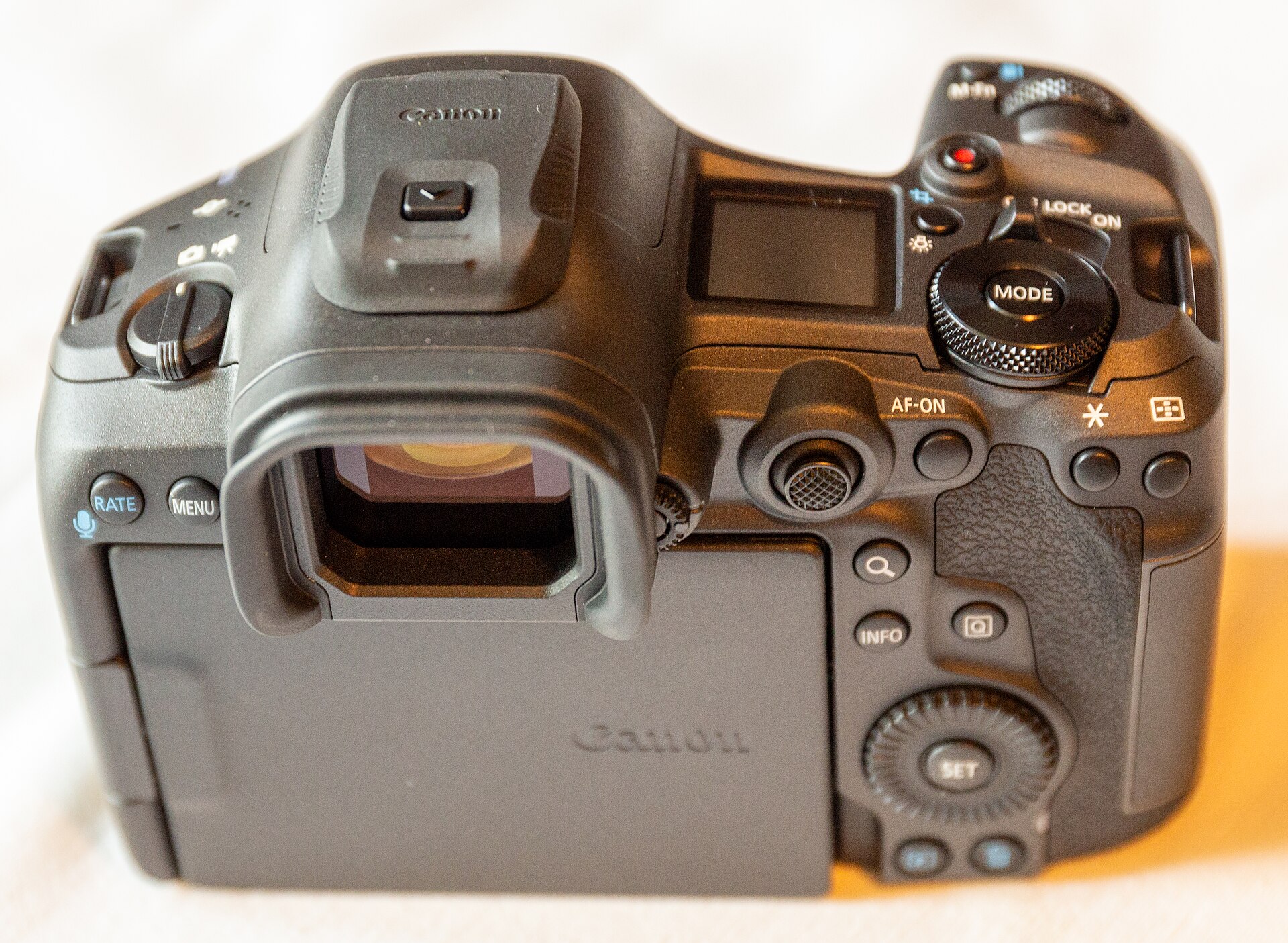
Canon took a parallel route. Its EOS R1 and EOS R5 Mark II introduce the DIGIC Accelerator, a co-processor that sits alongside the DIGIC X and is built specifically for deep-learning workloads. The pairing powers Dual Pixel Intelligent AF, which estimates body, joint, and head position to track people — including a “register people priority” mode for team sports. It is a concrete example of how AI changes what a camera understands about a scene before the shutter even fires.
Computational photography comes to dedicated cameras
Smartphones have leaned on computational photography for a decade; dedicated cameras are finally catching up. The EOS R5 Mark II runs a neural network on-device to upscale images roughly fourfold — from about 45 to 179 megapixels — entirely in-camera, and applies Neural Network Noise Reduction to high-ISO raw files without touching a computer. That is the same philosophy as a phone’s night mode, transplanted into a professional body: let software recover what the sensor struggles to capture.
Sony’s Alpha 1 II pushes image stabilisation to a claimed 8.5 stops of compensation, using its AI unit to understand motion rather than merely react to shake. Across the board, the 2026 message is consistent: dedicated cameras are borrowing the phone playbook — multi-frame stacking, fusion, semantic scene analysis — and pairing it with far larger sensors and glass.
The smartphone frontier: generative editing goes mainstream
On the other side of the market, phones have pushed past capture assistance into generative editing. Google’s Pixel 9 line introduced Add Me, which merges two shots so the photographer can appear in their own group photo, and expanded Magic Editor with Reimagine (text-to-image edits) and Auto Frame. Zoom Enhance predicts fine detail to sharpen long-distance crops after the fact, while Video Boost leans on cloud processing to clean up footage.
Samsung’s Galaxy S-series leans on its ProVisual Engine and Galaxy AI tools for generative edits and object removal, and Apple has tied the iPhone’s camera more tightly to its broader AI efforts. The shared theme is unmistakable: the image on screen is increasingly a collaboration between photons and a neural network — and for many photographers, that is exactly the point.
The trust problem: proving a photo is real
The more AI can synthesise pixels, the more photographers, newsrooms, and platforms need proof of what actually happened. That is where Content Credentials come in. Leica’s M11-P became the first camera to attach Content Credentials at the moment of capture — a cryptographically signed record, built on the C2PA standard championed by the Content Authenticity Initiative, that documents the camera, settings, and any later edits.
Since then the idea has spread across Leica’s lineup and into the wider industry, with major manufacturers signalling support for authenticity standards. In a world where AI can fabricate a convincing news photograph, in-camera provenance is no longer a niche feature — it is the counterweight that keeps photography trustworthy.
What it means for photographers
AI does not replace the photographer; it shifts the burden. The camera now handles much of the mechanical difficulty — nailing focus, exposure, and noise — leaving you to make decisions about what to photograph and why. The skills that still matter in 2026 are intention, composition, and editorial judgment, plus a working understanding of how much of an image is real. The machines are getting better at the craft, which makes the human eye more valuable, not less.
Conclusion
AI in cameras has moved from novelty to foundation. Dedicated chips, in-camera neural processing, mainstream generative editing, and authenticity standards are no longer competing threads — they are the same story told from four angles. The 2026 camera does not just record light; it understands the scene, reconstructs what the sensor cannot capture, and increasingly can prove what is true. The photographer’s job has changed, but it has not disappeared.
FAQ
What does a dedicated AI processor actually do in a camera?
It runs neural networks on-device for tasks such as subject recognition, autofocus prediction, and in-camera noise reduction or upscaling — without the latency or power draw of a general-purpose processor or a round-trip to the cloud.
Is in-camera AI upscaling the same as a phone’s digital zoom?
Similar in principle — a neural network predicts detail beyond the sensor’s native resolution — but dedicated cameras pair it with large sensors and lenses, so the starting point is far higher quality.
How can I tell whether a photo was AI-edited?
Look for Content Credentials (C2PA). Cameras such as Leica’s M11-P embed a verifiable record of capture and edits, which anyone can check with free tools from the Content Authenticity Initiative.
Related Posts
The Rise of Global Shutter Sensors: Sony a9 III and the End of Rolling Shutter
For more than two decades, nearly every digital camera you…
8K Video Adoption in 2026: Where It Actually Stands
Eight years after the first 8K televisions reached store shelves,…
2026 Mirrorless Camera Market Trends: What CIPA Data Reveals
The mirrorless camera market has entered a new phase in…