The mirrorless camera market has entered a new phase in 2026. Shipment data from CIPA — the Camera & Imaging Products Association of Japan — shows an industry no longer riding the double-digit growth of 2024 and 2025, yet one that is far from collapsing. Instead, manufacturers are shipping fewer interchangeable-lens bodies while earning more per unit sold. Here is what the latest CIPA figures reveal about where mirrorless is heading this year.
Mirrorless Now Owns Nine in Ten Interchangeable-Lens Shipments
The long format transition is effectively complete. In 2025, CIPA members shipped approximately 6.31 million mirrorless bodies worldwide, a 12.5% increase over 2024. That figure now represents roughly 90% of all interchangeable-lens cameras (ILCs) sold, completing a decisive swing away from the optical viewfinder era.
The DSLR, meanwhile, is fading fast. Global DSLR shipments fell to about 691,000 units in 2025, down roughly 31% year over year and a fraction of the format’s 13-million-unit peak in 2012. Total digital camera shipments reached 9.44 million units in 2025, up 11.2% — the second consecutive annual increase.
2026’s Defining Story: Fewer Units, Higher Prices
If 2025 was a year of recovery, 2026 is shaping up to be a year of premiumization. CIPA’s own forecast calls for total camera shipments to edge up about 1.6% to 9.59 million units in 2026, while ILC volumes are projected to slip roughly 2.6% to 6.82 million.
The monthly data bears this out. Through July 2026, mirrorless units were down about 6% compared with the same period in 2025 — yet shipped value was up 3%. June was the sharpest single month: mirrorless shipments fell 19.4% to 463,818 units, and full-frame bodies dropped 29.3%. Even so, first-half industry revenue still rose roughly 6.1%.
The reason is simple arithmetic: the average mirrorless body now ships at around $711, versus about $282 for a DSLR. Manufacturers are concentrating on higher-margin, higher-priced models, and the surviving buyer is spending more per camera.
Full-Frame Cools Down as Crop Sensors Rebound
Perhaps the most surprising trend in the 2026 data is the split inside the interchangeable-lens market. For years, the industry assumed a one-way march toward full-frame. The first half of 2026 says otherwise: full-frame body shipments fell 16.8% year over year, while APS-C and smaller formats actually grew 2.8%.
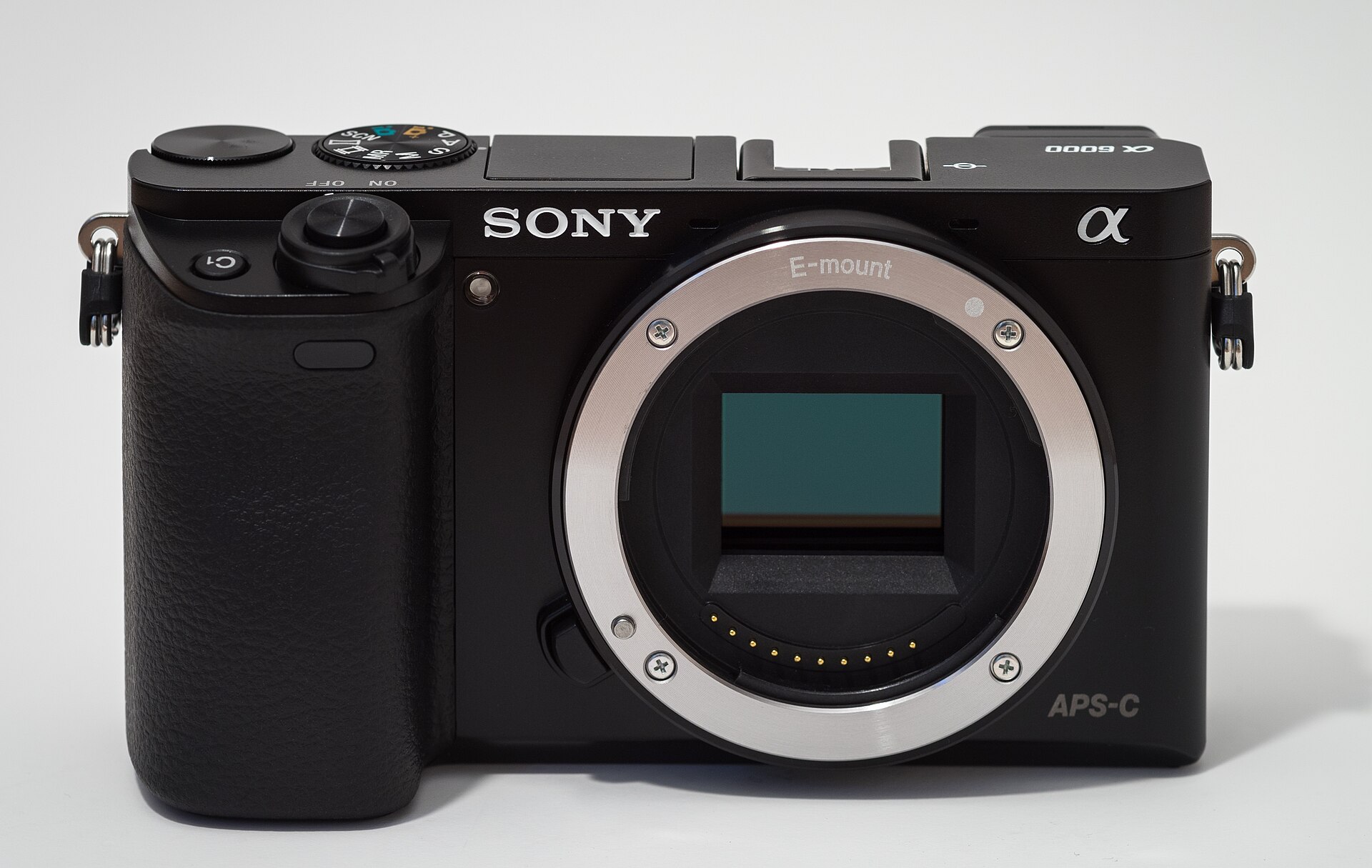
The same pattern appeared in lenses — full-frame glass was down 4.3%, while lenses for smaller formats rose 2.7%. Price and portability are clearly resonating with a new generation of buyers who do not need a large sensor to justify their purchase.
The Brand Battle at the Top
The competitive picture remains a three-horse race. In 2025 mirrorless market share, Sony led with roughly 29.9%, followed by Canon at 27.4% and Nikon at 15.1%. By production volume, Canon shipped about 2.3 million mirrorless bodies in 2025, ahead of Sony’s 1.8 million, with Nikon (860,000) and Fujifilm (750,000) trailing further behind.
The Compact Comeback Runs Alongside
Mirrorless is not the whole story. Fixed-lens compact cameras grew 29.6% in 2025 to 2.44 million units and kept climbing about 13% through mid-2026 — proof that a slice of the market prefers pocketable, sensor-equipped cameras over a full ILC system. The lens-to-body ratio, meanwhile, has ticked up to about 1.57, suggesting committed ILC buyers are still adding glass to their kits.
What It Means for Buyers
For photographers, the 2026 trends point to a clear conclusion: the mirrorless market has matured. Expect fewer entry-level launches, more focus on premium full-frame and versatile crop-sensor models, and prices that reflect a market selling quality over quantity. If you are shopping this year, the value is increasingly in capable crop-sensor bodies and a healthy used market — not in waiting for a flood of cheap new full-frame cameras.
FAQ
What is CIPA data?
CIPA is the Camera & Imaging Products Association of Japan, which publishes monthly and annual shipment statistics from its member manufacturers — the most widely cited industry-wide figures for digital cameras and lenses.
Is mirrorless outselling DSLR in 2026?
Yes, by a wide margin. Mirrorless now accounts for roughly nine out of every ten interchangeable-lens cameras shipped, while DSLR volumes keep sliding toward single-digit market share.
Why are camera prices rising while unit shipments fall?
Manufacturers are prioritizing higher-margin premium models. The average mirrorless body ships at roughly $711 versus about $282 for a DSLR, so revenue is holding up even as unit counts slip.
Related Posts
CES 2026 Camera Innovations Roundup: 8K Action Cams, AI Gimbals, and Cameras That Swim and Fly
CES 2026 (January 6–9, Las Vegas) was a quiet show…

Smartphone Camera Trends for 2026: Bigger Sensors, Variable Aperture, and AI
For years, the smartphone camera race was defined by a…
Medium Format Goes Mainstream in 2026
For more than a decade, digital medium format was the…