Open your phone’s camera app and pinch up to 10x. The viewfinder jumps closer to your subject — yet no lens barrel slid forward, and no glass physically moved. So what just happened? The answer is one of the cleverest tricks in modern photography: computational zoom. It is part optics, part software, and it is the reason a phone that is only a few millimeters thick can convincingly pretend to be a telephoto camera. Here is how it actually works.
What “Zoom” Really Means on a Phone
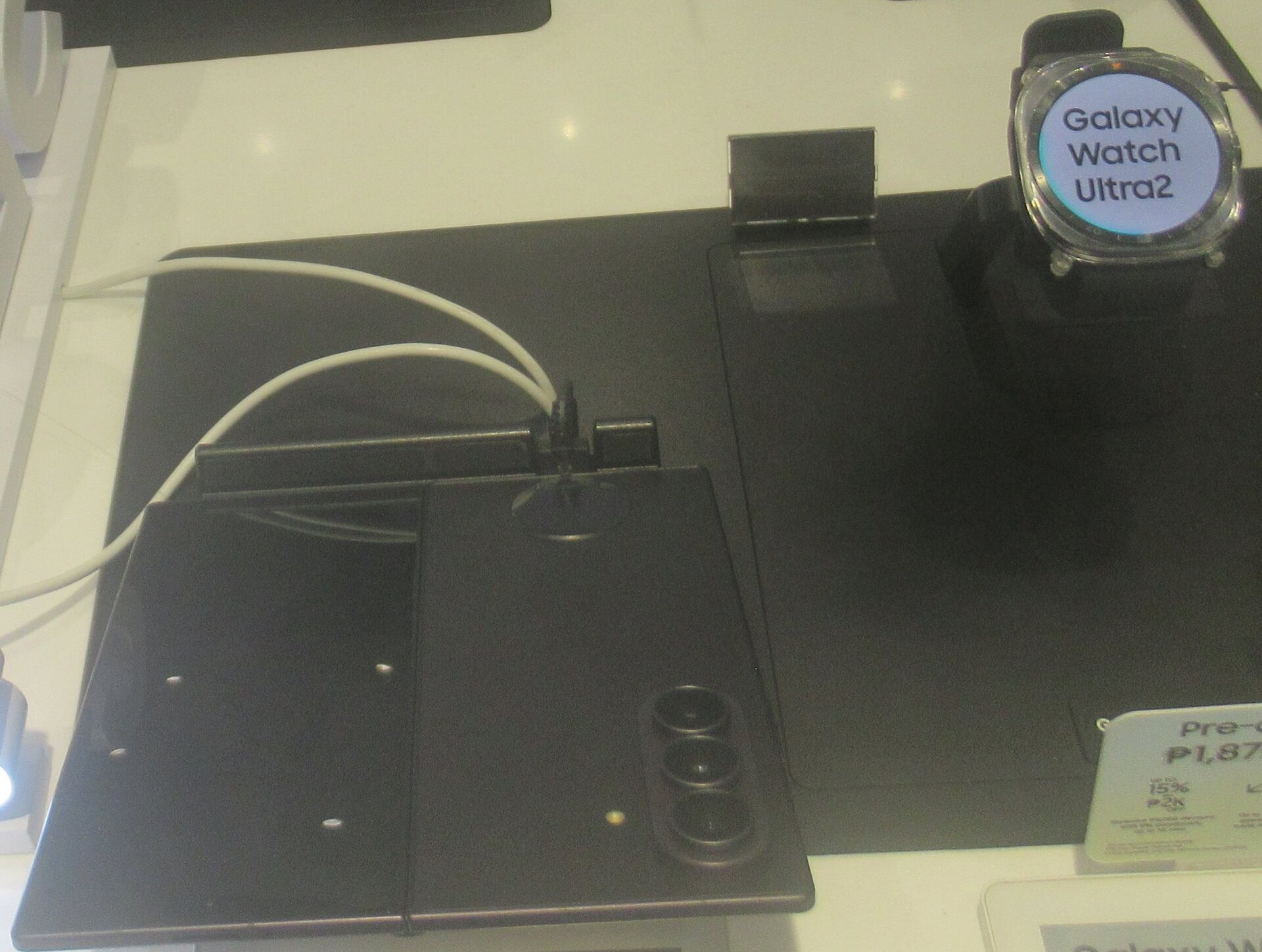
A dedicated camera with a telephoto lens magnifies a scene by moving glass elements along the barrel, changing the focal length continuously. A smartphone cannot do that. Its lenses are fixed, sealed, and tiny. Instead, most phones carry two to four separate cameras, each with a different focal length — an ultra-wide, a wide, and one or more telephoto modules — and the “zoom” you see on screen is assembled from that fixed set plus a generous helping of software. The labels you tap (0.5x, 1x, 2x, 3x, 5x, 10x) are not lens positions; they are mostly shortcuts to different crops, different cameras, or a blend of both.
Digital Zoom: The Original Crop
The simplest form is digital zoom. Nothing moves and no additional camera is used. The phone simply crops into the center of the sensor and then upscales the result back to full resolution using interpolation. Because the crop throws away real pixels, the upscaler has to invent new ones, which produces softness, smearing, and blocky artifacts. This is why an old-school 4x digital zoom looked so bad: you were seeing a small patch of pixels stretched far beyond what was actually captured. Digital zoom adds no new information — it only magnifies what is already there.
Optical Zoom and the Periscope Trick
Some phones do carry genuine optical zoom, but with a twist. A dedicated telephoto camera can have a longer focal length that optically magnifies the subject before light ever reaches the sensor. To fit that longer focal length into a thin body, engineers use a periscope design: a prism bends the incoming light 90 degrees so the lens elements can run sideways along the length of the phone instead of sticking out the back. The result is real, lossless magnification at one fixed focal length — say 5x. But note the word fixed. On a phone, even “optical zoom” is usually a matter of switching between cameras, not smoothly racking a lens.
Hybrid and Computational Zoom: Where the Magic Happens
Between the fixed cameras sits hybrid zoom, and this is where software starts doing heavy lifting. When you choose a zoom level that does not exactly match a camera — for example 2x on a phone that has a 1x wide and a 3x telephoto — the phone fires both cameras at once. It takes a sharp crop from the telephoto, a wider crop from the main sensor, aligns them, and fuses the results. The telephoto contributes genuine detail in the center while the wide camera fills in color, exposure, and edges. The blend looks better than either camera could produce alone at that magnification.
Multi-Frame Super-Resolution: Borrowing Detail from Your Shaky Hand
The most impressive trick is multi-frame super-resolution, popularized by Google’s “Super Res Zoom” on Pixel phones. Instead of one frame, the camera captures a rapid burst. Your hand is never perfectly still, so each frame records the scene shifted by a fraction of a pixel. That tiny motion is not noise — it is free information. Software aligns the frames and merges them, reconstructing detail that no single frame contained. The result is a zoomed image with noticeably more texture and sharpness than a plain digital crop, which is why some phones punch well above the optical weight of their hardware.
The Limits: When Software “Invents” Detail
Computational zoom has a hard ceiling: it can only reconstruct detail that the sensor actually captured. Push far enough — 30x, 100x and beyond — and there is simply no real data left to recover. At that point, AI sharpening and texture synthesis begin to guess. This is the territory of the infamous Samsung “moon” controversy, where long-zoom night shots of the Moon appeared sharper than the optics alone could justify because the algorithm was trained on Moon images and filled in plausible craters. The takeaway is not that phone zoom is fake — it is that some of what you see at extreme magnification is reconstructed rather than recorded.
Conclusion
Phone zoom is a layered illusion: a crop here, a periscope lens there, and a burst of cleverly aligned frames on top. At modest levels — 2x to 10x on a modern flagship — it is genuinely good, often rivaling dedicated optics of a few years ago. Understanding the difference between the optical part and the software part is the key to setting the right expectations, and to knowing exactly what you are looking at when the viewfinder says “100x.”
FAQ
Is phone zoom “fake”?
Not exactly. A portion of it is real optics (telephoto and periscope lenses), but much of the magnification comes from cropping and multi-frame software. It is a hybrid, not a deception — though extreme zoom levels lean heavily on AI reconstruction.
Does digital zoom reduce image quality?
Yes. Pure digital zoom crops into the sensor and upscales, discarding real pixels and adding interpolation artifacts. Multi-frame super-resolution greatly improves this by merging many slightly shifted frames, but it still cannot recover detail the sensor never captured.
What is the difference between optical, hybrid, and digital zoom?
Optical zoom magnifies with glass and loses nothing. Digital zoom just crops and enlarges. Hybrid zoom combines multiple cameras and software fusion, giving results between the two. On phones, “zoom” is usually a blend of all three.
Related Posts
AI Noise Reduction Explained: How Neural Networks Rescue Your High-ISO Photos
Shooting in low light used to force a choice: a…
The Future of Computational Photography: Software Is Becoming the Camera
For most of photography’s history, better pictures meant better glass:…

AI Object Removal and Inpainting: How Smart Erasers Rebuild Your Photos
A stranger wandering through your landscape shot, a power line…