Every camera has a viewfinder, but not all viewfinders show you the same thing. A DSLR’s optical viewfinder (OVF) shows the real world through glass, while a mirrorless camera’s electronic viewfinder (EVF) shows a tiny, high-resolution live screen. The difference isn’t cosmetic — it changes how you compose, focus, and judge exposure before you ever press the shutter. In this guide we’ll explain how each type works, where each one wins, and which viewfinder belongs on your next camera.
What Is an Optical Viewfinder (OVF)?
In a DSLR, light enters the lens and strikes a reflex mirror angled at 45 degrees. That mirror bounces the image upward into a pentaprism (or a lighter, cheaper pentamirror), which flips the image back to the correct orientation and sends it through the eyepiece to your eye. What you see is genuine, unprocessed light — the actual scene, in real time, with zero lag and no resolution limit.
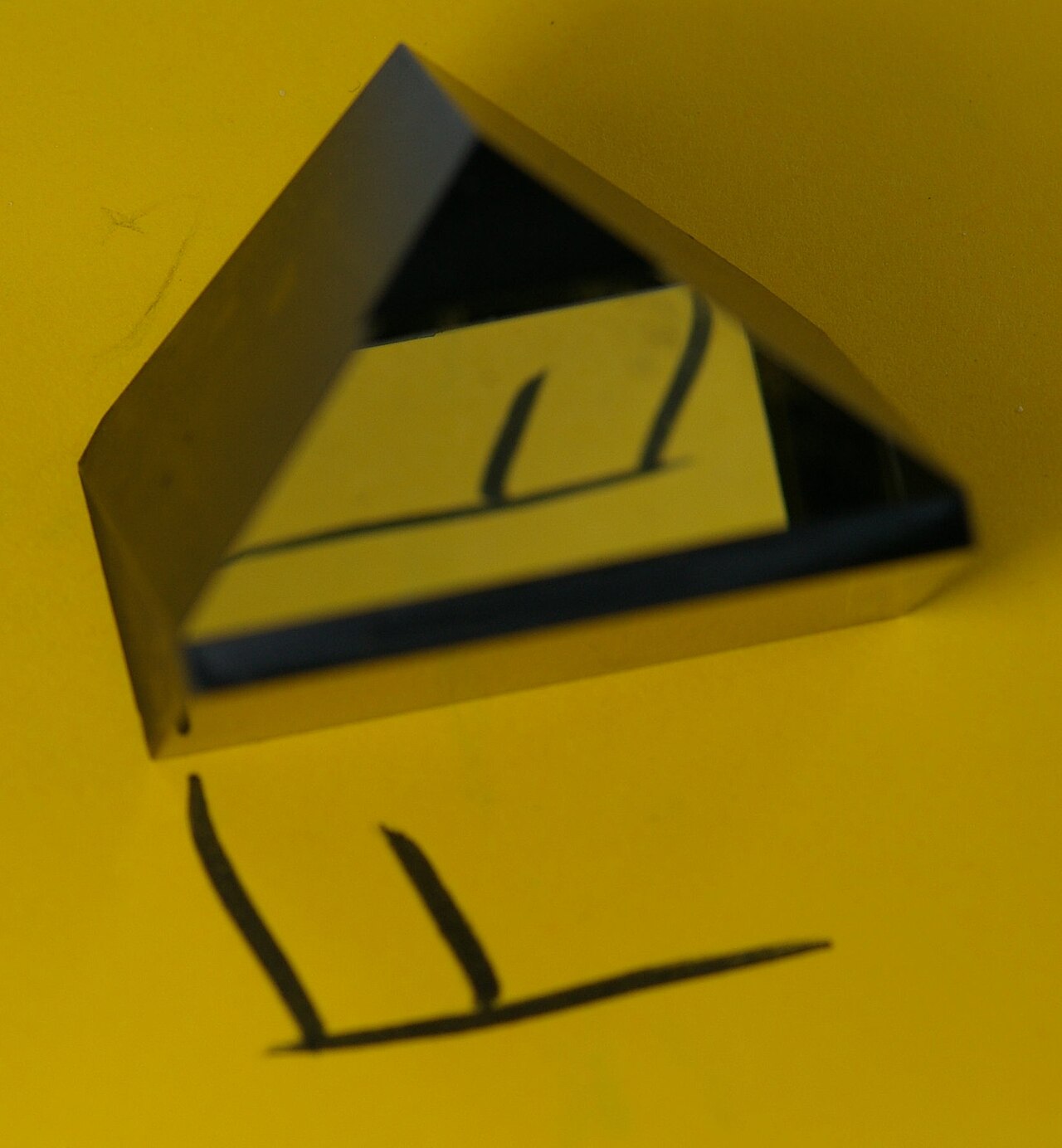
Because an OVF is purely optical, it draws no power to render the image and stays bright even in harsh midday sun. The trade-off is that it shows you the scene as your eye sees it, not as the sensor will record it. It cannot preview exposure, white balance, or a color profile. Entry-level DSLRs also typically show only about 95–98% of the frame, so you can capture edges you never actually saw; pro bodies reach 100% coverage.
What Is an Electronic Viewfinder (EVF)?
An EVF is a tiny display — usually an OLED panel roughly half an inch across — placed behind magnifying optics. The camera feeds it a live signal straight off the image sensor, so the viewfinder shows precisely what the sensor is about to capture.
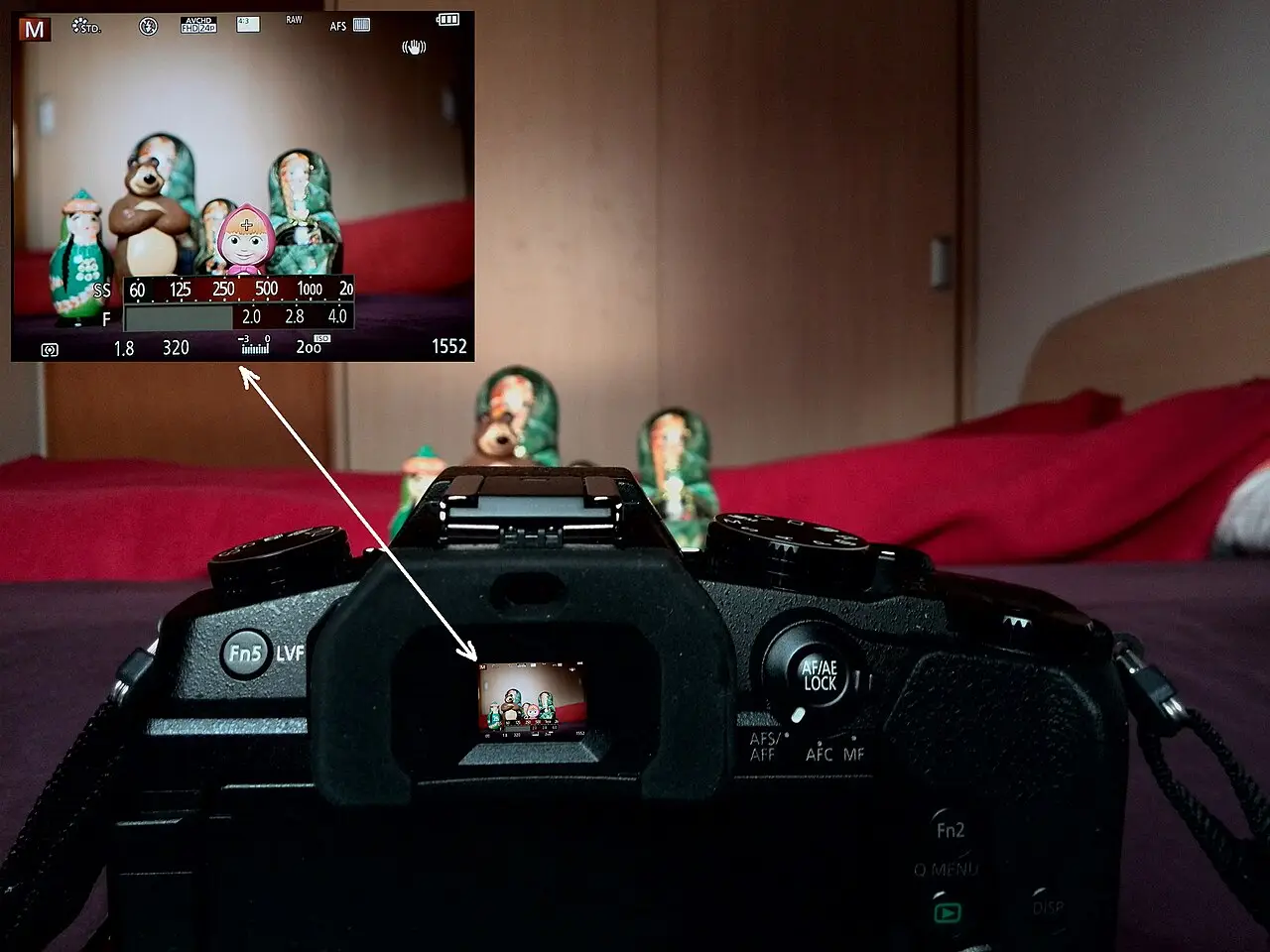
EVF resolution is quoted in dots, not pixels — and the distinction matters. A dot is a single red, green, or blue subpixel, so a 3.69-million-dot EVF actually contains about 1.23 million full-color pixels (roughly 1280 × 960). Sony’s a7R III (2017) helped make 3.69M dots the mainstream baseline. Today’s flagships push further: 5.76M dots on the Canon EOS R3 and Nikon Z8, and 9.44M dots on the Sony a1. Three other specs shape the experience: magnification (typically 0.7x–0.9x), refresh rate (60–120 Hz), and eye relief (the distance from your eye to the eyepiece, usually 21–25 mm).
The Key Differences at a Glance
| Feature | Optical (OVF) | Electronic (EVF) |
|---|---|---|
| What you see | Real light through glass | Live feed from the sensor |
| Exposure & white-balance preview | No | Yes (live simulation) |
| Lag | None | A few milliseconds |
| Battery drain | Minimal | Noticeable |
| In low light | Dims | Gains up (stays visible) |
| Focus aids (peaking, zoom, histogram) | No | Yes |
| Frame coverage | ~95–100% | 100% |
How Modern EVFs Closed the Gap
Early EVFs had two real weaknesses: lag and blackout. Lag meant the image you saw ran a few tens of milliseconds behind reality; blackout meant the view went dark each time the shutter fired, making it hard to track fast-moving subjects. Both problems are largely solved on modern cameras. Flagship EVFs now refresh at 120 Hz with latency measured in low milliseconds. More importantly, stacked CMOS sensors and the Sony a9 III’s global shutter read the whole frame at once and keep feeding the viewfinder during bursts, enabling “blackout-free” shooting on bodies like the Nikon Z9, Canon EOS R3, and Sony a9 III. This is the main reason sports and wildlife photographers — once the last OVF holdouts — have steadily migrated to mirrorless.
Which One Should You Choose?
If you want to see exactly what your final image will look like — exposure, white balance, and all — before you press the shutter, an EVF is the clear winner. It’s also essential for mirrorless video, manual-focus aids like peaking and focus magnification, and shooting in near-darkness. An optical viewfinder still has appeal if you work in harsh sun, prize maximum battery life, or simply prefer a glass-clear, lag-free view of the real scene — though OVFs are now found almost exclusively on DSLRs, a category most major brands are phasing out. A small niche of premium rangefinder-style cameras even offers hybrid viewfinders that toggle between an optical window and an electronic panel. For most people buying a new camera in 2026, the EVF is simply the default — and a very good one.
Conclusion
The viewfinder is easy to overlook, but it’s the window through which every photograph begins. An OVF gives you unprocessed light; an EVF gives you a preview of the finished image. Modern EVFs have eliminated most of their early drawbacks, which is exactly why mirrorless — and the EVF — has become the default for professionals and beginners alike. If you’re shopping for a camera today, compare the viewfinder’s dot count, magnification, and refresh rate the same way you’d compare megapixels.
FAQ
What does “3.69M dots” actually mean?
It counts subpixels, not pixels. Each full-color pixel is made of three subpixels (red, green, blue), so a 3.69-million-dot EVF is about 1.23 million pixels, roughly 1280 × 960.
Do electronic viewfinders have lag?
Modern EVFs have very low latency — a few tens of milliseconds at most, with flagships refreshing at 120 Hz. For the vast majority of shooting it is imperceptible.
Can you preview exposure through an optical viewfinder?
No. An OVF shows real light, so it cannot show how exposure, white balance, or picture styles will affect the final image. An EVF can.
Are optical viewfinders obsolete?
Not entirely, but they’re now largely confined to DSLRs, and most major brands are shifting their lineups to mirrorless EVF cameras.
Related Posts

Phase Detection Autofocus Explained: How Your Camera Locks Focus in Milliseconds
Press the shutter halfway and a modern camera can lock…
TTL vs Manual Flash: How Automatic Flash Metering Works (and When to Use Each)
When a flash photo comes out too dark or too…

Camera Dynamic Range Explained: What Stops Really Mean (and Why They Matter)
Every photographer has hit the same wall: a scene the…