Look closely at the front of almost any modern lens and you’ll see faint green, purple, or magenta reflections dancing on the glass. Those colours aren’t decoration — they’re the visible proof of lens coatings, the invisible engineering that quietly decides how much contrast, colour, and detail your photos keep. Understanding what those coatings do is one of the fastest ways to understand why a modern zoom with eighteen elements can outperform an old prime with five.
Why Uncoated Glass Reflects Light
Every time light passes from air into glass — or back out again — a small fraction bounces back. For ordinary optical glass, that’s roughly 4% per air-to-glass surface. It sounds trivial, but a modern zoom lens can contain fifteen, eighteen, or more individual elements, each with two air-glass surfaces. Those losses compound: with enough elements, an uncoated lens can transmit less than half the light entering it. Worse, the reflected light doesn’t vanish — it ricochets around inside the barrel and eventually lands on the sensor as scattered veiling flare and ghost images, washing out contrast and muddying colours.
How Anti-Reflective Coatings Work
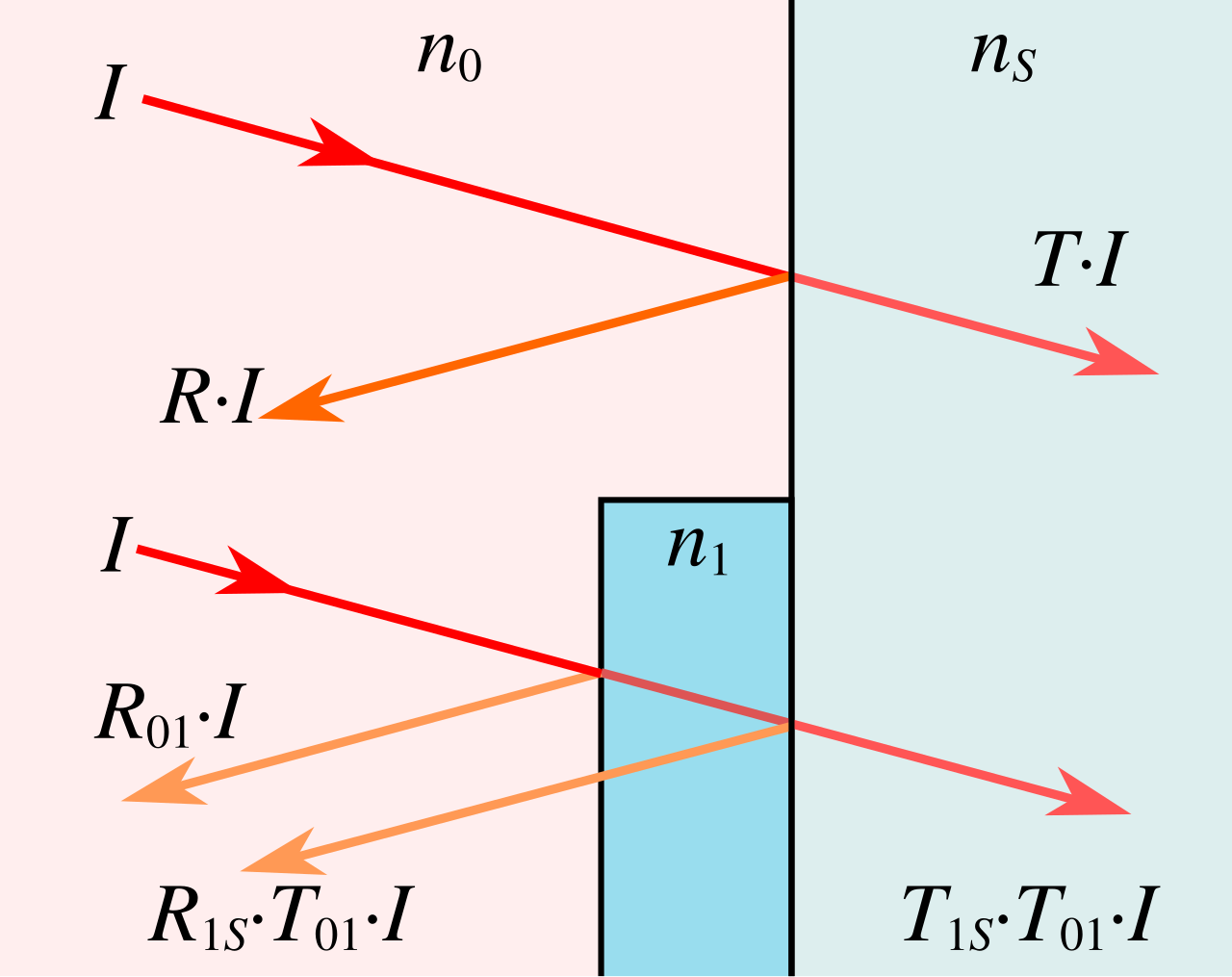
An anti-reflective (AR) coating is a microscopically thin film — often magnesium fluoride (MgF₂) for basic single coatings — deposited onto the glass. The film is tuned to roughly one-quarter of a wavelength of light thick. Light reflecting off the top of the film and light reflecting off the glass beneath it travel slightly different distances, so the two reflected waves arrive out of phase and cancel each other out through destructive interference. Less reflection means more light passes through the lens, and less stray light bounces around inside it.
Single Coating vs Multicoating
A single layer can only cancel one wavelength well and others partially — which is why single-coated lenses show that characteristic blue or amber reflection. A multicoated lens stacks several layers of different thicknesses and refractive indices, each optimised for a different part of the spectrum, so reflection stays low across the whole visible range. A good multicoated surface reflects well under 0.5% of light, compared with about 4% for bare glass. The green or purple hue you see on a modern lens is simply the tiny residue of light the coating couldn’t cancel — not the coating “colouring” your pictures.
The Famous Coating Names
Brands trademark their coatings, but they all solve the same physics:
- Zeiss T* — the original single-layer “T” coating dates to 1935 (patented by Alexander Smakula at Zeiss Jena); the multi-layer T* arrived in the early 1970s and is now a multi-layer structure tuned to each glass type.
- Canon Super Spectra Coating — Canon’s multi-layer anti-reflective treatment for controlling flare and ghosting across its EF and RF lenses.
- Nikon Nano Crystal Coat — rather than thin films alone, this uses a layer of ultra-fine nano-scale crystallised particles with an extremely low refractive index, adapted from Nikon’s semiconductor stepper technology. It is especially effective at suppressing ghosting in wide-angle lenses.
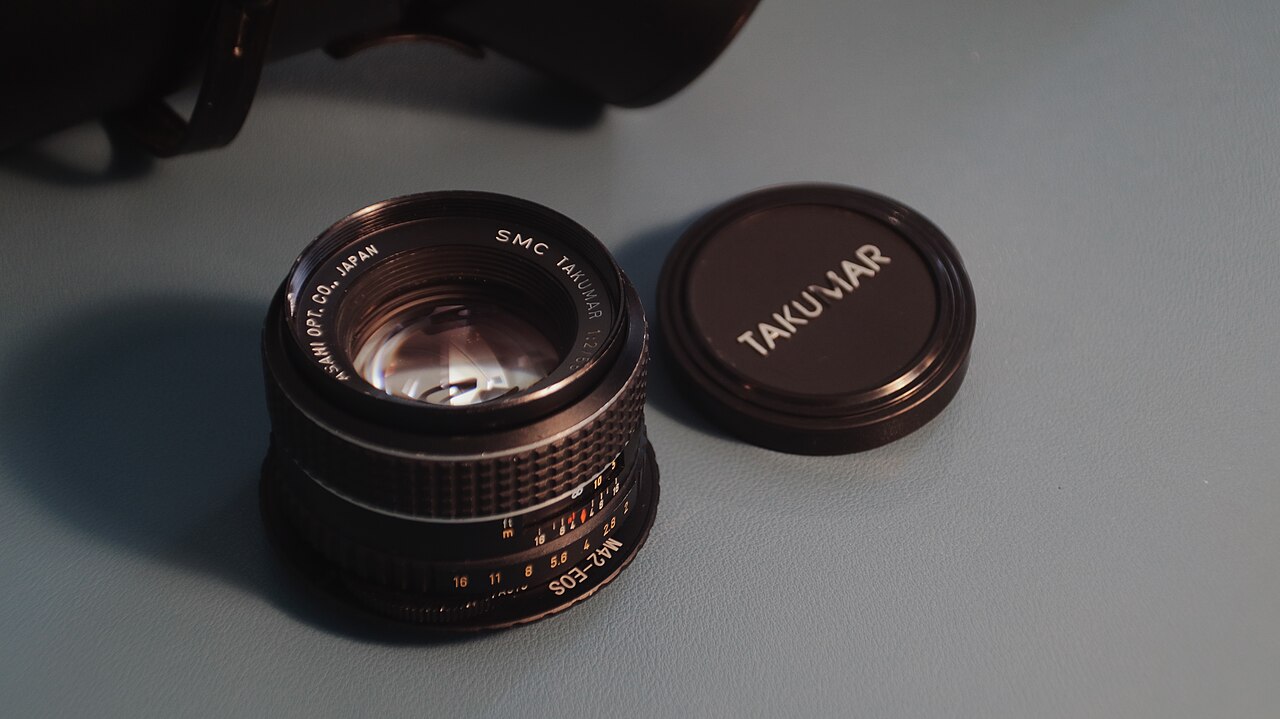
- Pentax SMC (Super-Multi-Coating) — one of the earliest high-performance multicoatings, made famous on Takumar lenses in the 1970s.
- Fujifilm Super EBC — Fujifilm’s “Electron Beam Coating,” a multicoating that controls flare and lifts contrast on its XF and GF lenses.
Beyond Anti-Reflection: Fluorine and Hard Coatings
Modern lenses add more than AR layers. A fluorine coating on the front and rear elements repels water, oil, dust, and fingerprints, keeping the glass easier to clean and less likely to smudge in the field. Hard coatings protect the softer AR layers from scratching, and some elements carry hydrophobic or anti-static treatments as well. None of these change sharpness directly — they change how well the lens survives real-world use.
What Coatings Mean for Your Photos
In practice, better coatings show up as higher contrast, cleaner colour, and far less flare and ghosting when you aim the lens toward a bright light source. They’re a big reason a modern eighteen-element zoom can out-perform an older five-element prime despite having more glass in the light path. Coatings can’t eliminate flare entirely — a bright source just outside the frame will still produce artefacts — but they shrink the effect dramatically, which is why lens hoods and good coatings are so often discussed together as the two halves of flare control.
Conclusion
Lens coatings are invisible engineering you can see in every photo. Next time you catch the green and purple reflections on your lens’s front element, that’s multicoating doing its job — letting nearly all the light through while keeping stray reflections out of your image.
FAQ
Do lens coatings affect sharpness? Not directly — but by preserving contrast and suppressing veiling flare, coatings make images look crisper and more detailed.
Why do coated lenses look green or purple? Those colours are the tiny amount of light the coating couldn’t cancel. Multicoatings spread the residual reflection across the spectrum, which is why you see a mix of hues.
Can coatings be damaged? Yes — aggressive cleaning can scratch AR layers, so use a blower, a clean microfiber cloth, and gentle pressure. Fluorine coatings help resist oil and fingerprints.
Is a multicoated filter worth the extra cost? If you’re buying a protective or ND filter, yes — an uncoated filter adds its own reflections straight back into the light path.
Related Posts
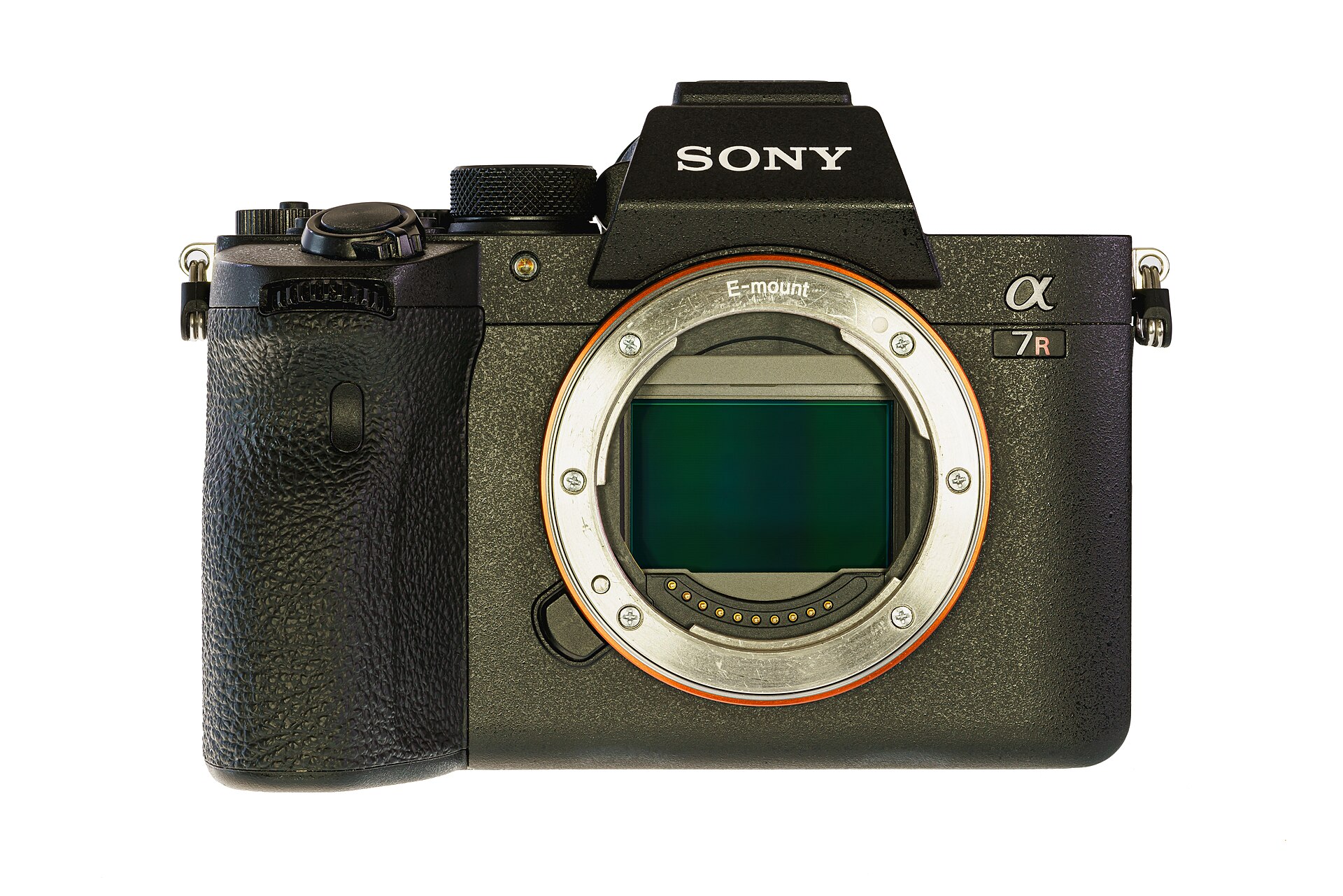
Lens Mount Systems Compared: Canon RF vs Sony E vs Nikon Z vs Fujifilm X
When you buy an interchangeable-lens camera, you are not just…
Weather Sealing in Cameras Explained: IP Ratings, Seals & Limits
"Weather sealing" is one of the most heavily marketed —…
How Image Stabilization Works: OIS vs IBIS vs EIS Explained
Blurry handheld shots are one of the most common frustrations…