When a flash photo comes out too dark or too bright, the culprit is usually the flash mode. Modern flashes can expose automatically using a system called TTL (through-the-lens) metering, or you can take full control in manual mode. Each has real strengths, and working photographers switch between them constantly. Here is how both work, and when each one wins.

What TTL Flash Metering Actually Does
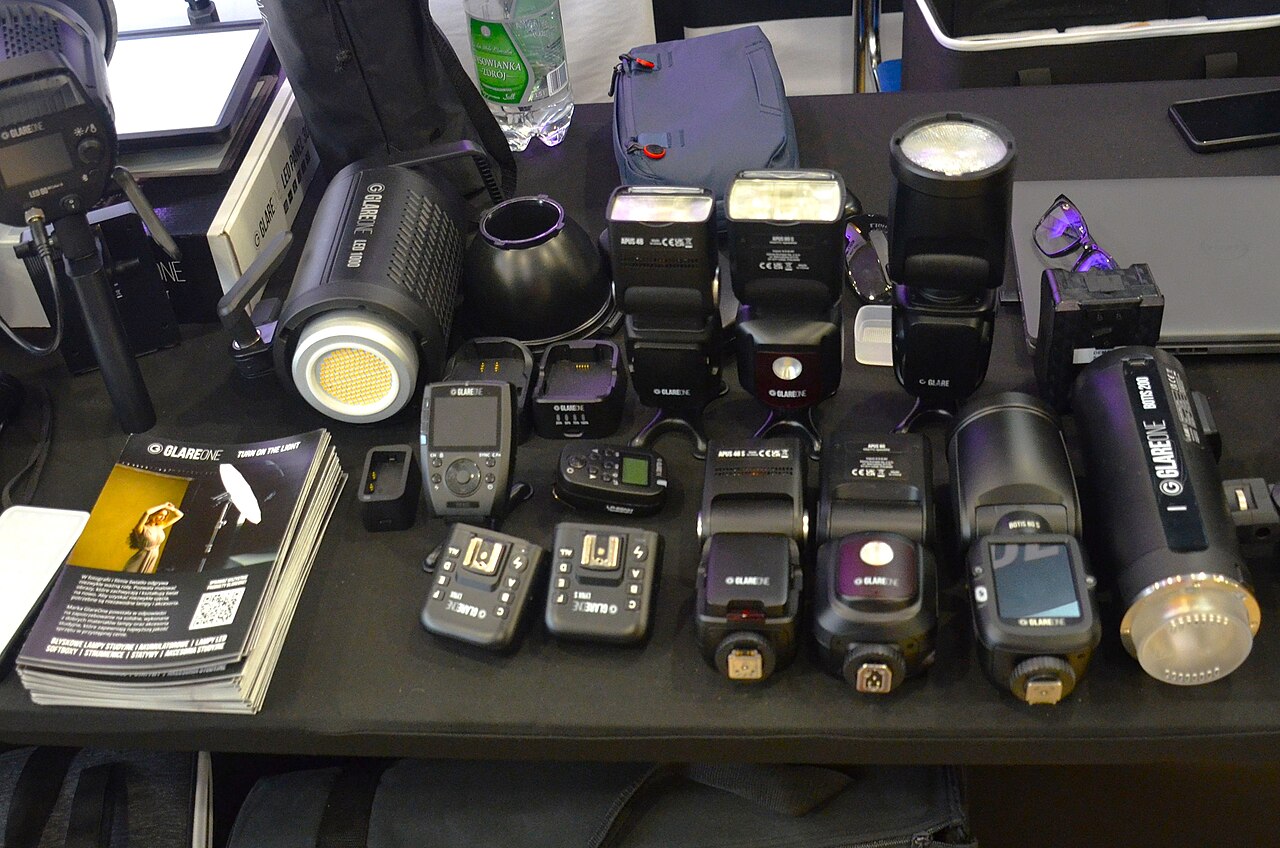
TTL stands for “through the lens.” The camera measures the light from the flash that bounces off your subject and comes back through the lens, then cuts the flash off at just the right moment. In practice it works like this: when you press the shutter, the flash first fires a low-power pre-flash. The camera’s metering sensor reads that burst, compares it against the ambient light, and calculates how much power the main flash needs. The main flash then fires at the calculated level. The whole sequence happens in milliseconds, so you usually never notice the pre-flash.
Each brand gives this system its own name. Canon calls it E-TTL II, Nikon calls it i-TTL, and Sony uses TTL with a P-TTL pre-flash mode and an ADI mode that also factors in the focus distance from the lens.
Manual Flash and the Guide Number
Manual mode is the opposite: you set the flash power yourself, usually as a fraction of full output — 1/1, 1/2, 1/4, 1/8, and so on — and the camera does nothing to adjust it. To find the right setting, photographers either use a light meter or fall back on the guide number (GN), a measure of flash power. The guide number formula is GN = distance × f-number at ISO 100. A flash with a guide number of 60 can correctly expose a subject 6 meters away at f/10, or 3 meters away at f/20. It is a simple tool, though today’s auto modes mean most people never do the math.
The Strengths of TTL
TTL shines when things change quickly. At a wedding or event, your subject distance, aperture, and zoom change from shot to shot; TTL recalculates the flash power for every frame, so you get consistent exposure without touching the flash. It also compensates for modifiers automatically — bounce a speedlight into a softbox or umbrella, or add a gel, and TTL measures the light that actually reaches the subject and adjusts for it.
When you want the flash a little brighter or dimmer, you use flash exposure compensation (FEC) rather than hunting for power settings, which is faster and more intuitive in the field.
The Strengths of Manual
Manual wins when you need consistency and control. In a studio, you set the lights once and every frame looks identical — no risk of the meter being fooled by a white dress or a black suit. It is also predictable: TTL can nudge exposure slightly from frame to frame as the scene changes, which complicates multi-frame work like stitching or stop-motion.
Manual fires no pre-flash, which avoids the classic “blinkers” problem — subjects who reflexively blink at the pre-flash, leaving you with half-closed eyes in the real shot. It is also essential when you deliberately balance a strobe against ambient light, such as matching a flash to a sunset.

When to Use Which
- Events, run-and-gun, changing distance — TTL.
- Studio, product, repeatable setups — manual.
- Subjects who blink at the pre-flash — manual.
- Bouncing or modifying and you want to skip the math — TTL.
- Mixing flash with ambient light precisely — manual.
Conclusion
Neither mode is better — they solve different problems. Most working photographers keep both in the bag: TTL for speed and convenience, manual for consistency and precision. If you are new to flash, start in TTL to learn what good flash exposure looks like, then switch to manual when you want a repeatable, deliberate result.
FAQ
What does TTL stand for?
Through-the-lens. The camera meters the flash light that passes back through the lens to set the exposure.
Does TTL fire a pre-flash?
Yes. Most modern TTL systems (Canon E-TTL II, Nikon i-TTL) fire a low-power pre-flash an instant before the main flash to calculate the exposure.
Do I need a light meter for manual flash?
No. You can use the guide number formula (GN = distance × f-number) or trial and error, though a handheld light meter makes studio work faster and more precise.
Related Posts
Chroma Subsampling Explained: 4:2:0 vs 4:2:2 vs 4:4:4 (And Why It Matters for Video)
Record a video on almost any camera and your footage…
Log Video Profiles Explained: How S-Log3, C-Log3, and V-Log Capture More Dynamic Range
Point a camera with a log profile enabled at a…
Lens Coatings Explained: How Multicoating Reduces Flare and Ghosting
Look closely at the front of almost any modern lens…