Street photography lives or dies by how fast you can react — and a big, heavy zoom usually gets in the way. That’s why experienced street shooters reach for a compact prime lens: small enough to stay unnoticed, bright enough to isolate a subject, and sharp enough to zone-focus without hesitation. Here are the best compact primes for the three biggest mirrorless systems in 2026, plus how to pick the right focal length.
What Makes a Great Street Lens
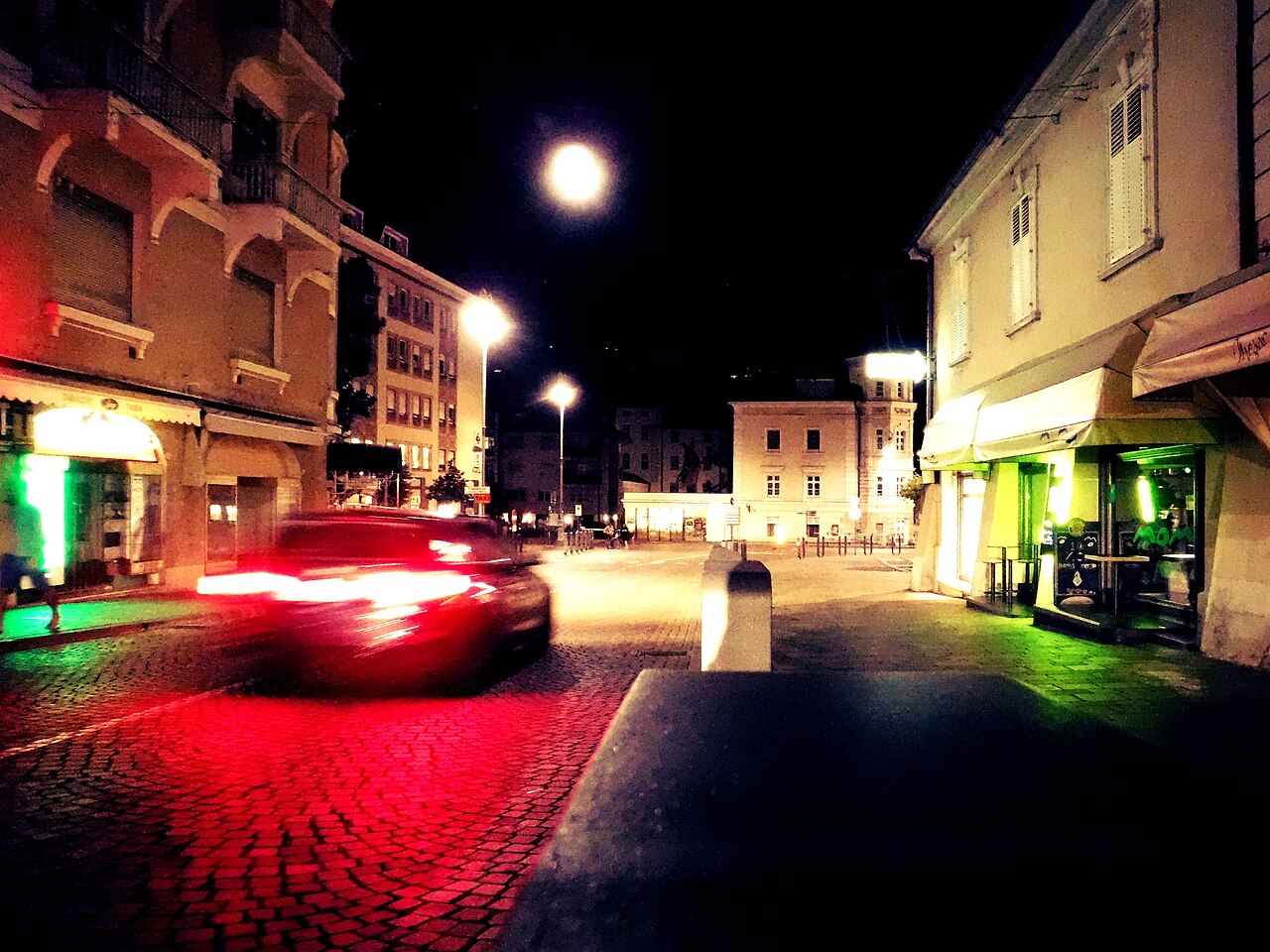
A good street lens ticks four boxes. It should be small and discreet, so the camera doesn’t draw attention or tire your hand. It should be bright — f/2.8 or faster — for evening work and shallow depth of field. A 28–50mm full-frame equivalent focal length keeps the frame natural and lets you shoot close without distortion. And it should focus fast and quietly, with a manual-focus feel precise enough for zone focusing.
Best Compact Prime by System
Three lenses stand out as the default compact prime for their respective mounts:
| Lens | System | Max Aperture | Weight | Filter | Typical Price |
|---|---|---|---|---|---|
| Canon RF 28mm f/2.8 STM | Canon RF | f/2.8 | 120 g | 55 mm | ~$299 |
| Sony FE 40mm f/2.5 G | Sony E | f/2.5 | 173 g | 49 mm | ~$750 |
| Fujifilm XF 27mm f/2.8 R WR | Fujifilm X | f/2.8 | 84 g | 39 mm | ~$400 |
Canon RF 28mm f/2.8 STM is the pancake that made affordable street glass exciting again. At just 24.7mm deep and 120g, it disappears on an EOS R8 or R50, and the 28mm view is wide enough to show context without looking exaggerated. The gear-type STM motor is quick and quiet, and three aspherical elements keep corners sharp. If you want more subject separation, the RF 35mm f/1.8 Macro IS STM is the step-up pick.
Sony FE 40mm f/2.5 G is the premium option. It’s part of Sony’s matched set of compact G primes, with a metal barrel, an aperture ring, two linear autofocus motors and dust-and-moisture resistance. The 40mm focal length sits between a classic 35mm and a 50mm, making it a versatile all-rounder on an a7C-series body. The FE 35mm f/1.8 is the cheaper, brighter alternative if you’d rather trade a little build quality for a stop of light.

Fujifilm XF 27mm f/2.8 R WR is the classic pancake for X-mount. At 84g and 23mm deep, it turns an X-T50 or X-M5 into a genuinely pocketable camera, and its 41mm full-frame-equivalent view is the sweet spot many street photographers prefer. For a wider, faster option, the weather-sealed XF 23mm f/2 R WR (35mm equivalent) is the go-to.
Choosing the Right Focal Length
- 28mm (18mm on APS-C): wide and environmental. You work close and pull more of the scene into the frame.
- 35mm (23mm on APS-C): the documentary standard — enough context without losing the subject.
- 40–50mm (27–35mm on APS-C): tighter and more subject-focused, flattering for candid portraits.
Remember the crop factor: on Fujifilm X multiply by 1.5, on Canon APS-C by 1.6. A 27mm pancake on an X-mount body is not a wide lens — it’s a 41mm equivalent.
Honorable Mentions
If the three picks above don’t fit your budget or style, these are worth a look: the Canon RF 50mm f/1.8 STM (a ~$199 nifty fifty), the Sony FE 50mm f/2.5 G (a compact 50mm with the same G-series handling), and the Fujifilm XF 35mm f/2 R WR (a weather-sealed 50mm equivalent).
Conclusion
The best street lens is the one you’ll actually carry every day — and for most people that’s a 28–40mm prime small enough to forget is mounted. The Canon RF 28mm f/2.8 STM is the value champion, the Sony FE 40mm f/2.5 G is the premium compact, and the Fujifilm XF 27mm f/2.8 R WR keeps an APS-C kit genuinely pocketable. Whichever system you shoot, pick a bright, small prime, learn one focal length deeply, and let the rest of the frame take care of itself.
FAQ
Is 35mm or 50mm better for street photography?
Both work. 35mm (full-frame) is the classic documentary view — it captures more of the scene and lets you shoot close. 50mm is more isolating and flattering for candid portraits. Many street photographers settle on one and stick with it.
Do I need a fast f/1.4 lens for street photography?
Not really. f/2 to f/2.8 is enough for most street work and keeps the lens small. An f/1.4 prime is bigger and pricier, and at street distances you’ll often stop down for more depth of field anyway.
What focal length is best for an APS-C camera?
Divide by the crop factor. On Fujifilm (1.5x), a 23mm lens gives a 35mm-equivalent view and a 27mm gives about 41mm. On Canon APS-C (1.6x), an 18mm lens is roughly 28mm equivalent.
Related Posts
Sony a6700 Review (2026): The APS-C Hybrid That Punches Above Its Weight
Disclosure: This article contains affiliate links. If you buy through…
Sigma 24-70mm f/2.8 DG DN II Art Review: The Flagship Zoom That Beats Sony on Value
Disclosure: This article contains affiliate links. If you buy through…
Nikon Z8 Review (2026): Flagship Power in a Lighter Body
Disclosure: This article contains affiliate links. If you buy through…