Ask any portrait photographer what separates an “okay” photo from a dreamy one, and bokeh will come up within a minute. It’s the soft, creamy blur behind a sharp subject — but bokeh isn’t just “a blurry background.” It’s a measure of how a lens renders that blur, and some lenses do it far more beautifully than others. Here’s what bokeh actually is, what creates it, and how to get more of the good stuff.

What Is Bokeh? (And Why It’s Not Just a Blurry Background)
Bokeh comes from the Japanese word boke (ボケ), meaning “blur” or “haze.” The spelling with an “h” was popularized in 1997 by Mike Johnston, then editor of Photo Techniques magazine, to nudge English speakers toward the correct pronunciation (“boh-kuh,” not “boke”). In practice, bokeh describes the aesthetic quality of the out-of-focus areas in a photo — especially how the lens renders small points of light, which appear as soft discs photographers call “bokeh balls.”
The key word is quality, not quantity. You can have a huge amount of blur that looks harsh and distracting, or a modest amount that looks silky and pleasing. Two lenses at the same aperture and distance will blur the same scene by the same amount, yet one can look like melted butter while the other looks busy and nervous.
Bokeh vs. Depth of Field: Quality vs. Quantity
Depth of field (DOF) is how much of the scene is acceptably sharp — a thin slice for a portrait shot wide open, or deep front-to-back sharpness for a landscape. Bokeh is what the unsharp parts look like. The two are related but independent: the same f/1.4 aperture can produce shallow DOF on two different lenses, but only one will melt the background into smooth, even circles. When people praise a lens for “good bokeh,” they’re talking about the character of that blur — whether highlights dissolve into round, softly-lit discs or collapse into hard-edged, distracting shapes.
What Determines Bokeh? Aperture Blades and Optical Design
Here’s the core idea: when you photograph a distant point of light out of focus, the lens projects the shape of its aperture onto the sensor. The aperture’s shape literally becomes the bokeh’s shape.
- Aperture blades. A lens with many blades — or blades with curved edges — keeps the opening close to a perfect circle, so bokeh balls stay round. Most modern portrait primes use nine rounded blades, and some flagships use eleven or more. Fewer, straighter blades turn out-of-focus highlights into visible hexagons or octagons as you stop down.
- Wide open vs. stopped down. Shoot at maximum aperture and the opening is nearly circular no matter how many blades the lens has; stop down and the polygon shape becomes obvious in highlights.
- Sunstar bonus. Stop way down to f/11–f/16 on a bright point of light and you’ll get a starburst instead of a disc. Straight-edged blades create crisper points — an even number of blades produces the same number of rays, while an odd number produces roughly double.
Five Types of Bokeh You’ll See in the Wild
Cat’s-eye bokeh. Toward the edges of the frame, bokeh discs often stretch into lemon- or cat’s-eye shapes. This is optical vignetting: the lens barrel and internal elements clip the light path for off-axis rays, so the round aperture appears elliptical. It’s most visible at maximum aperture near the corners — and many photographers actually like the swirly, directional feel it adds.
Onion-ring bokeh. Look closely at some bokeh discs and you’ll see faint concentric rings, like the layers of an onion. These come from molded aspherical glass elements, whose precision molding process leaves microscopic concentric ridges that show up in bright highlights. It’s a small cosmetic trade-off for the sharpness those aspherical elements provide.
Donut bokeh. Catadioptric (mirror) lenses render highlights as rings rather than discs, because the secondary mirror at the center of the lens blocks the middle of the aperture. The result is a distinctive “donut” — loved or hated, but instantly recognizable.
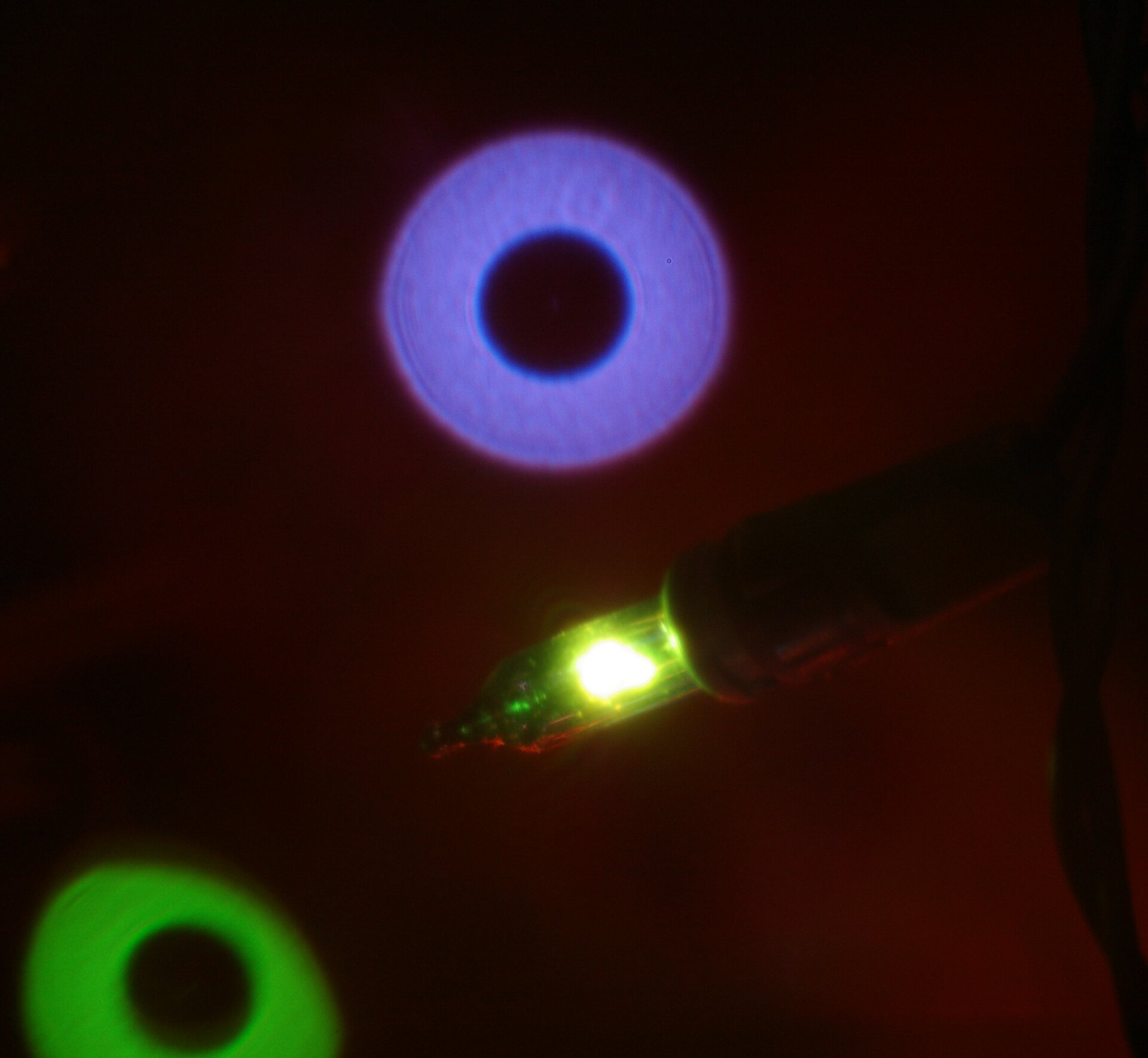
Soap-bubble bokeh. Some lenses undercorrect spherical aberration so that bokeh discs are brighter at the edges than the center, creating a “soap bubble” look. The classic Meyer Trioplan lenses made this a signature, and modern revivals chase the same dreamy effect.
Swirly bokeh. Petzval-design lenses produce a characteristic swirl in the corners, as off-axis light gets bent unevenly. It’s another vintage look that has come back into fashion among portrait shooters.
How to Get Creamy, Buttery Bokeh
You don’t need an exotic lens to get beautiful bokeh. Stack these four choices and the effect builds quickly:
- Shoot wide open. f/1.4–f/2.8 throws the background far out of focus and keeps the aperture opening round.
- Use a longer focal length. An 85mm or 135mm lens compresses the scene and enlarges background blur far more than a 35mm at the same framing.
- Get close, and pull the subject away from the background. A short camera-to-subject distance combined with a large subject-to-background gap is the single biggest lever you can pull.
- Add background interest. Fairy lights, distant traffic, or backlit foliage become hundreds of glowing bokeh balls.
For the smoothest possible transitions, a few lenses use an apodization (APD or STF) element that softens the edges of each bokeh disc — Fujifilm’s XF 56mm f/1.2 R APD and Sony’s STF lenses (like the FE 100mm f/2.8 STF GM OSS) are built specifically for this. And lenses such as the Canon RF 85mm f/1.2 L are prized precisely because their optical design renders backgrounds that almost melt away.
Conclusion
Bokeh is part science and part taste. The science is aperture shape and optical design; the taste is deciding whether you love cat’s-eyes, donuts, or the cleanest possible circles. For most shooters, a fast 50mm or 85mm prime shot wide open, with the subject pulled away from a light-filled background, is all you need to start producing that creamy look everyone chases.
FAQ
Is bokeh the same as depth of field?
No. Depth of field is how much of the scene is sharp; bokeh is how the out-of-focus areas look. Shallow DOF enables bokeh but doesn’t guarantee good bokeh.
How many aperture blades are best for bokeh?
More is generally rounder. Nine rounded blades is the modern sweet spot for portrait primes; eleven or more stays even smoother when you stop down.
Do I need an f/1.2 lens for good bokeh?
No. An affordable f/1.8 prime at 50mm or 85mm produces plenty of subject separation. Getting the subject close and the background far away matters more than one extra stop of aperture.
Related Posts
Global Shutter vs Rolling Shutter Explained: Why the Sony a9 III Changed the Game
Nearly every digital camera you've ever used — from your…
Eye AF and AI Subject Tracking Explained: How Your Camera Locks Onto Faces, Eyes, and Birds
A decade ago, nailing focus on a moving subject meant…
LOFIC Sensors Explained: How Your Phone Camera Captures 100dB of Dynamic Range
Almost every photographer has watched a scene lose its detail…