Every digital camera you have ever used starts with the same trick. It records not one image but three — a grayscale frame seen through a red filter, another through green, and another through blue — then blends the three into color. When you convert that photo to black and white in an app, you are quietly throwing that color data away. But a small number of cameras take a more radical path: their sensors have no color filters at all, so they physically cannot record color. Far from a limitation, that omission is exactly why black-and-white specialists love them. Here’s how a monochrome sensor works, why it produces sharper, cleaner files, and which cameras actually use one.
How a normal sensor records color
Nearly every digital sensor is, underneath everything, a monochrome device. A photosite simply counts photons; it has no idea what color they are. To capture color, manufacturers lay a color filter array (CFA) over the sensor — most commonly a Bayer pattern of red, green, and blue filters, with twice as many green pixels as red or blue because human vision is most sensitive to green light.
Each pixel is therefore blind to two-thirds of the color spectrum, recording only red, green, or blue. Software then runs a process called demosaicing, interpolating the missing two color values for every pixel from its neighbors. The result looks seamless, but a Bayer sensor is essentially guessing at roughly two-thirds of the color information in every pixel. Those color filters also absorb light, which is one reason every modern sensor has to work a little harder in dim conditions.
What a monochrome sensor removes
A monochrome sensor simply deletes the color filter array. Each photosite now records pure luminance — how much light falls on it, with no red, green, or blue restriction. There is nothing to interpolate, because every pixel already contains the only value it needs. The sensor delivers a true black-and-white image directly, with no demosaicing step and no light lost to color filters.
This is a fundamentally different thing from shooting a normal camera and converting to monochrome afterward. A color camera captures three filtered channels and discards or merges them later; a monochrome camera captures full luminance at every single pixel from the start.

Three reasons monochrome files look sharper and cleaner
1. More real detail. Because there is no demosaicing, every pixel holds genuine luminance data instead of an interpolated guess. A monochrome sensor resolves noticeably more fine detail than a Bayer sensor of the same pixel count — reviewers commonly describe the sharpness as comparable to a color camera with a meaningfully higher resolution. That crisp, “grain-like” texture is the single biggest reason photographers pay a premium for these bodies.
2. Better high-ISO performance. Remove the color filters and the sensor stops throwing away roughly two-thirds of the incoming light. Pentax notes that dropping the CFA raises the effective base sensitivity by about one stop, and Leica’s M11 Monochrom pushes its native range to ISO 125–200,000 with unusually clean files. Just as importantly, monochrome sensors produce no chroma noise — the ugly colored speckling that plagues high-ISO color shots. What noise remains is luminance-only, which reads much more like classic film grain than digital artifacts.
3. No moiré or false color. Because a monochrome sensor never samples color, it cannot produce the rainbow moiré and false-color fringing that can appear when a Bayer sensor meets fine, repeating detail. That is the same artifact an optical low-pass filter exists to suppress — a monochrome camera sidesteps it entirely at the source.
The cost of removing color
Monochrome is a one-way street. You can never recover a color version from a monochrome file, and you cannot simulate the effect of the colored filters black-and-white film photographers once screwed onto their lenses. With a normal camera, software lets you darken a blue sky by boosting the blue channel after the fact; a monochrome shooter has to physically mount a red or orange filter at the moment of capture. The workflow rewards discipline and punishes hesitation.
There is also the matter of price and rarity. These are niche, often premium products, and for most photographers the flexibility of a color sensor — shoot now, decide on black and white later — is simply more valuable than the extra sharpness and sensitivity a monochrome sensor provides.
The cameras that use monochrome sensors
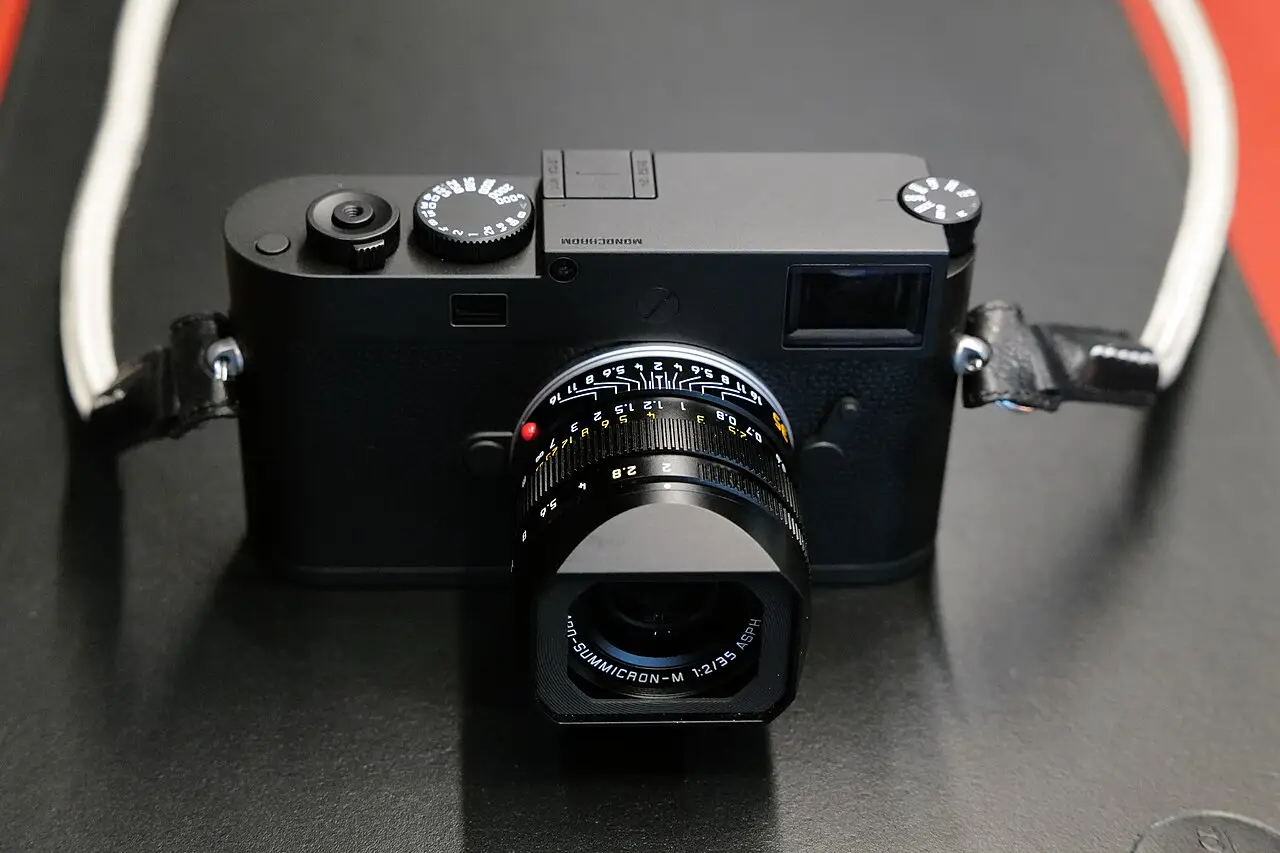
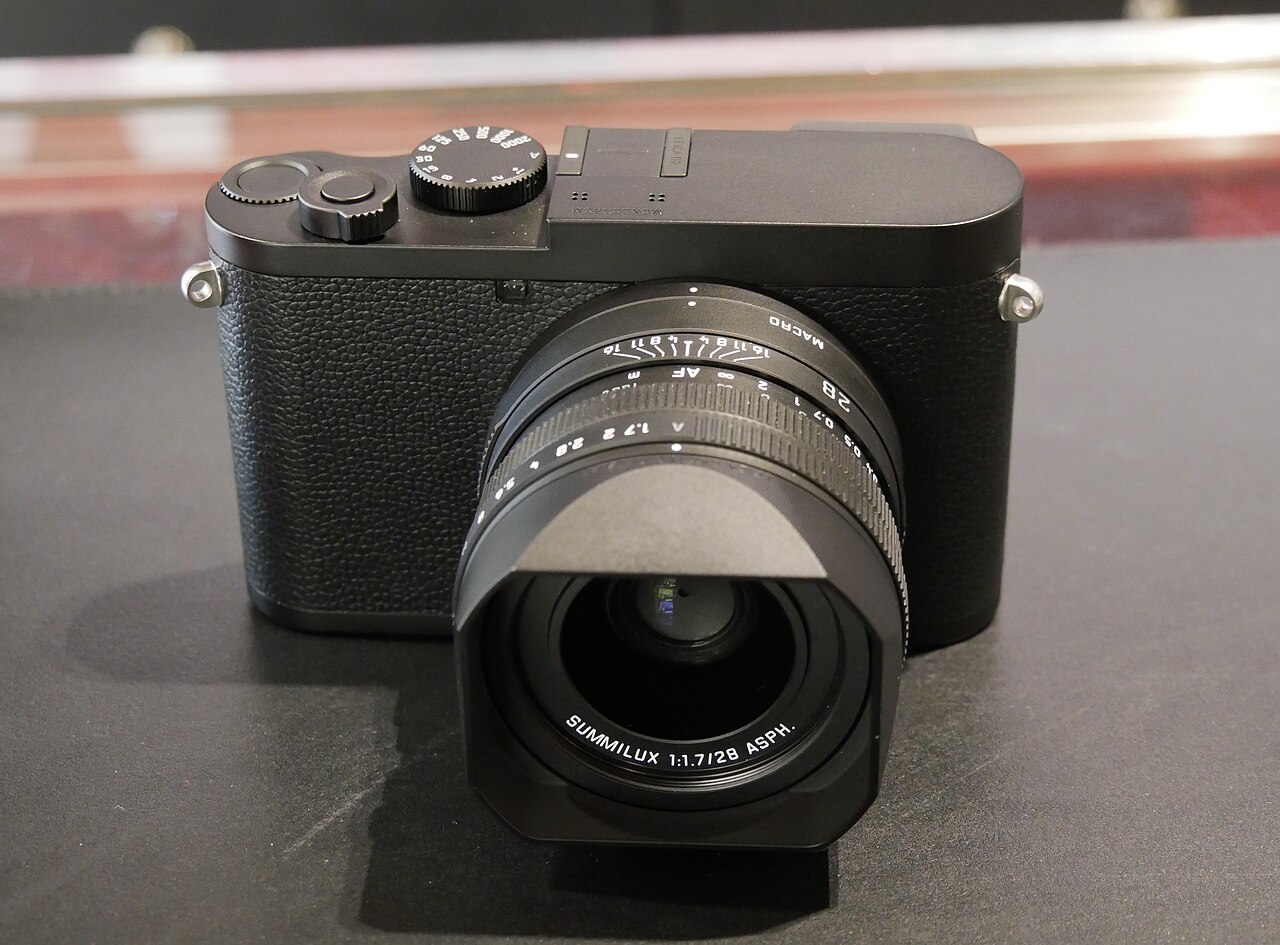
Leica has been the torchbearer here since the original Leica M Monochrom arrived in 2012, the first modern digital camera sold with a dedicated black-and-white sensor. The current flagship, the Leica M11 Monochrom (2023), pairs a 60-megapixel full-frame BSI monochrome sensor with “Triple Resolution” output of 60, 36, or 18MP, a native ISO up to 200,000, and a price around $9,195. The Leica Q2 Monochrom (2020) offers the same idea in a fixed-lens compact with a 47.3MP full-frame sensor.

For a more accessible route, Ricoh’s Pentax K-3 III Monochrome (2023) built a 25.7-megapixel APS-C monochrome DSLR for about $2,199, with no color filter and no anti-aliasing filter, 5.5 stops of in-body stabilization, 4K/30p black-and-white video, and a staggering ISO range that tops out at 1.6 million. Medium-format specialists have had achromatic options too — Phase One has long offered monochrome digital backs for studio and art reproduction work.
Conclusion
A monochrome sensor is the most committed piece of hardware in photography — a camera that refuses color in exchange for maximum detail, sensitivity, and tonal purity. For the overwhelming majority of shooters, a standard Bayer sensor and a well-crafted black-and-white conversion is the smarter, more flexible choice. But if black and white is not an occasional look but the whole point of your photography, a camera with no color filter at all delivers something a conversion can only imitate.
FAQ
What is the difference between a monochrome sensor and a normal camera in black-and-white mode? A normal camera always records color through a Bayer filter and discards it during conversion. A monochrome sensor has no color filters, so every pixel records full luminance directly, with no interpolation and no light loss.
Why are monochrome cameras sharper than color cameras with the same megapixels? Color cameras must reconstruct about two-thirds of each pixel’s color through demosaicing, which softens fine detail. A monochrome sensor skips that step, so each pixel holds real luminance data, yielding visibly more resolving power.
Can a monochrome camera ever shoot color? No. The color information was never captured, so it cannot be recovered in editing. It is a permanent, intentional limitation.
Are monochrome cameras worth the price? Only for dedicated black-and-white photographers who will use the extra sharpness, cleaner high-ISO performance, and lack of moiré. For everyone else, a standard color camera plus software conversion is more flexible and much less expensive.
Related Posts
Eye AF and AI Subject Tracking Explained: How Your Camera Locks Onto Faces, Eyes, and Birds
A decade ago, nailing focus on a moving subject meant…
Sensor Cleaning and Camera Maintenance: The Complete Guide
Every photographer eventually notices them: faint dark spots that appear…

LUTs Explained: How Look-Up Tables Transform Your Video Color
Scroll through any filmmaking forum and you'll keep running into…