You set up your camera on a tripod, attach a long telephoto lens, switch off image stabilization, and fire the shutter with a remote release — and the shot still comes back slightly soft. If the blur appears most around 1/60s and disappears at very fast or very slow shutter speeds, the culprit is usually the shutter itself. The problem is called shutter shock, and the standard fix is a feature found on nearly every modern interchangeable-lens camera: the electronic first-curtain shutter (EFCS).
How a Focal-Plane Shutter Works
Most interchangeable-lens cameras expose the sensor with a focal-plane shutter — two thin curtains that sit directly in front of the sensor. To take a photo, the first (front) curtain slides open to begin the exposure, and a moment later the second (rear) curtain slides across to end it.
At slow shutter speeds you can hear the two curtains as separate clicks. At fast speeds the rear curtain starts chasing the front curtain before it has finished, so the sensor is exposed through a narrow moving slit that sweeps across the frame.
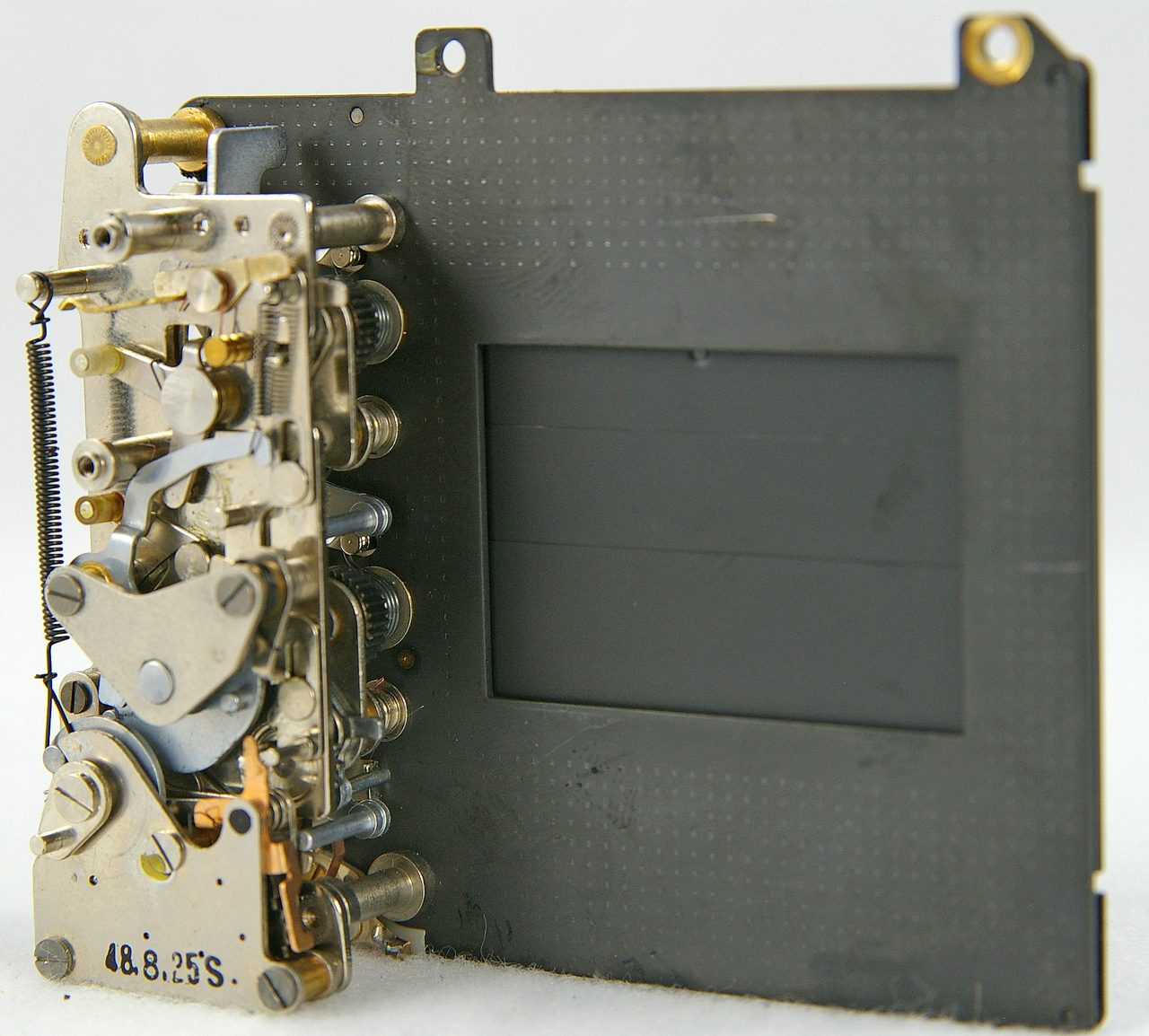
Here is the key detail: on a DSLR shooting through the viewfinder, the shutter starts closed, so the exposure simply begins when the front curtain opens. But on a mirrorless camera (or a DSLR in Live View), the sensor must stay exposed at all times to feed the electronic viewfinder. To take a mechanical photo, the camera has to close the front curtain first, then reopen it to start the exposure, then close the rear curtain. That extra close-and-reopen of the front curtain is what causes the trouble.
What Is Shutter Shock?
Shutter shock is the micro-vibration created when the mechanical shutter — mainly the sudden movement of the front curtain — kicks the camera during the exposure. It shows up as a subtle, uniform softness or a faint double edge, most visible with long lenses, high-resolution sensors, and lightweight bodies.
It is worst at moderate shutter speeds, roughly 1/15s to 1/200s (often peaking near 1/30s–1/100s). Faster than that, the exposure is too brief for the vibration to register; slower than that, the vibration occupies such a tiny fraction of the total exposure that it disappears. This is why the problem feels so inconsistent — your 1/4000s action shots and your 2-second long exposures are both sharp, but the 1/60s portrait is soft.
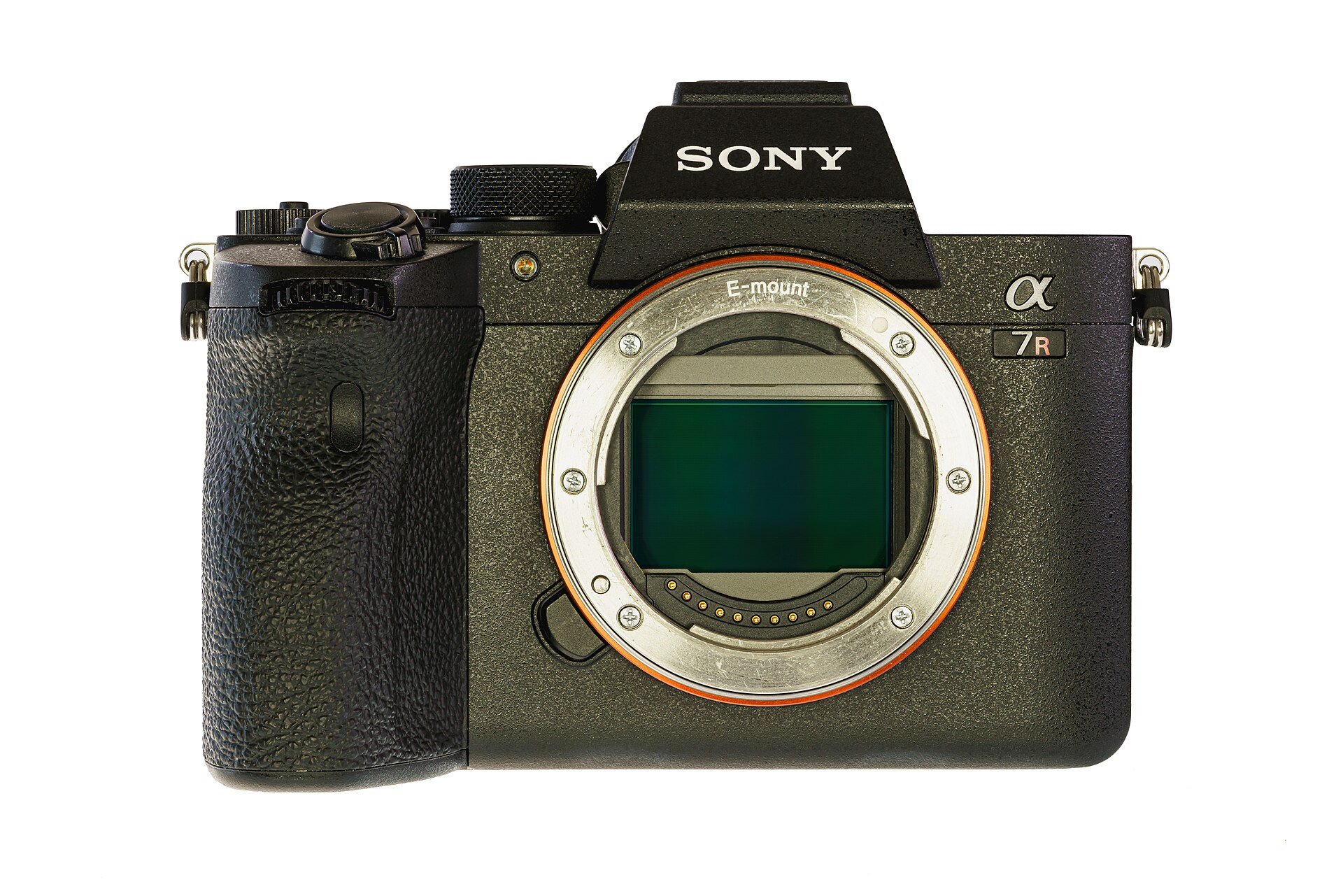
The original Sony a7R is a famous early example: its first-generation shutter was comparatively loud and heavy, and it produced clearly visible shutter shock at common handheld speeds until Sony addressed it in later bodies.
How Electronic First-Curtain Shutter Fixes It
EFCS removes the mechanical front curtain entirely. Because the sensor is already exposed for live view, the camera can begin the exposure electronically — resetting and reading the sensor line by line — and then use only the mechanical rear curtain to end it. No front curtain moves, so the vibration that causes shutter shock never happens in the first place. You hear only a single click.
Different makers use different names: Sony calls it “e-Front Curtain Shutter,” Canon calls it “1st-curtain Electronic Shutter,” and Nikon exposes it in the Shooting menu. On most modern mirrorless bodies it is enabled by default.
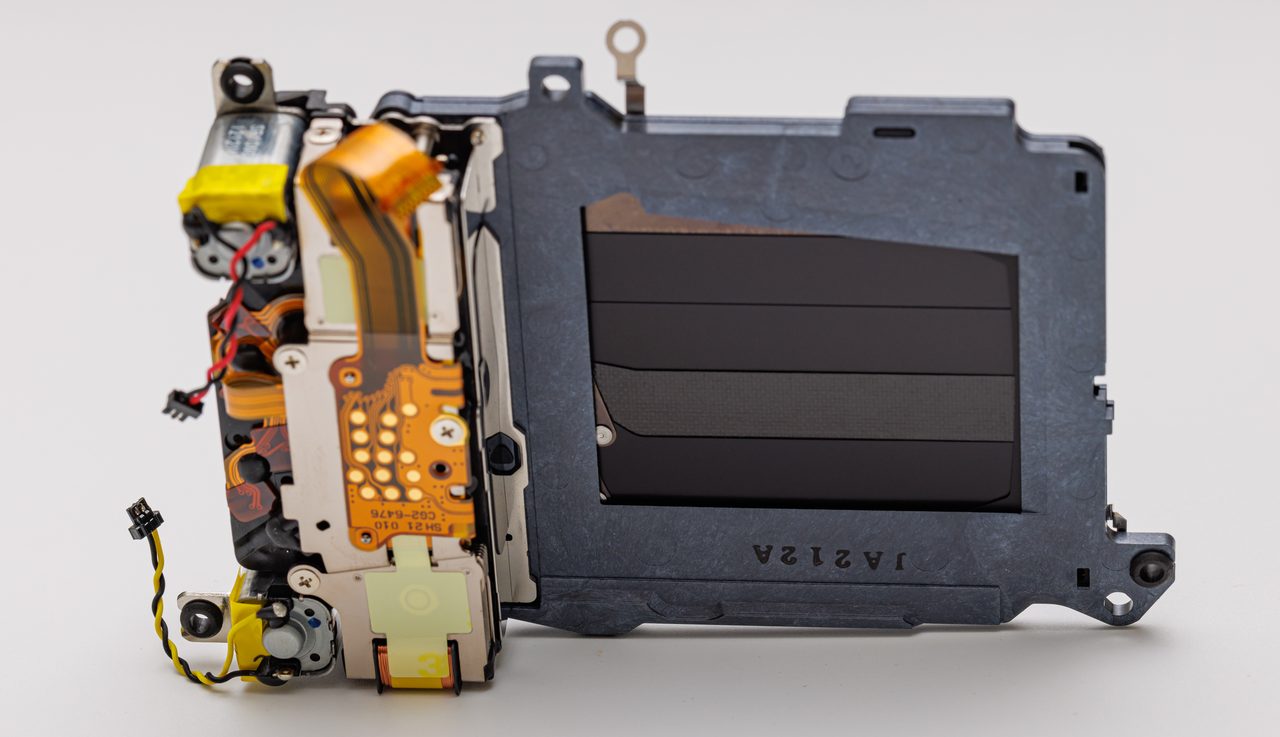
The trade-off is subtle but real. The electronic “first curtain” and the mechanical rear curtain do not sit in the same plane, which effectively tilts the slit the light passes through. At the highest shutter speeds and widest apertures this can cause uneven exposure or bokeh that looks slightly clipped, and under some artificial lighting it can produce banding. That is why most cameras cap EFCS around 1/2000s and why it is not ideal for flash or very fast action.
EFCS vs. Electronic vs. Mechanical Shutter
- Mechanical: both curtains move. Fast and dependable with flash, but can cause shutter shock and adds wear.
- EFCS: electronic start, mechanical end. Vibration-free start and quieter operation, but a limited top speed and minor exposure/bokeh quirks at the extreme.
- Fully electronic: no moving parts, silent, fastest burst speeds — but slower sensor readout can cause rolling-shutter distortion and banding, and flash support is limited.
When to Turn EFCS On or Off
Leave it on (the default) for: landscape, macro, product, architecture, astrophotography, and any tripod or high-resolution work at moderate shutter speeds — the cases where shutter shock is most likely to rob you of sharpness.
Turn it off when: shooting at the fastest shutter speeds (about 1/2000s and up) with fast wide-aperture lenses, photographing fast action or sports, using flash, or when you notice banding under LED or fluorescent lighting.
Conclusion
Shutter shock is easy to misdiagnose because it looks like ordinary misfocus. If your tripod shots are soft only around the middle shutter speeds, EFCS is the first thing to check. Keep it enabled for general shooting, and switch to a mechanical or fully electronic shutter for the few situations — fast lenses, high shutter speeds, and flash — where its quirks outweigh its benefit.
FAQ
Does shutter shock affect mirrorless cameras?
Yes — arguably more. A mirrorless camera must close the front curtain and reopen it to begin a mechanical exposure, which is exactly the motion that causes shutter shock. EFCS eliminates it.
At what shutter speeds is shutter shock worst?
Roughly 1/15s to 1/200s, typically peaking near 1/30s to 1/100s. The exact range varies by camera body and lens.
Should I leave EFCS on all the time?
For most photography, yes. Turn it off for very fast shutter speeds with fast lenses, sports, and flash work.
Is EFCS the same as the silent (electronic) shutter?
No. EFCS still uses a mechanical rear curtain to end the exposure; the fully electronic shutter moves no mechanical parts at all.
Related Posts

Camera Dynamic Range Explained: What Stops Really Mean (and Why They Matter)
Every photographer has hit the same wall: a scene the…
Full-Frame vs APS-C vs Micro Four Thirds: Sensor Sizes Compared
Every digital camera is built around one component that shapes…
High-Resolution Camera Technology 2026: From 200MP Sensors to Computational Photography
In 2026, "more megapixels" no longer means "a better camera."…