Press the shutter on two different cameras and you’ll hear two very different sounds. One gives a crisp mechanical “clack” from deep inside the body; the other makes a soft, almost silent click from the lens itself. The difference is the shutter mechanism — and it matters far more than the noise. It decides how fast you can sync a flash, how much vibration the camera produces, and how fast you can shoot. In this guide we’ll break down the two most common mechanical shutter designs — the focal-plane shutter and the leaf shutter — so you know exactly what each one does well, and where each one falls short.
What a focal-plane shutter is
The focal-plane shutter lives in the camera body, sitting just in front of the sensor — at the “focal plane” that gives it its name. It’s built from two curtains, usually thin metal or carbon-fibre blades. When you press the shutter, the first curtain opens to begin the exposure, and the second curtain follows to end it.
At slow shutter speeds the first curtain fully opens, the whole sensor sits exposed for a moment, then the second curtain closes. But above a certain speed, the second curtain starts closing before the first has finished opening. Instead of exposing the whole sensor at once, the two curtains travel across it as a narrow moving slit, exposing the frame strip by strip.


This is the design that dominates interchangeable-lens cameras. Nearly every DSLR and most mirrorless bodies use a focal-plane shutter, because putting the shutter in the body keeps lenses simpler, smaller, and cheaper.
What a leaf shutter is
A leaf shutter takes the opposite approach: it lives inside the lens, usually right next to the aperture. It’s built from a set of overlapping metal blades, much like the aperture diaphragm itself. The blades spring open from the center to start the exposure and close back toward the center to end it.
The defining feature is that a leaf shutter exposes the whole frame simultaneously. There’s no slit scanning across the sensor — the blades open, the entire frame is illuminated at once, and the blades close. That single mechanical fact drives almost everything a leaf shutter is good at.
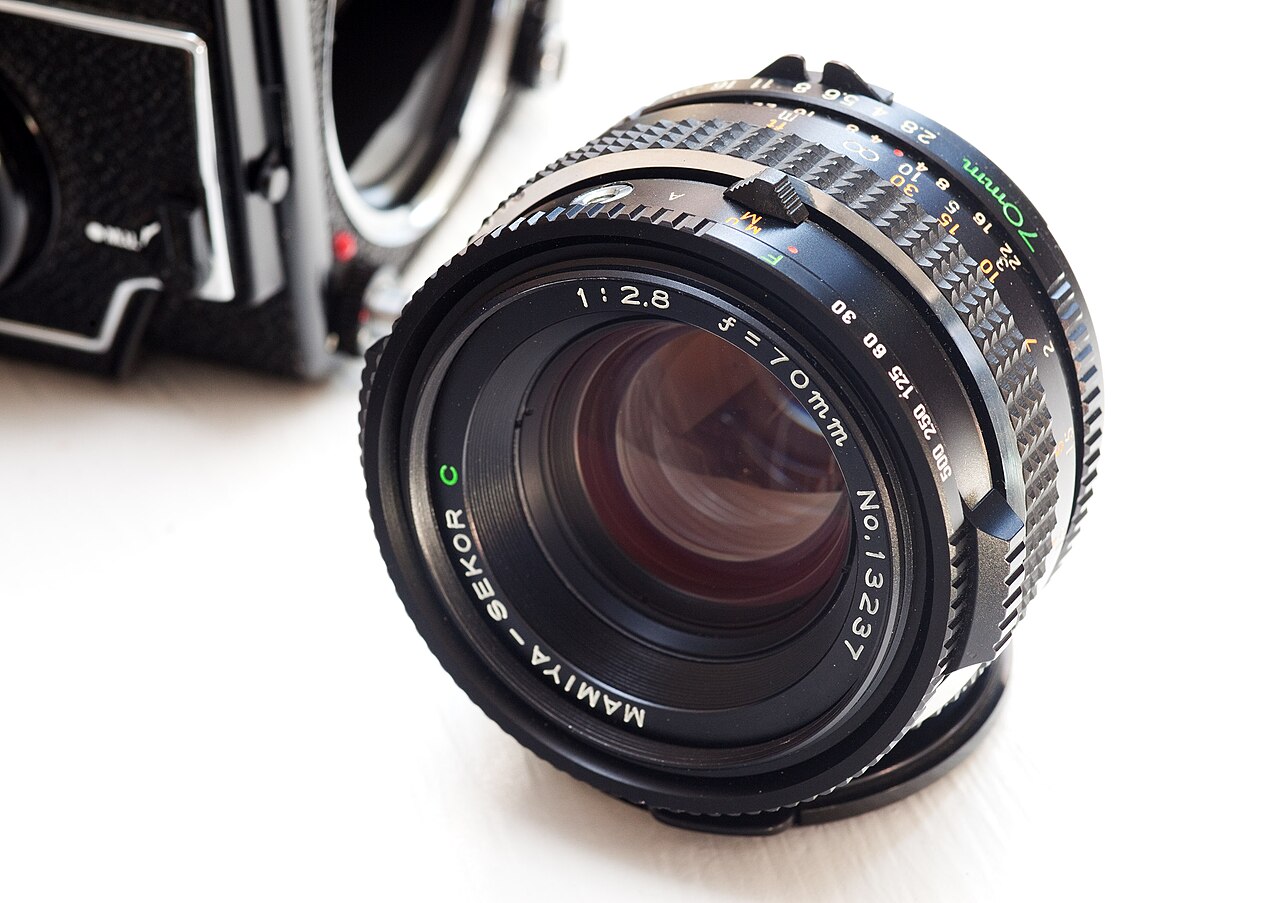

Leaf shutters show up in fixed-lens cameras like the Fujifilm X100 series, and in medium-format systems where lenses carry their own shutters, such as Hasselblad’s XCD lens range and Phase One’s leaf-shutter lenses.
The flash sync speed difference (the big one)
Here’s where the two designs really diverge. A flash fires in one extremely brief burst. For that burst to light the whole frame evenly, the entire sensor has to be uncovered at the exact moment the flash fires.
A leaf shutter has no problem with this. Because it exposes the whole frame at once, it can sync with flash at any shutter speed its mechanism supports — commonly up to 1/1000s or 1/2000s, and in some modern Hasselblad XCD lenses up to 1/4000s. That’s why Hasselblad advertises “flash synchronisation at all speeds” for its XCD lenses.
A focal-plane shutter can’t do that at high speeds. Above its sync speed it exposes the frame as a moving slit, so only a strip of the sensor is uncovered at any instant. Fire a flash then, and you get a dark band across the image. That’s why focal-plane cameras have a sync speed limit — typically 1/200s or 1/250s, though a few bodies reach 1/320s. Shoot with flash above that, and you’ll see the band.
Top speed, HSS, and the workaround
The focal-plane shutter wins on raw speed. Its curtains can move extremely fast, giving top mechanical speeds of 1/8000s and beyond — useful for shooting wide open in bright light or freezing fast motion. Leaf shutters top out lower, usually between 1/1000s and 1/4000s, because those blades simply can’t open and close as quickly as a light curtain.
For focal-plane users who want flash above sync speed, the industry built high-speed sync, or HSS. Instead of firing once, the flash emits a rapid series of pulses that effectively acts as continuous light as the slit travels across the frame. It works, but at a real cost: HSS dramatically reduces the flash’s effective power, so you need more light or less distance to get the same exposure. A leaf shutter’s single full-power burst is far more efficient.
Vibration, size, and cost
Leaf shutters are also quieter and produce less vibration. Their small blades carry far less mass than two large curtains slamming across the frame, which helps when shooting on a tripod at long focal lengths or doing macro work. That quietness is part of why the Fujifilm X100 line is so popular for discreet street shooting.
The trade-off is in the lenses. Because a leaf shutter lives in each lens, every leaf-shutter lens has to carry its own shutter mechanism. That makes the lenses more complex, heavier, and more expensive than an equivalent focal-plane design — one reason medium-format systems like Hasselblad cost what they do.
The global shutter wildcard
There’s a newer player that scrambles the comparison: the global shutter. This is a fully electronic sensor that exposes every pixel over the same instant, with no moving curtains at all — effectively a leaf shutter’s whole-frame-together behavior, but achieved electronically at any speed. The Sony a9 III was the first full-frame interchangeable-lens camera built around a global shutter, and it can sync flash across its entire shutter range, up to 1/80000s.
Global shutter sensors still carry trade-offs in cost and image quality, but they point toward a future where the leaf shutter’s signature advantage is no longer unique to leaf shutters.
Conclusion
The focal-plane shutter and the leaf shutter are two solutions to the same problem — controlling how long light reaches the sensor — and each wins in a different arena. Focal-plane shutters give you blazing top speeds and cheap, compact lenses, at the cost of a low flash sync ceiling. Leaf shutters sacrifice top speed and lens simplicity to give you full-power flash sync at high speeds, plus quieter, steadier operation. If you shoot studio or outdoor flash, that leaf-shutter sync speed is the feature that changes how you work. For almost everyone else, the focal-plane shutter — and increasingly, the electronic global shutter — carries the day.
FAQ
What is a flash sync speed? It’s the fastest shutter speed at which the entire sensor is uncovered when the flash fires. Above it, on a focal-plane shutter, the moving slit blocks part of the frame and you get a black band across the image.
Why can leaf shutters sync flash at higher speeds? Because they expose the whole frame at once — there’s no moving slit — so the flash illuminates the entire sensor no matter the shutter speed.
Do I need a leaf-shutter camera? Only if you regularly use flash outdoors in bright light or want to overpower the sun at wide apertures. Most photographers get by fine with a focal-plane shutter and HSS.
Is a global shutter the same as a leaf shutter? Not mechanically — a global shutter is electronic, with no moving blades — but it achieves the same whole-frame-at-once benefit and can sync flash at any speed.
Related Posts

Global Shutter vs Rolling Shutter: What’s the Difference and Why It Matters
Every digital camera turns light into an image using a…

Phase Detection Autofocus Explained: How Your Camera Locks Focus in Milliseconds
Press the shutter halfway and a modern camera can lock…
How Autofocus Works: Phase Detection vs Contrast Detection
Every time you half-press the shutter button, your camera has…