When Sony unveiled the Venice 2 cinema camera, it made one of the most flexible high-end capture systems in the industry. Now the company has finally revealed full specifications and pricing for the platform’s wildest accessory yet: the Rialto 65, a replaceable sensor module that swaps the camera’s full-frame chip for one measuring 53.75 × 35.83 mm — roughly 2.2 times the imaging area. Priced at $80,000 for the sensor block alone, it is aimed squarely at the very top of Hollywood production, where the appetite for “more sensor” has traditionally meant renting an Arri Alexa 65.
What is the Sony Rialto 65?
The Rialto 65 is not a standalone camera. It is a sensor module — officially the CBK-6510XS — that replaces the standard full-frame sensor inside a Sony Venice 2 body. Sony first teased the project earlier in 2026, and has now confirmed the complete specification, the price, and a tentative launch window. The name nods to the 65 mm class of digital cinema sensors, a format with deep roots in filmmaking. Although the sensor’s diagonal comes up just short of a true 65 mm, it occupies the space between full-frame and IMAX-sized 70 mm capture.
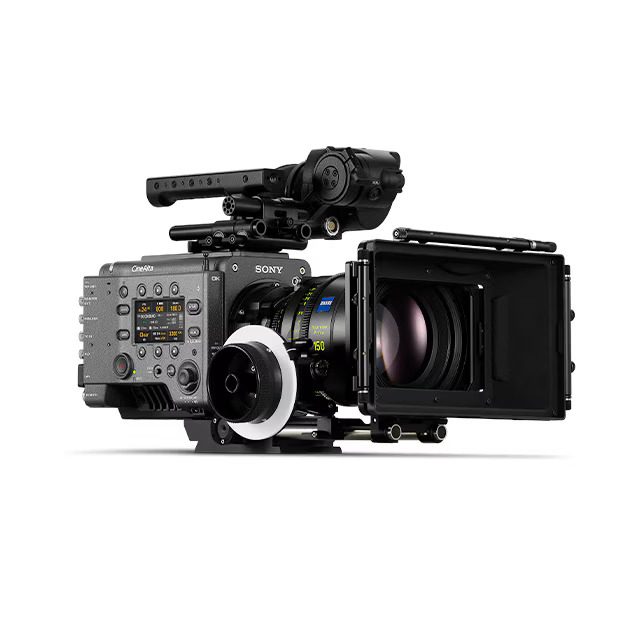
A sensor 2.2× larger than full frame
Full-frame has long been treated as the benchmark in digital imaging, but the Rialto 65 leaves it behind. Its 53.75 × 35.83 mm sensor covers a total area of 1,926 mm², versus the 840 mm² of the Venice 2’s standard full-frame sensor — about 2.2 times the surface area. More area means larger photosites, a cleaner signal-to-noise ratio, and shallower depth of field at equivalent framing. Sony describes it as “the industry’s largest image sensor” in the digital realm, though it remains smaller than the full 70 mm IMAX film frame used by filmmakers such as Christopher Nolan.
Resolution, frame rates, and crop modes
Paired with a Venice 2 body, the Rialto 65 records 9.6K open gate in 3:2 (or 1.5:1) at up to 30 frames per second, and 9.6K at a 2.20:1 widescreen ratio at up to 50p — though the fastest frame rates are not available in the highest-quality Raw X-OCN XT codec. Sony is also planning several additional readout modes, delivered later via firmware update: 9.6K 17:9 at up to 40p, 6.4K 3:2 at up to 60p from a full-frame-sized crop, and 4.3K 17:9 at up to 100p from an APS-C crop. That flexibility means a single sensor block can behave like a large-format, full-frame, or Super 35-style camera depending on the production’s needs.
No lens mount — and a detachable design
One of the most unusual decisions is what Sony deliberately left out: a lens mount. Lenses with an image circle large enough to cover a 65 mm-class sensor are comparatively rare and varied, so Sony ships the Rialto 65 with no mount at all — production houses attach a third-party mount matched to the glass they plan to use. The sensor block can also be detached from the body and run on a cable, letting operators fit the imaging head into tight spaces. A 4.5 m cable is included, while a longer 12 m cable adds $9,000. Sony is also producing a set of drop-in ND filters with electronic contacts that automatically tell the camera which filter is installed.
How it compares to the Arri Alexa 65
The Rialto 65’s natural rival is the Arri Alexa 65, the 65 mm digital cinema camera that has dominated top-tier productions for a decade — but the Alexa 65 is rental-only, so crews cannot buy one outright. Sony’s approach is different: it sells the sensor block and the Venice 2 body (roughly $60,000–70,000), giving production companies and rental houses the option to own the system. Both cameras trade on the same fundamental idea — a sensor far larger than full frame that delivers a high-resolution, low-noise image with a distinctive shallow-depth-of-field character.
Price, availability, and who it is for
At $80,000 for the sensor module alone — before the Venice 2 body, a lens mount, and lenses — the Rialto 65 is clearly not a consumer product, and it was never meant to be. Sony says it is tentatively planning to ship the module in the first half of 2027, and the majority of units are expected to end up at rental houses rather than with individual cinematographers.
The bottom line
The Rialto 65 is as much a statement of intent as a product. It extends the Venice 2 platform beyond full frame into large-format territory and gives cinematographers a purchasable alternative to rental-only 65 mm systems. Whether it reshapes how big-budget productions are shot remains to be seen, but it confirms that the “bigger sensor” race is alive and well at the top of the market.
FAQ
Is the Sony Rialto 65 a standalone camera?
No. It is a sensor module that replaces the sensor inside a Sony Venice 2 cinema camera. You still need the Venice 2 body and a lens mount to use it.
How much bigger is the Rialto 65 than full frame?
Its sensor measures 53.75 × 35.83 mm (1,926 mm²), roughly 2.2 times the area of a standard full-frame sensor.
How much does the Rialto 65 cost?
$80,000 for the sensor block alone. The Venice 2 body is additional, at roughly $60,000–70,000.
When will the Rialto 65 be available?
Sony is tentatively planning to launch it in the first half of 2027.
Related Posts
Sigma 16-300mm f/3.5-6.7 DC OS: The World’s First 18.8x Zoom for APS-C
Sigma has pushed the all-in-one superzoom further than ever before.…
Tamron 16-50mm f/2.8 A Announced: A Fast, Compact Standard Zoom for APS-C Mirrorless
Tamron has announced the 16-50mm F2.8 A (Model B091), a…
Canon EOS R1 AI Autofocus Firmware Update: Action Priority AF Adds American Football
Canon has pushed a free firmware update to its flagship…