Disclosure: This article contains affiliate links. If you buy through them, we may earn a commission at no extra cost to you.
The Sony a7 V (model ILCE-7M5) is the fifth generation of Sony’s best-selling full-frame line, and it is the camera most reviewers now call the best all-around mirrorless body you can buy. It pairs a new 33-megapixel partially-stacked sensor with Sony’s most advanced AI autofocus yet — at a price that lands at roughly half the flagship a1 II.
What’s New in the Sony a7 V
The a7 V is not a mild refresh. The headline changes are:
- A new 33.0-megapixel full-frame partially-stacked Exmor RS CMOS sensor (back-illuminated), with high-speed circuitry above and below the sensing layer.
- The BIONZ XR2 processor with an integrated AI processing unit.
- Sensor readout roughly 4.5x faster than the a7 IV, enabling a 1/16000s maximum shutter speed and blackout-free bursts at up to 30 fps.
- A Pre-Capture mode that buffers frames before you fully press the shutter.
- AI Smart Reframe for automated subject-tracking zooms in video.
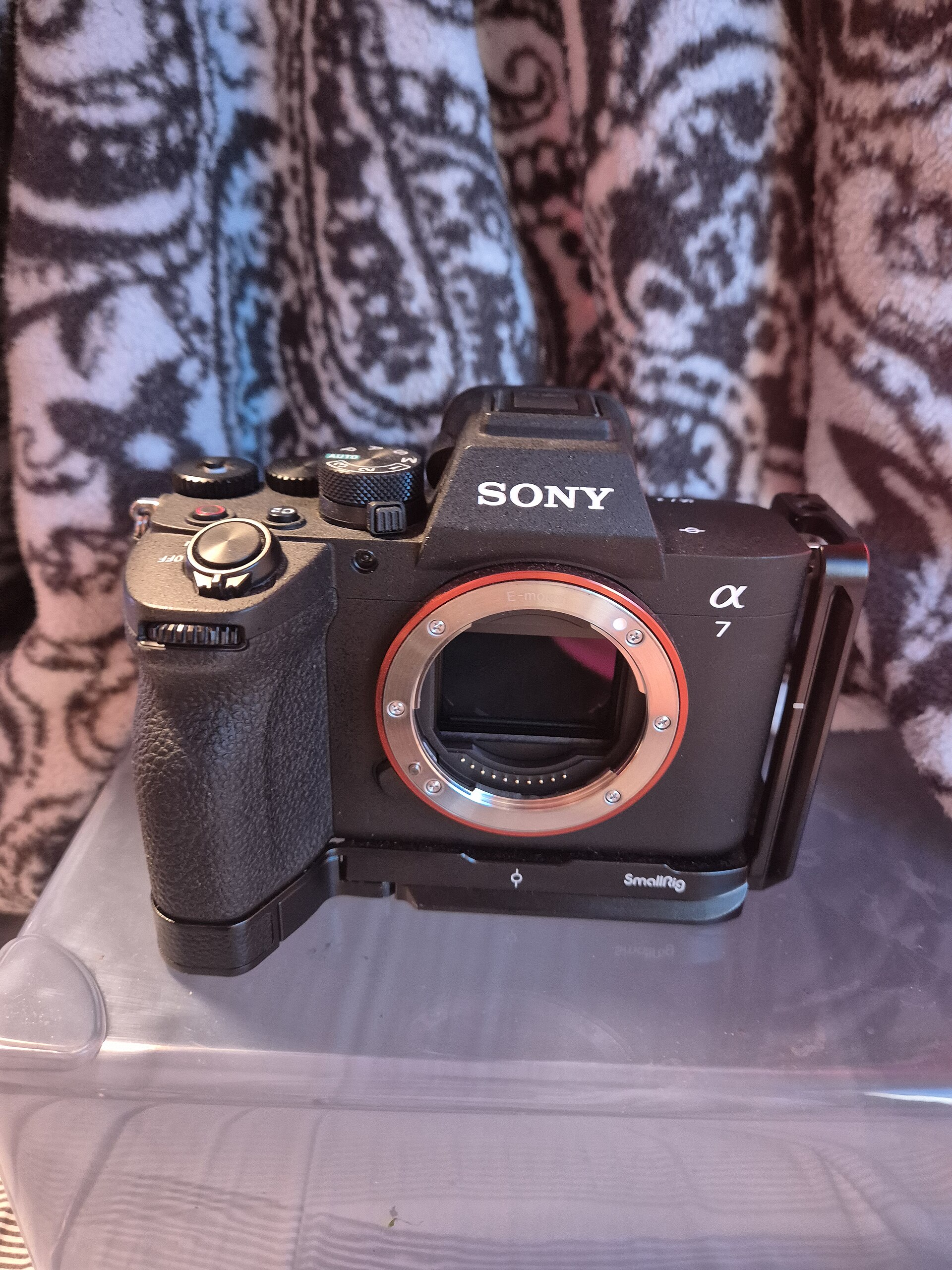
Image Quality: A 33MP Partially-Stacked Sensor
The partially-stacked design is the key upgrade. It gives the a7 V faster readout than the a7 IV without the cost of a fully stacked sensor, which translates directly into less rolling shutter and higher burst rates. Sony rates the sensor for up to 16 stops of dynamic range, and early reviews back that up with excellent highlight recovery and smooth shadow gradations.
High-ISO performance is a strong point too. Testers report clean, detailed files well into the mid-to-high ISO range, which makes the a7 V a genuinely strong low-light and event camera — not just a spec-sheet camera.
Autofocus & Speed: AI That Rarely Misses
The AI-powered Real-time Tracking is the most capable Sony has put in the a7 series. It recognizes humans, animals, birds, insects, cars, trains and planes, and it re-acquires subjects quickly even after they leave the frame. With up to 60 AF/AE calculations per second, the a7 V holds focus on fast, unpredictable action.
New XS to XL focus area sizes give you finer control — the extra-small spot is useful when foreground objects like branches sit between you and your subject. Combined with blackout-free 30 fps shooting and Pre-Capture, this is a camera that genuinely makes wildlife and sports work feel forgiving.
Video: Sharper 4K, With One Caveat
The a7 V tops out at 4K rather than 6K or 8K — that is its one real limitation versus some rivals. But the 4K it produces is excellent: 4K 60p is oversampled from 7K with full pixel readout and no binning, so footage looks notably sharper than a native 4K sensor. There is also 4K 120p for slow motion, albeit with a 1.5x APS-C crop.
For color work, the a7 V supports 10-bit recording and Sony’s S-Log3, S-Cinetone and HLG profiles, so it slots cleanly into a professional grading pipeline. If you primarily shoot video and need 6K or 8K, look elsewhere — but for a hybrid stills-and-video shooter, this 4K is more than enough.
Design, Battery & Handling
The a7 V keeps the familiar a7-series form factor: a magnesium-alloy body weighing about 610 g (695 g with battery and card) and measuring 130.3 x 96.4 x 82.4 mm. It runs on the proven NP-FZ100 battery, good for roughly 630 shots per charge — comfortably a full day for most photographers.
In-body stabilization is rated at up to 7.5 stops in the center of the frame and 6.5 stops toward the edges, which makes hand-held slow-shutter work far more reliable. The E-mount also opens up one of the largest lens ecosystems in mirrorless, including strong third-party options.
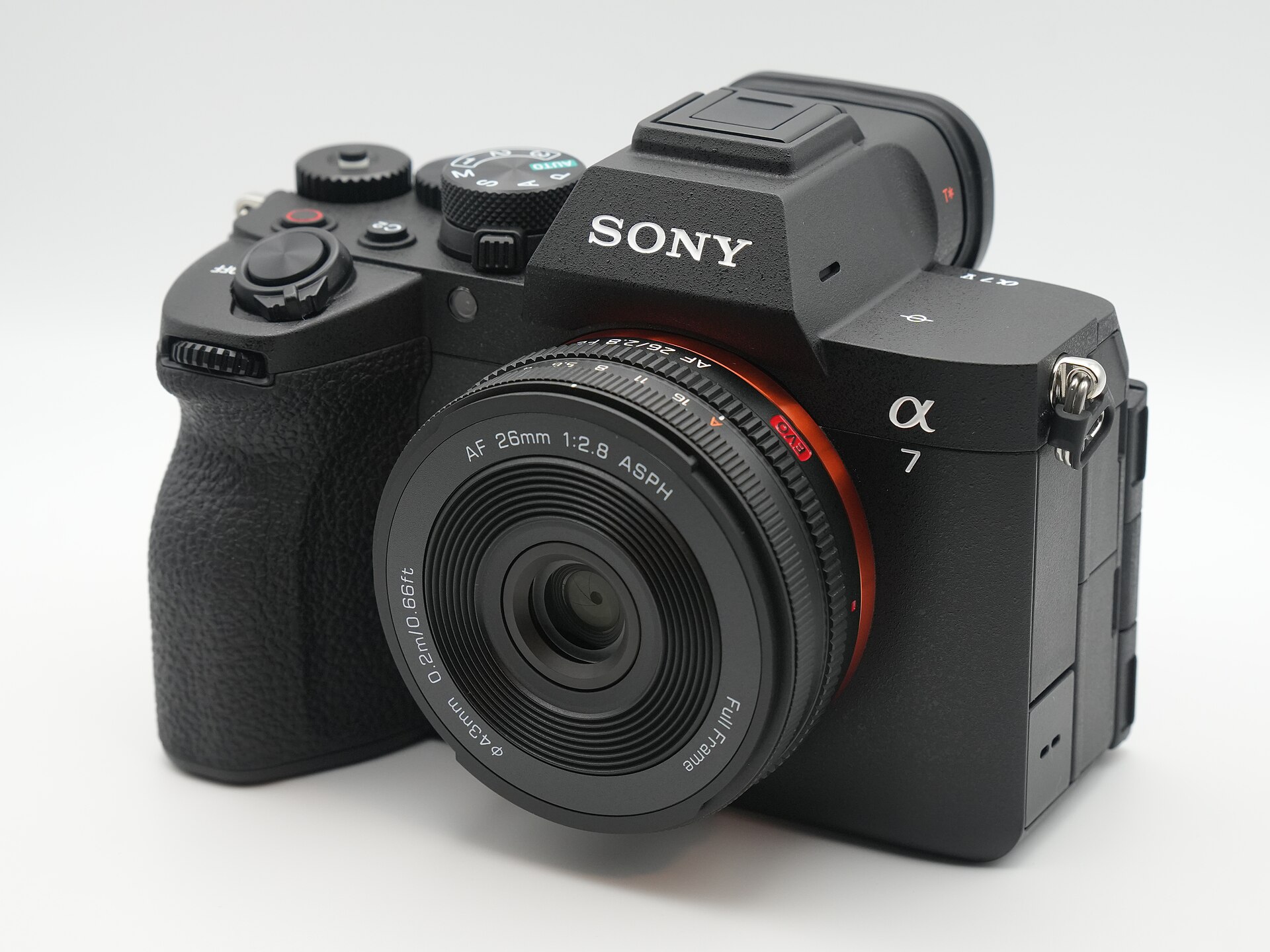
Sony a7 V Full Specifications
| Specification | Detail |
|---|---|
| Model | Sony Alpha a7 V (ILCE-7M5) |
| Lens mount | Sony E-mount (full-frame and APS-C) |
| Sensor | 35 mm full-frame (35.9 × 23.9 mm) Exmor RS CMOS, partially stacked, back-illuminated |
| Effective pixels | 33.0 MP (stills) / 27.6 MP (video); 35.7 MP total |
| Processor | BIONZ XR2 with integrated AI processing unit |
| Image stabilization | 5-axis sensor-shift, up to 7.5 stops (center) / 6.5 stops (periphery) |
| Autofocus | Fast Hybrid AF, 759 phase-detection points; EV -4 to EV 20 |
| Subject recognition | Human, Animal, Bird, Insect, Car, Train, Airplane |
| Continuous shooting | Up to 30 fps (electronic shutter), 10 fps (mechanical) |
| Shutter speed | 1/16000–30 s (electronic), 1/8000–30 s (mechanical), Bulb |
| Flash sync | 1/250 s (full-frame), 1/320 s (APS-C) |
| ISO range | ISO 100–51200 (expandable 50–204800 stills) |
| Viewfinder | 0.5″ Quad-VGA OLED EVF, 3.69M dots, 0.78x magnification, 120 fps |
| LCD monitor | 3.2″ vari-angle TFT touchscreen, 2.1M dots |
| Video recording | 4K 60p (oversampled from 7K), 4K 120p (1.5x crop); 10-bit 4:2:2; XAVC S / HS / S-I |
| Color profiles | S-Log3, S-Cinetone, HLG |
| Card slots | Slot 1: CFexpress Type A + SD (UHS-I/II); Slot 2: SD (UHS-I/II) |
| Ports | 2× USB-C (USB 3.2 10 Gbps + USB 2.0), HDMI Type-A, 3.5 mm mic, 3.5 mm headphone, Multi Interface Shoe |
| Wireless | Wi-Fi 6 (802.11ax, 2.4/5/6 GHz), Bluetooth 5.3 |
| Battery | NP-FZ100; approx. 630 shots (EVF) / 750 shots (LCD) |
| Dimensions | 130.3 × 96.4 × 82.4 mm |
| Weight | 610 g body only / 695 g with battery and card |
| Body material | Magnesium alloy |
Sony a7 V vs Canon R6 Mark II vs Nikon Z6 III
All three sit in the same mid-tier full-frame bracket, but they make different trade-offs. Here is how they stack up on paper:
| Spec | Sony a7 V | Canon EOS R6 Mark II | Nikon Z6 III |
|---|---|---|---|
| Sensor | 33 MP partially-stacked BSI | 24.2 MP CMOS | 24.5 MP partially-stacked (world’s first) |
| Burst (electronic) | 30 fps | 40 fps | 20 fps full-frame (up to 120 fps crop) |
| Max video | 4K 60p (7K oversampled), 4K 120p (crop) | 4K 60p (6K oversampled), 6K RAW out | 6K 60p RAW internal, 4K 120p, FHD 240p |
| IBIS | 7.5 stops | 8 stops | 8 stops |
| Card slots | CFexpress Type A + SD, SD | Dual SD UHS-II | CFexpress Type B + SD |
| Weight (body) | 610 g | 670 g | ~670 g |
| Price (body) | $2,898 | $2,499 | $2,499 |
The a7 V wins on resolution and pure stills quality, the R6 Mark II counters with a higher 40 fps burst and 8-stop IBIS, and the Z6 III is the video specialist with internal 6K RAW. For a balanced hybrid shooter, the a7 V’s combination of 33 MP detail, class-leading AI autofocus and the huge E-mount lens library is the most compelling package of the three.
Verdict
The Sony a7 V is the best all-around full-frame camera Sony has ever made — reviewers at WIRED scored it 9/10 and described it as offering 95% of the flagship a1 II for half the price, while DPReview awarded it a 91% overall score. It carries a 4.7/5 rating from early Amazon buyers.
It is the right buy if you want class-leading autofocus, a versatile 33MP sensor, and strong 4K video in one body. The only real reasons to look elsewhere are a need for 6K/8K video or a preference for another brand’s lens system.
What Amazon Buyers Say
The a7 V holds a 4.7/5 rating from 109 Amazon customers at the time of writing. Here is what a few verified purchasers had to say:
| Rating | Share of reviews |
|---|---|
| ★★★★★ 5 star | 87% |
| ★★★★☆ 4 star | 5% |
| ★★★☆☆ 3 star | 2% |
| ★★☆☆☆ 2 star | 2% |
| ★☆☆☆☆ 1 star | 4% |
“Huge upgrade, incredible video quality, and finally feels ‘complete’. The autofocus is fast and reliable, even in indoor lighting, and the footage looks amazing straight out of the camera.”
“33 MP sensor, so excellent resolution… Video is amazing with up to 4K 120 fps… It has the latest autofocus which is amazingly fast and is good at locking on the eye of a subject, person, animal or insect.”
“The Auto Focus is superb and spot on. I own a Canon R5, Sony A1 and Nikon Z8… The A7V is really top notch. This is the camera to get for the price, unless you want to pay more than double for the A1II or A9III.”
“The image quality is outstanding. The full-frame sensor delivers beautiful detail, rich dynamic range, clean low-light performance… a true workhorse for filmmakers.”
“The rear screen hands down exceeded my expectations… The AI tracking is definitely improved… All in all, I give it 5 stars. The speed of the new sensor, the improved LCD screen and the long list of other upgrades make it worthy.”
“I had an A7 III that lasted me six years… I’m disappointed that it sometimes loses face focus and focuses on whatever is in front of it. The battery also seems to last less, and for the price it’s funny it doesn’t even include a charger.”
“The product arrived already opened, with signs a lens had been mounted, and the warranty card was missing from the box.”
Read all customer reviews on Amazon →
FAQ
Is the Sony a7 V worth it in 2026?
Yes. It is widely considered the best full-frame camera for most people, delivering flagship-level autofocus and image quality at a mid-tier price.
What is the difference between the a7 IV and the a7 V?
The a7 V adds a 33MP partially-stacked sensor, a BIONZ XR2 AI processor, faster readout, blackout-free 30 fps bursts, Pre-Capture and improved subject recognition.
Does the Sony a7 V shoot 4K 120p?
Yes, at a 1.5x APS-C crop. Full-width recording is 4K 60p oversampled from 7K.
What lenses should I pair with the a7 V?
A fast standard zoom like a 24-70mm f/2.8 or 24-105mm f/4 covers most shooting, with a 35mm or 50mm prime for low light and portraits.
Related Posts

Best Cameras for Wildlife and Sports Photography (2025 Buying Guide)
Wildlife and sports photography is the ultimate stress test for…
Best Cameras for Video and Vlogging in 2025: A Complete Buying Guide
If you are starting a YouTube channel, shooting short-form Reels…
Fujifilm X100VI Review (2026): The Viral Compact That’s Still Worth the Hype
Disclosure: This article contains affiliate links. If you buy through…