Almost every photographer has watched a scene lose its detail in an instant — a bright sky flaring to pure white while the foreground falls into shadow. The culprit is a hard physical limit built into every image sensor: each pixel can hold only so much light before it “clips” and throws the excess away. In 2026, a sensor technology called LOFIC is attacking that limit directly. Sony’s new LYTIA L910 is the first mobile image sensor built around it, promising up to 100 dB of dynamic range from a single exposure. Here’s what LOFIC is, how it works, and why it matters for the next generation of phone cameras.

The Core Problem: When a Pixel Overflows
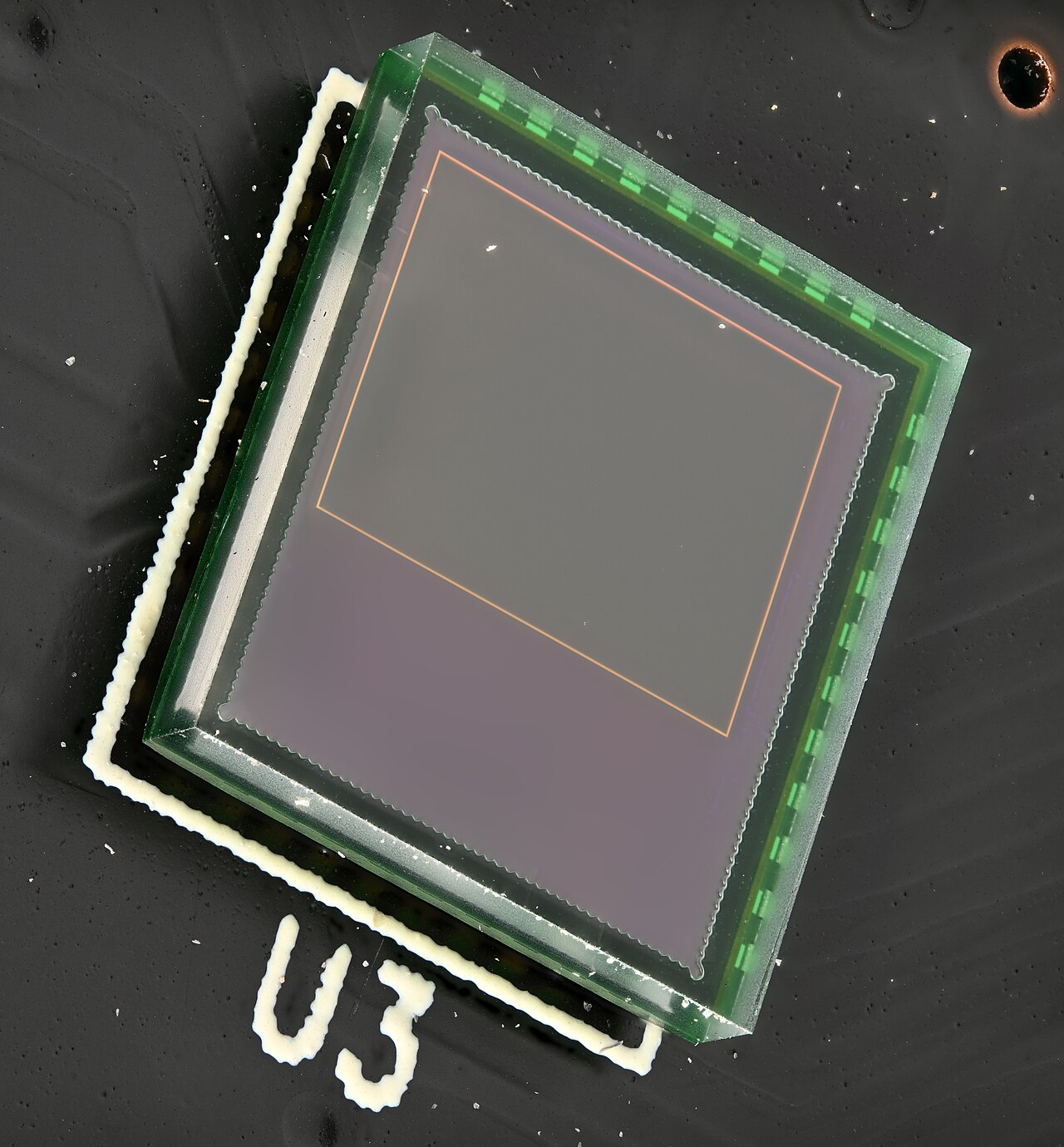
A camera pixel is essentially a tiny well that fills with electrons as light strikes it. Photons knock electrons free inside the photodiode, and the sensor counts them to determine how bright that spot is. But the well has a fixed capacity — what sensor engineers call full-well capacity, or saturation. When a bright highlight fills the well completely, the extra electrons have nowhere to go. They spill over into neighboring pixels or are simply discarded, and the sensor records that spot as pure white with no texture. Photographers know the result as blown highlights.
Dynamic range measures the gap between the darkest shadow and the brightest highlight a sensor can capture in a single frame, quoted in stops or decibels (dB). Every stop is a doubling of light. A typical smartphone sensor manages roughly 12 stops in one exposure and leans on multi-frame HDR — firing several shots at different exposures and merging them — to approximate more. That is exactly where LOFIC changes the game.
What Is LOFIC?
LOFIC stands for Lateral Overflow Integration Capacitor, and the idea is elegantly simple. In a conventional pixel, once the photodiode’s well is full, the overflow charge is lost. LOFIC adds a small, high-density capacitor right next to each photodiode, connected so that when the well overflows, the surplus electrons flow laterally into the capacitor instead of being thrown away.
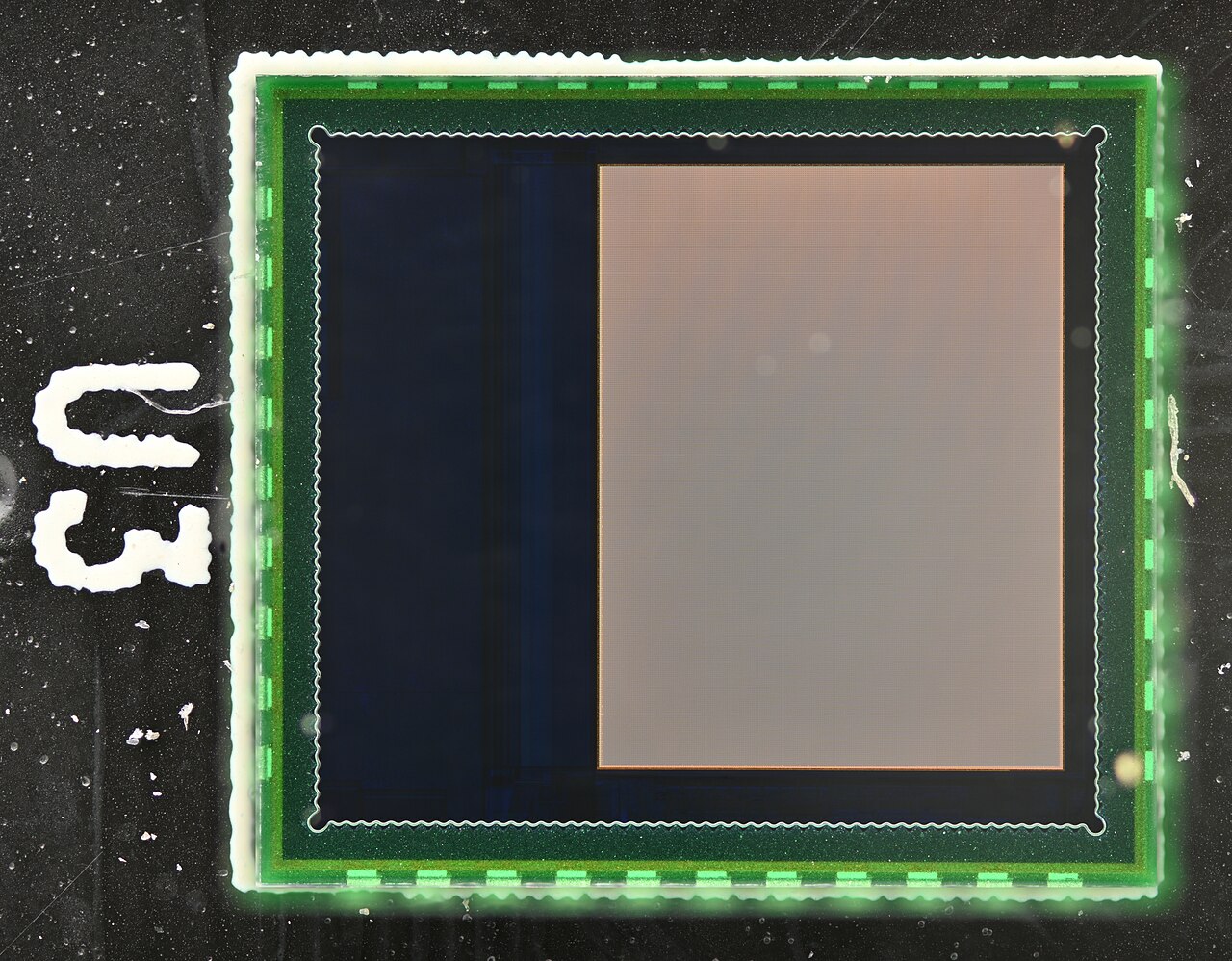

Think of it as adding an overflow tank to a bucket. A normal pixel is a bucket that spills over when full; a LOFIC pixel is a bucket with a side reservoir that catches the spill. The result is a dramatically higher effective saturation capacity — the pixel can hold far more light before it clips. Highlights that would normally burn out are preserved, captured in the same instant as the shadows rather than in a separate, later exposure.
Single-Exposure HDR vs Multi-Frame Stitching
Why does capturing everything in one shot matter? Multi-frame HDR has real weaknesses. Because it merges several exposures taken a fraction of a second apart, anything that moves — a waving hand, a passing car, leaves in the wind — can produce ghosting or doubled edges. Under flickering artificial light such as LEDs and fluorescent tubes, the separate frames can have different brightness, creating visible banding. And the burst-and-merge process itself takes time, which makes it awkward for video.
A LOFIC sensor sidesteps all of this. It captures the full highlight-to-shadow range in a single exposure, so there is nothing to merge and no chance of ghosting or flicker. That also makes high-dynamic-range video practical — something frame-merged HDR has always struggled with.
The Sony LYTIA L910: LOFIC’s Mobile Debut
Sony Semiconductor Solutions announced the LYTIA L910 on June 17, 2026 — the first sensor in its LYTIA lineup to use a LOFIC structure. The headline number is 100 dB of dynamic range from a single exposure, which works out to roughly 16.6 stops. For context, high-end smartphone sensors typically reach about 80–85 dB, while a good full-frame mirrorless camera sits around 15 stops — so the L910 pushes a phone-class sensor into territory long reserved for much larger cameras.
The L910 is a 1/1.28-type stacked CMOS sensor (about 12.49 mm diagonal) with roughly 50 effective megapixels and 1.22 µm pixels behind a Quad Bayer color filter. It pairs LOFIC with two supporting technologies: Triple Conversion Gain HDR (TCG-HDR), which reads a single exposure at three different conversion gains, and Ultra High Conversion Gain (UHCG) circuitry that Sony says cuts random noise by roughly 30 percent for cleaner low-light shadows. On the video side it delivers 4K HDR at 60 frames per second, and it can shoot 50-megapixel stills at 30 fps or 12.5-megapixel stills at up to 120 fps. Mass production is scheduled for summer 2026, so the first phones using it could arrive before the end of the year.
Who Else Is Using LOFIC?
Sony isn’t alone. Chinese sensor maker SmartSens announced its SCC62HS in mid-2026 — a 200-megapixel sensor built on a 1/1.55-inch format with 0.5 µm pixels and native LOFIC support, expected to reach mass production in Q3 2026 and rumored for Huawei’s Pura series. LOFIC itself is not brand new: Sony has used similar overflow-capacitor designs in automotive image sensors, where cameras must hold detail in brutal high-contrast scenes such as driving out of a tunnel into sunlight or reading a license plate next to bright headlights. The move to mobile shows the technology is finally small and affordable enough for the mass market — and that highlight clipping is now the frontier sensor makers are racing to solve.
Conclusion
LOFIC doesn’t make a small phone sensor equal to a large camera — bigger pixels still gather more light and hold more signal. But it attacks the single most visible weakness of smartphone photography: blown highlights. By capturing a full 100 dB of dynamic range in one clean exposure, LOFIC sensors promise skies that keep their clouds, night scenes that keep their neon signs, and HDR video without the ghosting. As Sony, SmartSens, and others ship these sensors through 2026 and 2027, expect “single-exposure HDR” to become one of the most talked-about specs on the next generation of flagship phones.
FAQ
What does LOFIC stand for?
LOFIC stands for Lateral Overflow Integration Capacitor. It is a capacitor added beside each photodiode that stores overflow charge, letting the pixel hold more light before it clips.
Is 100 dB really about 16.6 stops?
Yes. One stop of dynamic range equals roughly 6 dB, so 100 dB ÷ 6.02 ≈ 16.6 stops — comparable to a high-end full-frame camera.
Does LOFIC make HDR processing unnecessary?
Not entirely. It removes the need to merge multiple exposures to recover highlights and it enables HDR video, but software tone mapping is still used to render that wide range onto screens.
When will phones with LOFIC sensors arrive?
Sony’s LYTIA L910 enters mass production in summer 2026 and SmartSens’ SCC62HS in Q3 2026, so the first LOFIC-equipped phones should appear in late 2026 or early 2027.
Related Posts
Pixel Shift Multi-Shot Explained: How Cameras Produce 400MP Photos from a 100MP Sensor
Most cameras are locked to the resolution printed on the…
Focus Peaking and Zebra Stripes Explained: Two Tools That Make Manual Focus and Exposure Easy
Every modern mirrorless camera hides two small helpers that make…
Weather Sealing in Cameras Explained: IP Ratings, Seals & Limits
"Weather sealing" is one of the most heavily marketed —…