Until recently, a smartphone with a true optical zoom was almost impossible to build. The math is brutal: to magnify a scene 5x over the main camera, a lens needs a focal length of roughly 120 mm (full-frame equivalent) — but that focal length has to sit between the glass and the sensor, and phones are only about 8 mm thick. The periscope lens is the clever engineering answer that finally made real zoom practical in a pocketable phone. Here’s how it works.
Why a Normal Telephoto Won’t Fit
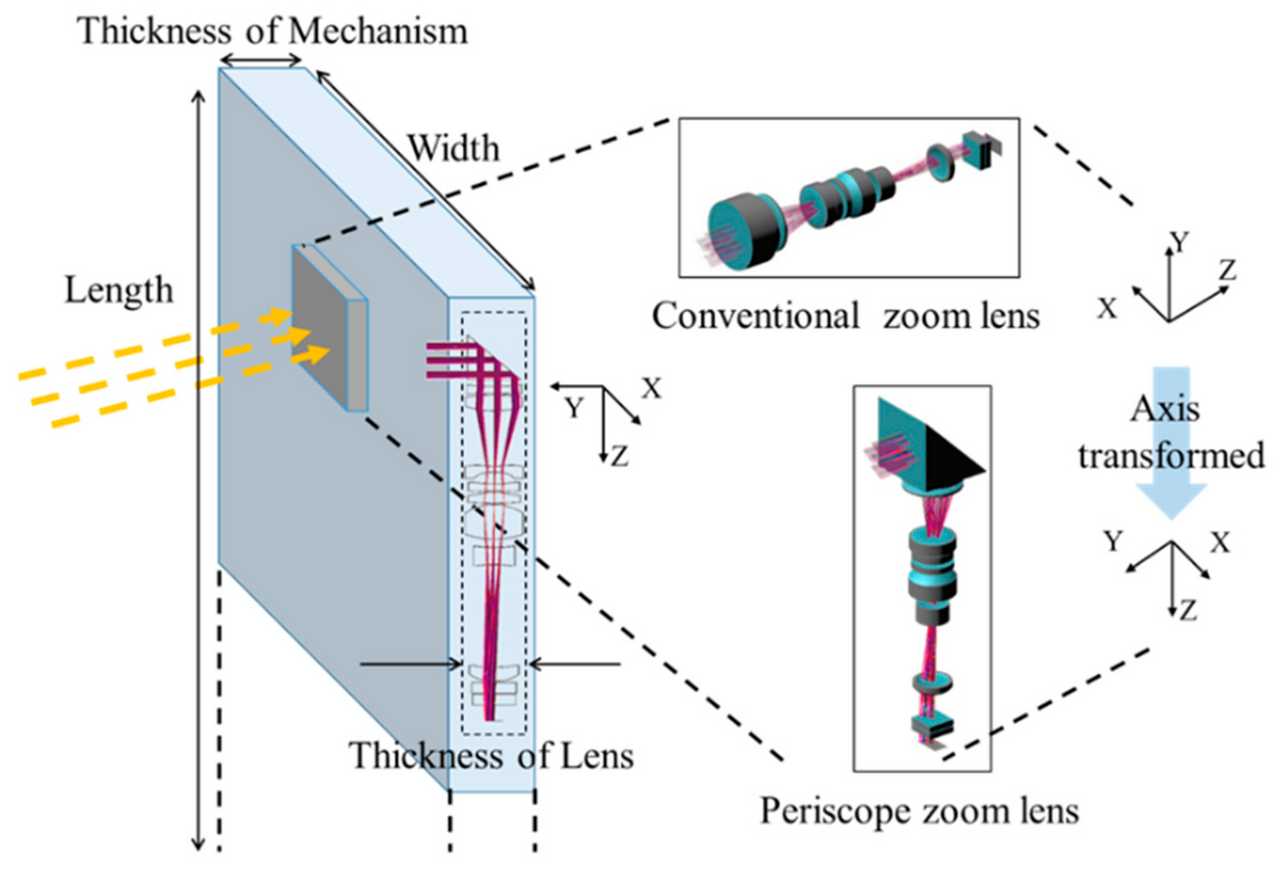
In a conventional camera lens, the lens barrel points straight at the subject and the sensor sits directly behind it. The distance from the lens’s optical center to the sensor (the focal length) grows with magnification. A 120 mm-equivalent lens would need roughly that much physical depth — far more than a phone can offer. Early phone makers cheated by adding a short, fixed telephoto (2x–3x), but going beyond that required a fundamentally different layout.
How a Periscope Lens Works
A periscope lens solves the thickness problem by turning the light sideways. Instead of pointing the lens out the back of the phone, the module places a prism (or angled mirror) right behind the rear glass. Incoming light passes through the phone’s back, hits the prism, and is reflected 90° so it travels along the body of the phone — through a long stack of lens elements — before reaching an image sensor that sits on its edge. Because the barrel now runs the length (or width) of the device rather than its depth, engineers gain a lot of room for a long focal length without adding a single millimeter of thickness.
Apple’s Tetraprism: The Same Trick, Folded Harder
Apple arrived late to periscope zoom and gave its version a distinctive name: the tetraprism, introduced with the iPhone 15 Pro Max in 2023. Where a classic periscope uses a single 90° bend, Apple’s tetraprism reflects the light path four times, bouncing it through a prism to fold a long optical path into a very compact space. The result is the same idea — a genuine 5x optical zoom at about 120 mm full-frame equivalent — achieved by folding the light even more aggressively.
Optical vs Hybrid vs Digital Zoom
Not every “zoom” claim is created equal:
- Optical zoom changes the true focal length with real lens elements, so no image quality is thrown away.
- Digital zoom simply crops into the image and enlarges it — detail is lost with every step.
- Hybrid zoom sits between the two: it starts from the optical lens, crops into a high-resolution sensor, then uses multi-frame computational fusion to sharpen the result. This is how phones advertise “10x,” “30x,” or even “100x” — most of that range is smart cropping plus AI, not real optics.
The Tradeoffs of Periscope Cameras
Periscope modules are not a free lunch. The folded design forces several compromises:
- Smaller sensor. Periscope sensors are typically 1/2.5″ to 1/3.5″, far smaller than the 1/1.3″ main sensor, so each pixel gathers less light and low-light detail suffers.
- Dimmer aperture. Most periscope lenses top out around f/2.8–f/3.4, versus f/1.8 or brighter on the main camera.
- More shake. A longer focal length magnifies hand movement, so periscopes need optical stabilization (lens-shift or prism-shift OIS) to keep shots sharp.
- Cost and complexity. Precision prisms and folded assemblies are harder to manufacture and align.
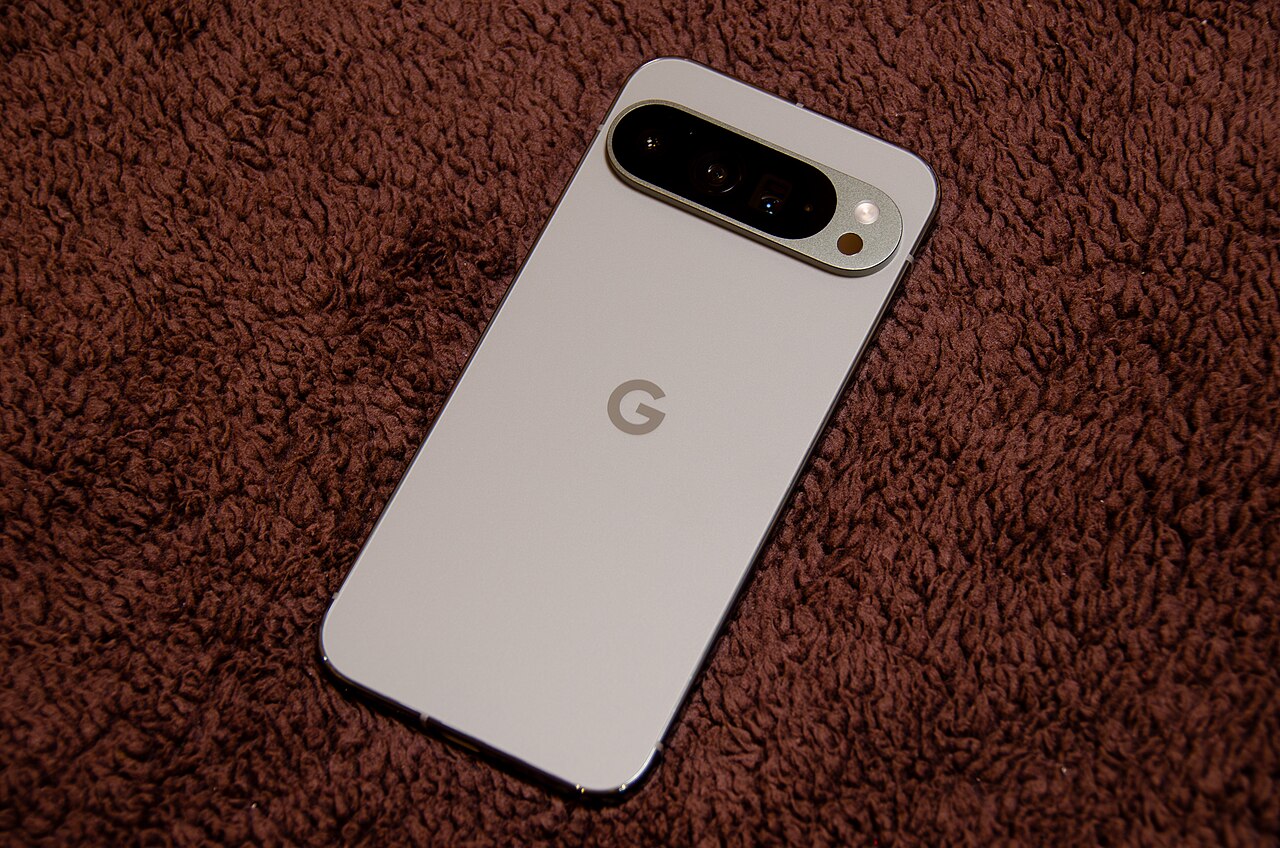
Real-world examples show how the industry balances these factors: Samsung’s Galaxy flagships carried a 10x periscope for years before shifting to a 5x periscope with a larger 50 MP sensor (prioritizing image quality over extreme reach), Google’s Pixel Pro models use a 5x periscope at roughly 112 mm equivalent, and Apple’s tetraprism delivers 5x at 120 mm.
Conclusion
The periscope lens is the reason modern phones can zoom optically without turning into bricks. By folding the light path 90° (or, in Apple’s case, four times), engineers fit a long telephoto into a thin body — at the cost of a smaller sensor and a dimmer aperture. Understanding those tradeoffs is the key to reading zoom marketing critically: the base optical magnification is real and lossless, while everything beyond it is increasingly clever cropping.
FAQ
Is a periscope lens the same as real optical zoom?
Yes. A periscope is a technique for achieving genuine optical zoom in a thin phone by bending the light path; the zoom itself is true optical magnification, not a software trick.
Why are periscope apertures so dim (f/2.8–f/3.4)?
The folded design and small sensor limit the size of the entrance pupil, so the lens gathers less light than the main camera — which is why periscope shots struggle in low light.
What does “100x zoom” actually mean?
Usually hybrid or digital zoom: only the base optical range (typically 5x) is lossless, and the rest is cropping and AI upscaling that softens fine detail.
Related Posts
Backside-Illuminated (BSI) vs Frontside-Illuminated Sensors: What’s the Difference?
Scroll through the spec sheet of any modern camera or…
Focus Breathing: What It Is and Why Videographers Care
You’re shooting a two-person interview. The director calls for a…
Leaf Shutter vs Focal-Plane Shutter: What’s the Difference and Why It Matters
Press the shutter on two different cameras and you'll hear…