Disclosure: This article contains affiliate links. If you buy through them, we may earn a commission at no extra cost to you.
Ask a street photographer for the one camera they would genuinely carry every single day and the answer, more often than not, is a Ricoh GR. The Ricoh GR IIIx is the 40mm-equipped sibling of the cult-classic GR III — same pocket-sized body, same 24.2MP APS-C sensor, but with a tighter, more natural field of view that many shooters find closer to how the eye sees. It is not cheap, it does not shoot 4K, and it has no viewfinder. It is also one of the most loved compact cameras on the market. Here is the full picture.
What Makes the Ricoh GR IIIx Special
The GR IIIx is the “ultimate snapshot camera” done right — a genuinely pocketable body built around a large APS-C sensor and a sharp prime lens. The headline differences from the GR III come down to the lens:
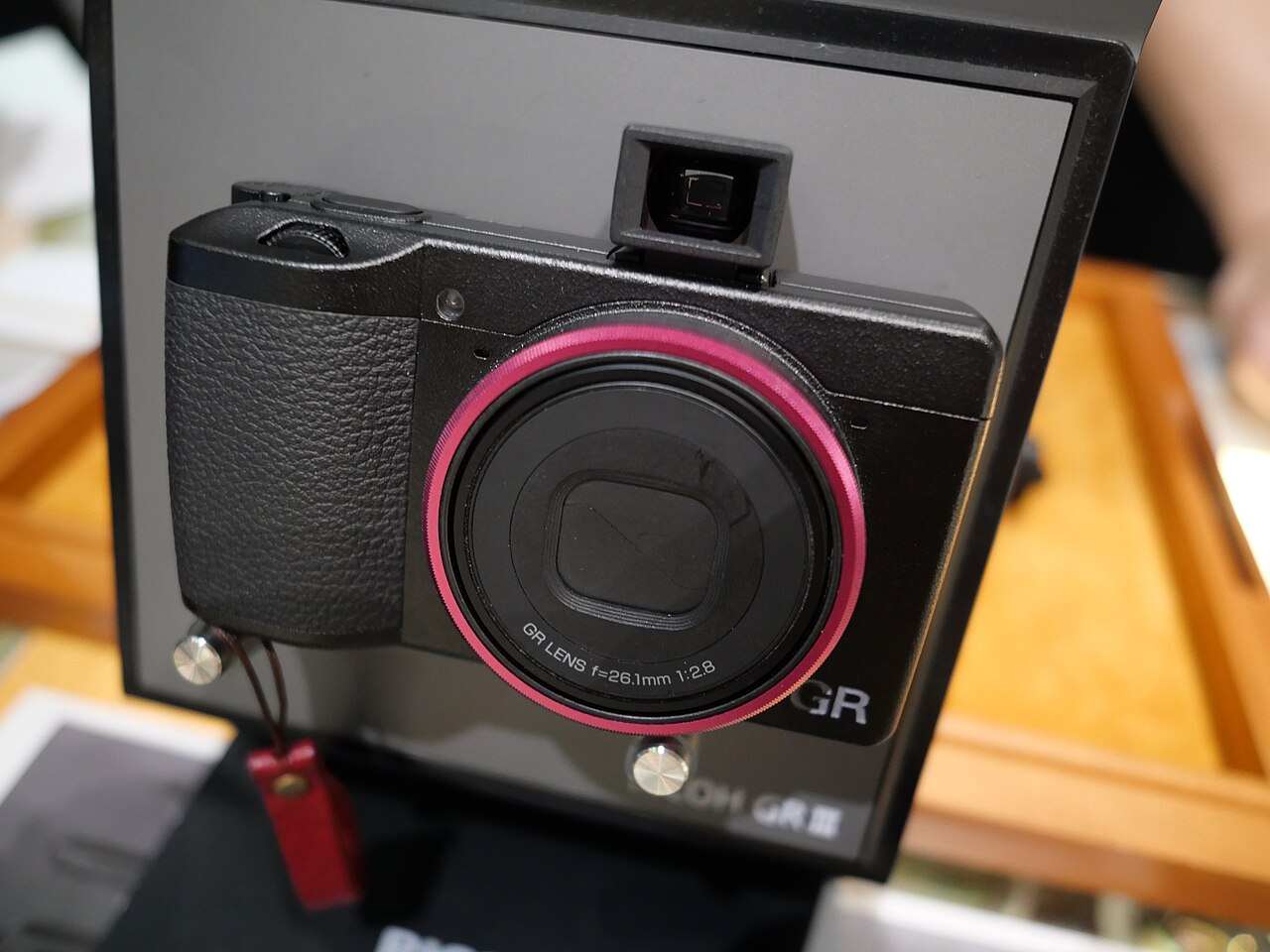
- 40mm-equivalent f/2.8 lens — a newly designed 7-element/5-group optic (26.1mm actual focal length) that delivers a more natural, “human-eye” perspective than the GR III’s 28mm.
- 24.2MP APS-C CMOS sensor (23.5 × 15.6mm) with no optical low-pass filter for maximum detail — the same large-sensor philosophy found in interchangeable-lens cameras.
- GR Engine 6 image processor plus a dedicated “Accelerator Unit” that suppresses noise across a staggering ISO 100–102,400 range.
- 3-axis sensor-shift stabilization (SR) to keep handheld shots sharp in low light.
- ~0.8-second startup and hybrid phase/contrast autofocus — the “snap” response the GR line is famous for.
- Snap Focus — a zone-focusing preset system that lets you fire instantly at a set distance, the classic street-photography tool.
- DR II ultrasonic dust removal to keep the fixed-lens assembly clean.
Image Quality
The GR IIIx produces files that punch far above its size class. The 24.2MP sensor paired with that sharp 40mm prime resolves fine detail cleanly, and because there is no anti-aliasing filter, images have an extra bite that makes them ideal for large prints and aggressive crops. The built-in 50mm and 71mm crop modes give you useful reach without changing lenses. Color is a strong point too — Ricoh’s Image Control profiles (including the much-loved film simulations) and a deep community of custom “recipes” let you bake a distinct look straight into the JPEGs, while 14-bit DNG RAW keeps all the latitude for post-processing.
Noise handling is impressive thanks to the Accelerator Unit, keeping images usable well into high ISOs. The one genuine limitation is low-light noise at the extreme end of the ISO range and the lack of a built-in flash — but the f/2.8 lens and stabilization cover most everyday situations.
Autofocus & Speed
Autofocus is hybrid — phase detection plus contrast detection — and it is fast and accurate in good light. For street work, the real star is Snap Focus: pre-set a distance (with a new 3.5m option added via firmware) and the camera fires the moment you press the shutter, with no focusing lag at all. Startup is near-instant at roughly 0.8 seconds, so the camera is ready before the moment passes. The honest caveat, echoed by many owners, is that continuous autofocus on moving subjects is not class-leading — this is a decisive-moment camera, not a sports camera.
Video
Be clear-eyed here: the GR IIIx is not a video tool. It records Full HD 1080p at up to 60 fps and that is the ceiling — there is no 4K. The 3-axis stabilization helps smooth out handheld clips, and the footage is perfectly fine for quick personal clips, but if video is a priority, this is not the camera to buy. Its value is almost entirely in stills.
Design & Handling
The GR IIIx is a masterclass in minimalism. It is small enough to drop into a front pocket or a coin pocket of jeans, yet the controls are thoughtfully laid out with a dedicated exposure-compensation rocker, customizable function buttons, and the option to save up to six custom configurations (U1–U3 plus more). The 3.0-inch touchscreen is bright and responsive. There is no viewfinder and no built-in flash — sacrifices made in the name of size — and the body is not weather-sealed, which is the one durability caveat owners frequently flag (many add a filter adapter or protective cap for dusty environments).
Full Specifications
| Specification | Ricoh GR IIIx |
|---|---|
| Sensor | 24.24MP APS-C CMOS (23.5 × 15.6mm), no low-pass filter |
| Lens | 26.1mm f/2.8 (40mm equiv.), 7 elements / 5 groups (2 aspherical) |
| Aperture | f/2.8 – f/16 |
| ISO range | 100 – 102,400 |
| Image stabilization | 3-axis sensor-shift (SR) |
| Autofocus | Hybrid AF (phase + contrast detection) |
| Startup time | ~0.8 seconds |
| Video | Full HD 1080p up to 60 fps |
| Minimum focus | ~0.12 m (macro mode) |
| In-camera crop | 50mm and 71mm equivalents |
| Display | 3.0-inch touchscreen LCD |
| Storage | SD / SDHC / SDXC (UHS-I) |
| Wireless | Wi-Fi + Bluetooth |
| Dust removal | DR II (ultrasonic) |
| File format | 14-bit DNG RAW + JPEG |
| Battery | DB-110 (approx. 200 shots per charge) |
| Weight | Approx. 262 g (with battery and card) |
Ricoh GR IIIx vs GR III vs Fujifilm X100VI
| Feature | Ricoh GR IIIx | Ricoh GR III | Fujifilm X100VI |
|---|---|---|---|
| Sensor | 24.2MP APS-C | 24.2MP APS-C | 40.2MP APS-C X-Trans |
| Lens (equiv.) | 40mm f/2.8 | 28mm f/2.8 | 35mm f/2 |
| Viewfinding | None (touchscreen only) | None (touchscreen only) | Hybrid optical/EVF |
| Image stabilization | 3-axis sensor-shift | 3-axis sensor-shift | 5-axis IBIS (up to 6 stops) |
| Video | 1080p60 | 1080p60 | 6.2K / 4K60 |
| Typical price | ~$1,250 | ~$1,000 | ~$1,599 |
| Best for | Pocketable 40mm street shooter | Pocketable 28mm snap camera | Premium compact with viewfinder + video |
The GR IIIx and GR III share almost everything except the lens — choose the 40mm if you want a tighter, more flattering everyday field of view, or the 28mm if you prefer the classic wide GR look. The X100VI is the obvious up-market rival: it adds a hybrid viewfinder, more megapixels, better stabilization, and serious video — but it is also bigger, heavier, pricier, and much harder to find in stock.
Verdict
The Ricoh GR IIIx is a niche camera that understands its niche perfectly. If you want the image quality of an APS-C interchangeable-lens camera in a body that genuinely disappears into a pocket, with a 40mm focal length that suits everyday people, travel, and street photography, there is almost nothing else like it. Accept its compromises — no viewfinder, no 4K, no weather sealing, premium price — and you get a camera with a devoted following for good reason. For the right shooter, it earns a strong recommendation.
What Amazon Buyers Say
The GR IIIx holds a 4.4 out of 5 rating from 238 global ratings on Amazon. Here is how those ratings break down:
| Star rating | Share of reviews |
|---|---|
| 5 stars | 77% |
| 4 stars | 5% |
| 3 stars | 8% |
| 2 stars | 5% |
| 1 star | 5% |
“The lens is incredibly sharp… When I take pictures of pets, I can zoom in to see all the individual hairs… This camera is tiny. I can fit it in the front pocket of my shorts.”
“I only wish it had 4k video. But it makes up for it for street and macro shots. Wow the macro shots are amazing. Buy it. Well worth the money…”
“As a creative, the best camera is what you have on you… The small size is ideal for travel and every day carry. Image quality is top notch. Film simulations are beautiful and fun.”
“The compact size makes it perfect for everyday carry, and the image quality is outstanding for such a small camera. Autofocus is snappy, and the IBIS helps keep shots sharp.”
Read all customer reviews on Amazon.
FAQ
Is the Ricoh GR IIIx better than the GR III?
Neither is objectively better — they differ in the lens. The GR IIIx uses a 40mm-equivalent f/2.8 lens that is closer to natural human vision, while the GR III uses a 28mm-equivalent for a wider, classic street look. Pick based on the focal length you prefer.
Does the Ricoh GR IIIx shoot 4K video?
No. Video is capped at Full HD 1080p at up to 60 fps. If 4K video is a requirement, look elsewhere (for example, the Fujifilm X100VI).
Is the GR IIIx weather-sealed, and is dust a problem?
The body is not weather-sealed, and because the lens extends and retracts, dust can find its way inside in gritty conditions — a frequently mentioned concern from owners. Ricoh includes DR II ultrasonic dust removal, but many shooters add a filter adapter or protective cap for extra peace of mind.
Related Posts
Sony a7 V Review (2026): The Best Full-Frame Camera for Most People
Disclosure: This article contains affiliate links. If you buy through…
Panasonic Lumix S5 II Review: The Full-Frame Hybrid That Does It All
Disclosure: This article contains affiliate links. If you buy through…
Best Cameras for Landscape Photography (2025 Buying Guide)
Landscape photography is a test of patience and detail. The…