Autofocus speed is one of the first things a photographer notices about a lens, but the motor doing the work rarely gets the credit. Whether a lens snaps into focus instantly on a moving subject or creeps silently while you are recording video comes down almost entirely to the type of autofocus motor inside it. Manufacturers love to brand these motors — Canon’s USM and STM, Nikon’s SWM, Sony’s XD Linear Motor — which makes the subject look more complicated than it is. Here is how the three main motor families work, and why each one matters.
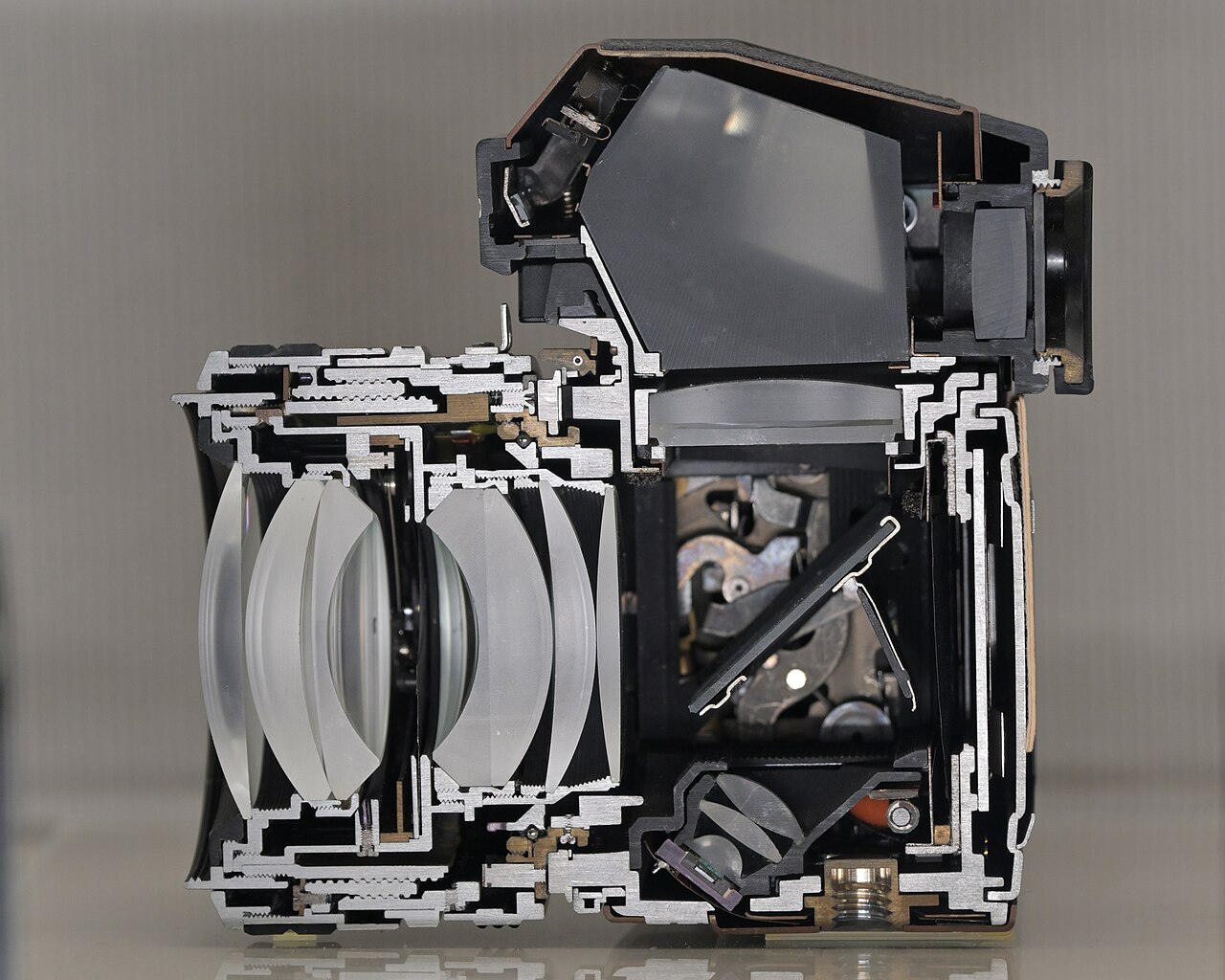
Why the motor matters more than you think
The autofocus motor converts electrical signals from the camera into physical movement of the lens’s focusing elements. Four properties separate the good motors from the mediocre. Speed determines how quickly the lens can rack from one focus distance to another. Noise matters enormously for video, where a whirring gear train gets picked up by the onboard microphone. Smoothness — the ability to change focus in tiny, controlled steps without visible jumps — is what makes cinematic focus pulls possible. Finally, full-time manual override lets you grab the focus ring and correct focus without switching out of autofocus mode.
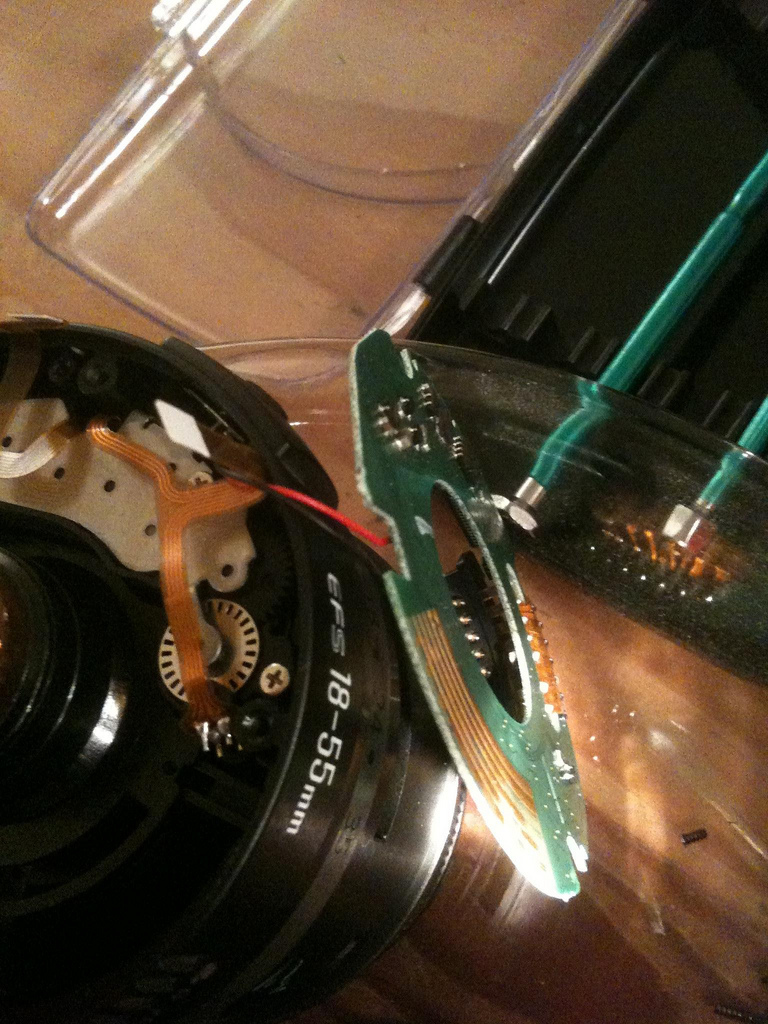
Ultrasonic motors: the fast, near-silent workhorse
Canon introduced the ring-type UltraSonic Motor (USM) with the EF mount in 1987, and the design quickly became the benchmark for fast, quiet autofocus. A ring-type USM is a piezoelectric motor: a ceramic element vibrates at an ultrasonic frequency — roughly 30 kHz, above the range of human hearing — and that vibration drives a metal rotor ring that turns the focusing mechanism. With no gear train in the way, the motor is fast, near-silent, and allows instant full-time manual override. Nikon’s Silent Wave Motor (SWM), Sigma’s Hyper Sonic Motor (HSM), and Tamron’s Ultrasonic Silent Drive (USD) all work on the same principle under different names.
Ring-type USM remains common in higher-end lenses, though it has largely been superseded by newer linear designs. A cheaper “Micro USM” variant in budget lenses is smaller but geared, so it loses the direct-drive, silent character of the ring type.
Stepper motors: built for smooth, quiet video
When video became a priority, Canon added a second motor type in 2012: the STM, or stepper motor. A stepper motor rotates in precise, discrete steps rather than continuously, driven by pulses of current sent through a sequence of coils. That step-by-step motion is exactly what video needs — focus changes happen smoothly and almost silently, without the abrupt jumps that can plague some focus-by-wire systems. Canon uses two STM variants: a compact gear-type STM in small, affordable lenses, and a faster, quieter lead-screw type in larger ones.
The trade-off is raw speed. STM lenses are generally a touch slower to snap from near to far focus than their USM counterparts, which is why they show up in kit zooms and compact primes rather than flagship sports glass. For stills-first shooters, USM speed usually wins; for vloggers and hybrid shooters, STM smoothness is worth far more.
Linear and voice coil motors: the modern standard
The newest family moves the focusing group in a straight line instead of rotating it. Voice coil motors (VCMs) — sometimes marketed simply as “linear” motors — use a coil of wire sitting inside a magnetic field, much like a loudspeaker driver. Pushing current through the coil moves it directly along the lens barrel, with no gears or rotating parts in between. Sony’s XD (Extreme Dynamic) Linear Motor in G Master lenses and Canon’s Nano USM and newer VCM actuators are all linear designs.
Linear motors combine the best of both earlier worlds: they are the fastest of the three for large, heavy focusing groups, they are essentially silent, and they offer extremely fine positional control. They have become the default choice for flagship mirrorless lenses, especially fast primes and zooms with heavy focusing elements. Canon’s RF 35mm F1.4L VCM even pairs a VCM with a smaller Nano USM, moving two lens groups independently to suppress focus breathing. One quirk: a VCM typically needs constant power to hold its position, so an unmounted lens may rattle slightly — that is normal and harmless.
How to choose
You rarely choose a lens purely for its motor, but the motor tells you a lot about what a lens was designed for. A USM or SWM lens signals fast stills performance with quiet operation. An STM lens signals smooth, video-friendly focus at a budget-friendly price. A linear or VCM lens signals a modern design optimized for fast hybrid shooting, often at a premium. If you shoot both photos and video, favor a linear or STM lens; if you shoot fast action, prioritize any high-end design with full-time manual override and decisive autofocus.
Conclusion
Autofocus motors are the unsung hardware behind every sharp frame and every silent focus pull. Ultrasonic motors delivered the first great leap in speed and quietness, stepper motors made video autofocus usable, and linear voice coil motors now power the fastest, most precise focusing systems on the market. Knowing the difference helps you read a lens spec sheet like a photographer — and pick the glass that matches how you shoot.
FAQ
Is USM better than STM?
It depends. Ring-type USM is usually faster for stills, while STM is smoother and quieter for video. For pure photography speed, USM tends to win; for video and hybrid use, STM is often the better fit.
What is a voice coil motor in a lens?
A voice coil motor (VCM) moves the focusing group using a coil inside a magnetic field, similar to a speaker driver. It drives the focus elements directly in a straight line, delivering very fast, quiet, and precise autofocus, especially for heavy focusing groups.
Why does my lens rattle when it is turned off?
Many linear and voice coil motors need power to hold their position. When the camera is off or the lens is unmounted, the floating focusing elements can move slightly, producing a soft rattle. This is normal and does not affect performance.
Related Posts

Dynamic Range Explained: Why Your Camera Clips Highlights and Crushes Shadows
Every photographer hits the same wall sooner or later: you…
Image Stabilization Explained: OIS, IBIS, and EIS
Blurry photos and shaky video share one root cause: camera…

High-Speed Sync (HSS) Explained: How Flash Works Above Your Camera’s Sync Speed
If you have ever tried to use a flash in…