Disclosure: This article contains affiliate links. If you buy through them, we may earn a commission at no extra cost to you.
The OM System OM-1 Mark II is the second-generation flagship of the Micro Four Thirds system — and it makes one of the strongest cases yet that a smaller sensor can beat a big one where it counts. Built around a 20.4MP stacked BSI sensor, a 1,053-point cross-type phase-detection AF system, and up to 8.5 stops of stabilization, it is aimed squarely at wildlife, bird, macro, and travel photographers who value speed and portability over raw megapixels. Here’s our full review.
What Makes the OM-1 Mark II Special
The OM-1 Mark II refines an already excellent camera rather than reinventing it. The headline upgrades are a larger buffer, better subject-detection AI, and a genuinely useful new computational tool called Live GND (graduated ND). Key highlights:
- 20.4MP Stacked BSI Live MOS sensor with the TruePic X processor for fast readout and low rolling shutter.
- 1,053-point cross-type phase-detection AF with AI recognition for people, birds, animals, cars, motorcycles, trains, and airplanes.
- Up to 120fps burst (SH2 mode) plus Pro Capture pre-burst that buffers frames before you fully press the shutter.
- 8.5-stop 5-axis sync IS — class-leading stabilization for hand-held telephoto work.
- IP53 weather sealing: dust-proof, splash-proof, and freezeproof to -10°C.
- Computational modes: Live ND (up to ND128), the new Live GND, hand-held 80MP High-Res Shot, and in-camera focus stacking.
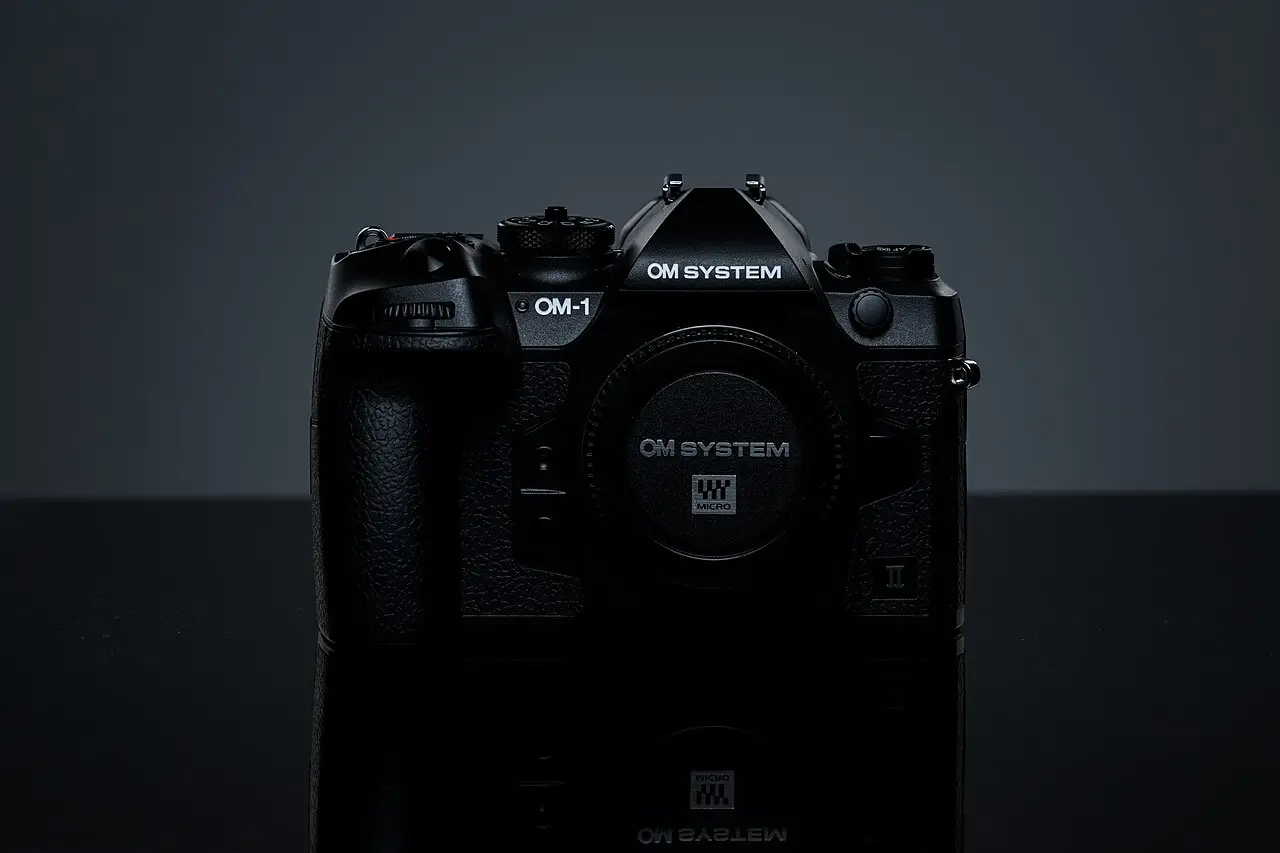
Image Quality
The 20.4MP output is modest by 2026 full-frame standards, but the OM-1 Mark II punches above its sensor size. The stacked BSI design improves light gathering and readout speed, and the TruePic X engine delivers accurate, punchy colors straight out of camera. High-ISO performance is noticeably better than the original OM-1, and the camera handles mixed and low light cleanly up to the ISO 6,400–12,800 range before noise becomes intrusive. For wildlife shooters, the real story is reach: the 2x crop turns a 300mm lens into a 600mm full-frame equivalent, letting you fill the frame with distant subjects without carrying a huge prime.
Autofocus & Speed
Autofocus is where the Mark II earns its keep. The cross-type phase-detection points and refreshed AI subject detection are fast, sticky, and remarkably reliable — Amazon buyers consistently praise how easily the camera finds a bird hidden in tangled branches and holds focus. The dedicated bird-detection mode is among the best in any camera at this price. With up to 120fps bursts (and 50fps with AF/AE tracking) plus Pro Capture pre-burst, you can capture the exact moment a bird takes off without spraying the shutter ahead of time.
Video
The OM-1 Mark II is a capable hybrid, recording C4K/4K up to 60p in 10-bit 4:2:2 with OM-Log400 for flexible grading, plus full-HD high-speed modes up to 240fps. The 8.5-stop stabilization carries over to video, producing remarkably steady hand-held footage, and the camera’s thermal design lets it run extended 4K/60p sessions without the overheating warnings that plague some rivals. It isn’t a dedicated cinema body — there’s no ProRes RAW or internal RAW — but for run-and-gun and wildlife clips it’s more than enough.
Design & Handling
At 511g the OM-1 Mark II is a featherweight flagship, and the deep grip, well-placed dials, and four fully customizable modes make it comfortable for all-day use. The 5.76M-dot OLED viewfinder is bright and detailed, and the 3.0-inch vari-angle touchscreen handles both stills and video framing. The IP53 build means you can shoot in rain, dust, and freezing conditions that would send most cameras back into the bag.
Full Specifications
| Sensor | 20.4MP Stacked BSI Live MOS (Micro Four Thirds, 17.4 × 13mm) |
|---|---|
| Processor | TruePic X |
| Autofocus | 1,053-point cross-type phase detection + contrast AF; AI subject detection (human/face/eye, bird, animal, car, motorcycle, train, airplane) |
| Burst shooting | Up to 120fps (SH2); 50fps with AF/AE; Pro Capture pre-burst |
| Stabilization | 5-axis sensor-shift, up to 8.5 stops (with Sync IS lens) |
| ISO range | 200–25,600 (extended 80–102,400) |
| Video | C4K/4K up to 60p, 10-bit 4:2:2; FHD up to 240fps; OM-Log400 |
| Viewfinder | 5.76M-dot OLED, 120fps refresh |
| Monitor | 3.0″ vari-angle touch LCD, 1.62M dots |
| Computational | Live ND (up to ND128), Live GND, hand-held 80MP High-Res Shot, focus stacking |
| Weather sealing | IP53 (dust/splash/freezeproof to -10°C) |
| Storage | Dual SD (UHS-II) |
| Battery | BLX-1 (USB-C charging) |
| Dimensions | 134.8 × 91.6 × 72.7mm |
| Weight | 511g (body with battery & card) |
| Mount | Micro Four Thirds |
| Price | $1,999.99 (body only, MSRP) |
OM-1 Mark II vs Panasonic G9 II vs Canon EOS R7
| Spec | OM-1 Mark II | Panasonic G9 II | Canon EOS R7 |
|---|---|---|---|
| Sensor | 20.4MP MFT stacked BSI | 25.2MP MFT Live MOS | 32.5MP APS-C CMOS |
| Burst (e-shutter) | Up to 120fps | Up to 60fps (AF-C) | Up to 30fps |
| Stabilization | Up to 8.5 stops | Up to 8 stops | Up to 7 stops |
| Autofocus | 1,053-pt cross-type phase + AI subject detection | 779-pt phase hybrid | Dual Pixel CMOS AF II |
| Video | 4K/60p 10-bit 4:2:2 | 5.8K Open Gate, 4K/120p | 4K/60p (uncropped) |
| Weather sealing | IP53 rated | Splash/freeze resistant | Weather sealed |
| Weight | 511g | ~658g | ~612g |
| Price (body) | $1,999.99 | ~$1,899 (street ~$1,499) | ~$1,399–1,499 |
The G9 II counters with more resolution and stronger video specs (5.8K Open Gate and 4K/120p), while the R7 offers more megapixels and Canon’s lens ecosystem for less money. But neither matches the OM-1 Mark II’s burst speed, IP53 build, or stabilization, which are the features that matter most in the field.
Verdict
The OM System OM-1 Mark II is the best Micro Four Thirds camera you can buy for wildlife, bird, and macro photography. Its combination of 120fps bursts, sticky AI autofocus, class-leading stabilization, and true weather sealing in a 511g body is unmatched by APS-C rivals at similar money. The trade-offs are real — 20.4MP and a smaller sensor mean less cropping headroom and a low-light edge to full-frame — but if reach, speed, and portability define your shooting, this is the flagship to beat.
What Amazon Buyers Say
The OM-1 Mark II holds a 4.4 out of 5-star average from 81 global ratings at the time of writing. Amazon’s “Customers say” summary highlights the camera’s image quality (especially at high ISO), superb autofocus and stabilization, and compact, lightweight design — while noting that battery life draws mixed reviews.
| Star Rating | Share of Reviews |
|---|---|
| 5 stars | 80% |
| 4 stars | 5% |
| 3 stars | 4% |
| 2 stars | 4% |
| 1 star | 7% |
“The size and weight are perfect — compact enough to carry all day without fatigue, but still solid and well-built. It fits easily in a small backpack or sling bag, which makes it ideal for hiking, travel, and street photography.”
“I love that I can carry this camera anywhere and in any weather with ease. Light and water resistant (rain forest) is crucial. The pre-capture mode allows the ability to capture birds in flight like never before.”
“In short, I’m having lots of fun with a compact camera with fabulous autofocus and image stabilization and programmable customizable settings and buttons.”
“It takes amazing shots, has lots of bells and whistles (Pro capture for the win) and is very light and portable.”
Read all customer reviews on Amazon
FAQ
Is the OM-1 Mark II good for beginners? It’s a flagship with deep menus and a learning curve, but the AI subject detection and computational modes make strong results easy out of the box. Several reviewers note that YouTube tutorials (many from OM ambassadors) flatten the learning curve quickly.
Does it overheat when shooting 4K video? No. The OM-1 Mark II’s heat-dissipating design lets it run extended 4K/60p sessions without the overheating warnings common on some APS-C and full-frame rivals.
Is Micro Four Thirds good enough versus full-frame? For wildlife, telephoto, and travel the 2x crop delivers huge reach in a tiny, light package — and the stacked BSI sensor closes much of the low-light gap. Full-frame still wins outright for maximum dynamic range and shallow-depth-of-field work, but for most outdoor photography the OM-1 Mark II is more than enough.
Related Posts
Best Cameras for Wildlife and Sports Photography (2025 Buying Guide)
Wildlife and sports photography is the ultimate stress test for…
Smartphone vs Mirrorless vs DSLR — Which Camera to Buy in 2026?
In 2026, the question "which camera should I buy?" has…
Sigma 24-70mm f/2.8 DG DN II Art Review: The Flagship Zoom That Beats Sony on Value
Disclosure: This article contains affiliate links. If you buy through…