Disclosure: This article contains affiliate links. If you buy through them, we may earn a commission at no extra cost to you.
The Panasonic Lumix GH7 is the company’s flagship Micro Four Thirds hybrid, and it makes a strong case for being the best value in serious video production right now. Building on the GH6, it adds phase-detection autofocus, internal Apple ProRes RAW, and the world’s first 32-bit float audio recording — all in a weather-sealed body that costs less than most full-frame rivals. Here’s our full breakdown.
What Makes the Lumix GH7 Special
- 25.2MP BSI CMOS Micro Four Thirds sensor with a 13+ stop dynamic-range boost (V-Log).
- Phase Hybrid Autofocus — the biggest upgrade over the GH6, with reliable subject tracking for people, animals, and vehicles.
- Internal ProRes 422 HQ and ProRes RAW HQ recording up to 5.7K — no external recorder needed.
- World’s first 32-bit float audio (with the optional DMW-XLR2), so you never clip audio again.
- 4K/120p full-width slow motion and up to 300 fps variable frame rate in FHD.
- Built-in cooling fan for unlimited 4K/60p recording at recommended temperatures.
- 7.5-stop 5-axis IBIS plus a 100MP high-resolution stills mode.
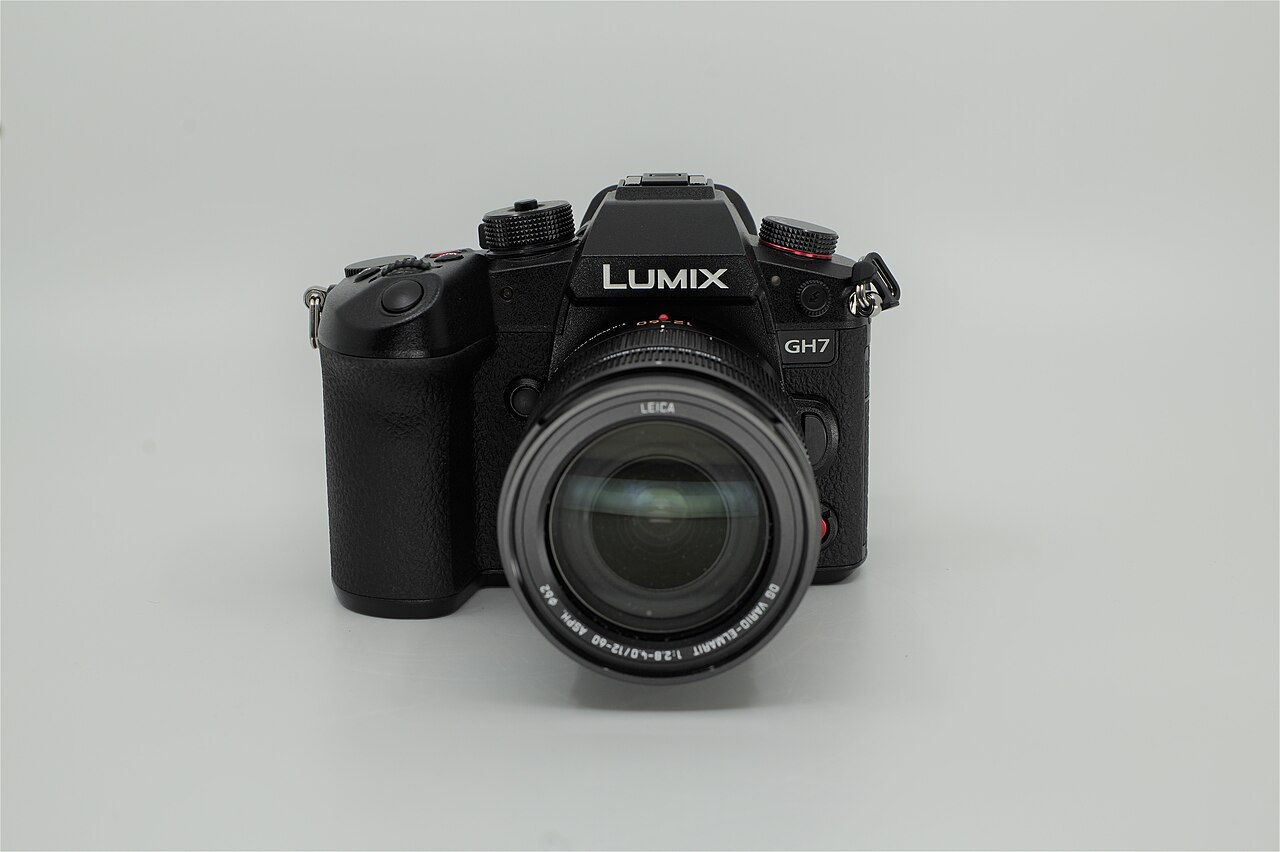
Image Quality
The GH7’s 25.2-megapixel BSI sensor delivers crisp, detailed stills with Panasonic’s pleasing natural color, and the DR Boost circuit keeps highlights and shadows well separated in V-Log. Dynamic range is genuinely impressive — up to 13+ stops in video — and the 100MP high-resolution mode squeezes extra detail out of static scenes. The trade-off is the smaller sensor: high-ISO noise creeps in earlier than on full-frame bodies, so it’s happiest below ISO 3200. For a video-first camera, that’s rarely a dealbreaker, but stills-only shooters should know what they’re signing up for.
Autofocus & Speed
Phase-detection autofocus is the headline fix. The GH6 relied on contrast detection that could hunt during video; the GH7 locks on and sticks, with subject detection for humans, animals, cars, motorcycles, trains, and planes. Continuous shooting tops out at 14 fps with the mechanical shutter and an absurd 75 fps with the electronic shutter (AF-S), backed by a deep buffer of 200+ RAW frames. For run-and-gun video or wildlife, the difference is night and day.
Video
This is where the GH7 earns its keep. Internal ProRes 422 HQ and ProRes RAW HQ at 5.7K give editors a professional codec without an external recorder, and 4K/120p slow motion comes with no crop — something several pricier full-frame cameras can’t match. The optional $200 Arri LogC3 profile brings cinema-grade color, and Real-Time LUT previews plus Adobe Frame.io integration speed up the post workflow. Add unlimited 4K/60p recording thanks to the built-in fan, and you have a complete small-crew production camera.
Design & Handling
At 805 g the GH7 is substantial but well-balanced, with a deep grip, a full-size HDMI port, and dual card slots (CFexpress Type B plus UHS-II SD). The 3.68M-dot OLED viewfinder is bright and the 3-inch touchscreen both tilts and flips out — a small touch that keeps cables clear of the screen. Weather sealing and freeze resistance down to -10°C round out a body built for location work. Battery life is the one weak spot, at roughly 380 shots; videographers will want spares or a V-mount solution.
Full Specifications
| Sensor | 25.2MP BSI CMOS, Micro Four Thirds (17.3 × 13.0 mm) |
|---|---|
| Lens mount | Micro Four Thirds |
| Autofocus | Phase Hybrid AF (PDAF + contrast), 779 points; subject detection for people, animals & vehicles |
| Stabilization | 5-axis IBIS, up to 7.5 stops (Body I.S. / Dual I.S. 2) |
| Continuous shooting | 14 fps (mechanical, AF-S) · up to 75 fps (electronic, AF-S) · 60 fps (electronic, AF-C) |
| High-res mode | 100MP pixel-shift stills |
| Video (internal) | 5.7K/5.8K up to 30p ProRes 422 HQ & ProRes RAW HQ; C4K/4K 4:2:2 10-bit 60p; 4K/120p; FHD up to 300 fps VFR |
| Dynamic range | 13+ stops (DR Boost, V-Log) |
| Audio | 32-bit float via DMW-XLR2 (sold separately), 4-channel |
| Viewfinder | 3.68M-dot OLED, 0.8× magnification |
| Rear screen | 3.0" free-angle/tilt touchscreen, 1.84M-dot |
| Media | 1× CFexpress Type B + 1× UHS-II SD |
| Connectivity | Full-size HDMI, USB 3.2 Gen 2, Wi-Fi/Bluetooth, wired LAN streaming |
| Battery life | ~380 shots (CIPA) |
| Weight | 805 g (1.77 lb) |
| Weather sealing | Dust, splash & freeze-resistant (-10°C) |
| Price | $2,197.99 (body only, launch MSRP) |
Panasonic GH7 vs. GH6 vs. Sony FX30
| Feature | Panasonic GH7 | Panasonic GH6 | Sony FX30 |
|---|---|---|---|
| Launch price (body) | $2,200 | $2,200 | $1,800 |
| Sensor | 25.2MP MFT BSI | 25.2MP MFT BSI | 26.1MP APS-C BSI |
| Autofocus | Phase Hybrid (PDAF) | Contrast-detect | Phase-detect |
| Internal RAW video | ProRes RAW HQ (5.7K) | None | None |
| 4K/120p | Yes, full width | Yes, full width | Yes, 1.56× crop |
| 32-bit float audio | Yes (DMW-XLR2) | No | No |
| Cooling | Built-in fan | Built-in fan | Built-in fan |
| Weight | 805 g | 823 g | 646 g |
Verdict
The Panasonic Lumix GH7 is the most complete video camera you can buy for around two thousand dollars. Phase-detect autofocus finally fixes the GH-series’ biggest weakness, internal ProRes RAW removes the recorder tax, and 32-bit float audio is a genuine first. Stills photographers who pixel-peep at high ISO should look at full-frame, and battery life asks for spares — but for filmmakers, videographers, and hybrid shooters, the GH7 is an outstanding value that punches well above its price.
What Amazon Buyers Say
The body-only GH7 listing on Amazon averages 4.9 out of 5 stars across 38 global ratings, with buyers almost universally praising the image quality, autofocus, and internal ProRes recording. Here are a few real owner reviews:
“The Panasonic GH7 … is a great photographic and video powerhouse. Have shot over 3,000 photos and hundreds of videos since purchase. Love the Pro-Res RAW videos, and internal recording. The image stabilization for video is very good, almost like having an image stabilized mount.”
“Great image quality, precise and very reliable autofocus, internal stabilization for handheld shots, very customizable menus… I sometimes shoot on Sony too and this is by far better for me… Already shot a short film with this and we are in love with the results… Worth your buck. You’ll get more than you expect!”
“The bests videocentric camera that I have ever used.”
See all reviews on the Amazon reviews page.
FAQ
Is the Lumix GH7 good for stills, or is it video-only?
It’s a capable hybrid. The 25.2MP sensor, 100MP high-res mode, and 75 fps bursts handle stills well, but the feature set is clearly weighted toward video. Stills-first shooters may prefer a full-frame body for cleaner high-ISO files.
Do I need the DMW-XLR2 for 32-bit float audio?
Yes. 32-bit float recording requires the optional DMW-XLR2 audio adapter. Without it, the GH7 records standard 24-bit audio through its built-in mic or 3.5mm input.
Is Micro Four Thirds a downside compared with full-frame?
It depends on your needs. The smaller sensor means more noise at very high ISO and a deeper depth of field, but it also enables faster readout, smaller and cheaper lenses, and excellent stabilization. For video shooters, these are often net advantages.
Related Posts

Full-Frame vs APS-C: Which Camera Sensor Size Is Right for You?
Full-frame and APS-C are the two sensor sizes you'll see…
Best Cameras for Beginners in 2026: Our Top Picks
Buying your first "real" camera is a milestone, and 2026…
Sigma 24-70mm f/2.8 DG DN II Art Review: The Flagship Zoom That Beats Sony on Value
Disclosure: This article contains affiliate links. If you buy through…