Blurry photos are rarely the fault of a slow lens. They are usually the fault of a slow shutter speed and a camera that will not sit still. No matter how steady you think your hands are, every photographer introduces a small amount of shake with every frame — a few millimeters of drift per second that softens fine detail the moment the shutter stays open longer than your hands can freeze.
Image stabilization (IS) is the technology that fights back against that shake. It lets you hold slower shutter speeds without a tripod, shoot cleaner low-light images at lower ISO, and keep video footage from looking like it was filmed on a boat. In this guide we explain the two main systems — lens-based OIS and in-body IBIS — how they work, what those “5-stop” marketing numbers actually mean, and when you should switch stabilization off entirely.
What Image Stabilization Actually Does
The classic handheld rule is the reciprocal rule: to avoid camera shake, use a shutter speed no slower than one over your focal length. With a 100 mm lens that means 1/100s; with a 500 mm telephoto, roughly 1/500s. It is a rough guide, not a law, but it explains why long lenses punish shaky hands.
Stabilization relaxes that rule. If a system is rated for 3 stops, you can shoot three stops slower than the reciprocal speed before blur creeps back — 1/12s instead of 1/100s with our 100 mm lens. That is the difference between raising ISO to a noisy 6400 and keeping it at a clean 800. In practice, well-implemented optical stabilization delivers roughly 2 to 5.5 stops of real-world benefit, and the best synchronized flagship systems now claim 6 to 8.5 stops.
Lens-Based Stabilization (OIS)
Optical image stabilization lives inside the lens. Tiny gyroscopes detect angular movement — how the lens tilts up and down (pitch) or swivels side to side (yaw) — and feed that signal to an actuator that shifts a floating lens element in the opposite direction, keeping the light path steady on the sensor.
Every manufacturer has its own name for the same idea: Canon IS (Image Stabilizer), Nikon VR (Vibration Reduction), Sony OSS (Optical SteadyShot), Fujifilm OIS, Tamron VC (Vibration Compensation), and Sigma OS (Optical Stabilizer). The advantage of putting stabilization in the lens is that it corrects the viewfinder image on an optical DSLR, and each lens can be tuned to its own focal length. The downside is that it only compensates for angular shake, and you pay for it again in every single lens you buy.
In-Body Image Stabilization (IBIS)
In-body stabilization moves the sensor instead of a lens element. Because the sensor is the final element in the optical path, shifting it can correct more than just tilt. A 5-axis IBIS system counters five kinds of motion: pitch, yaw, roll (rotation around the lens axis), and horizontal and vertical translation (X and Y shift). Gyroscopes measure the movement and magnetically float the sensor to cancel it out, all within a single frame.
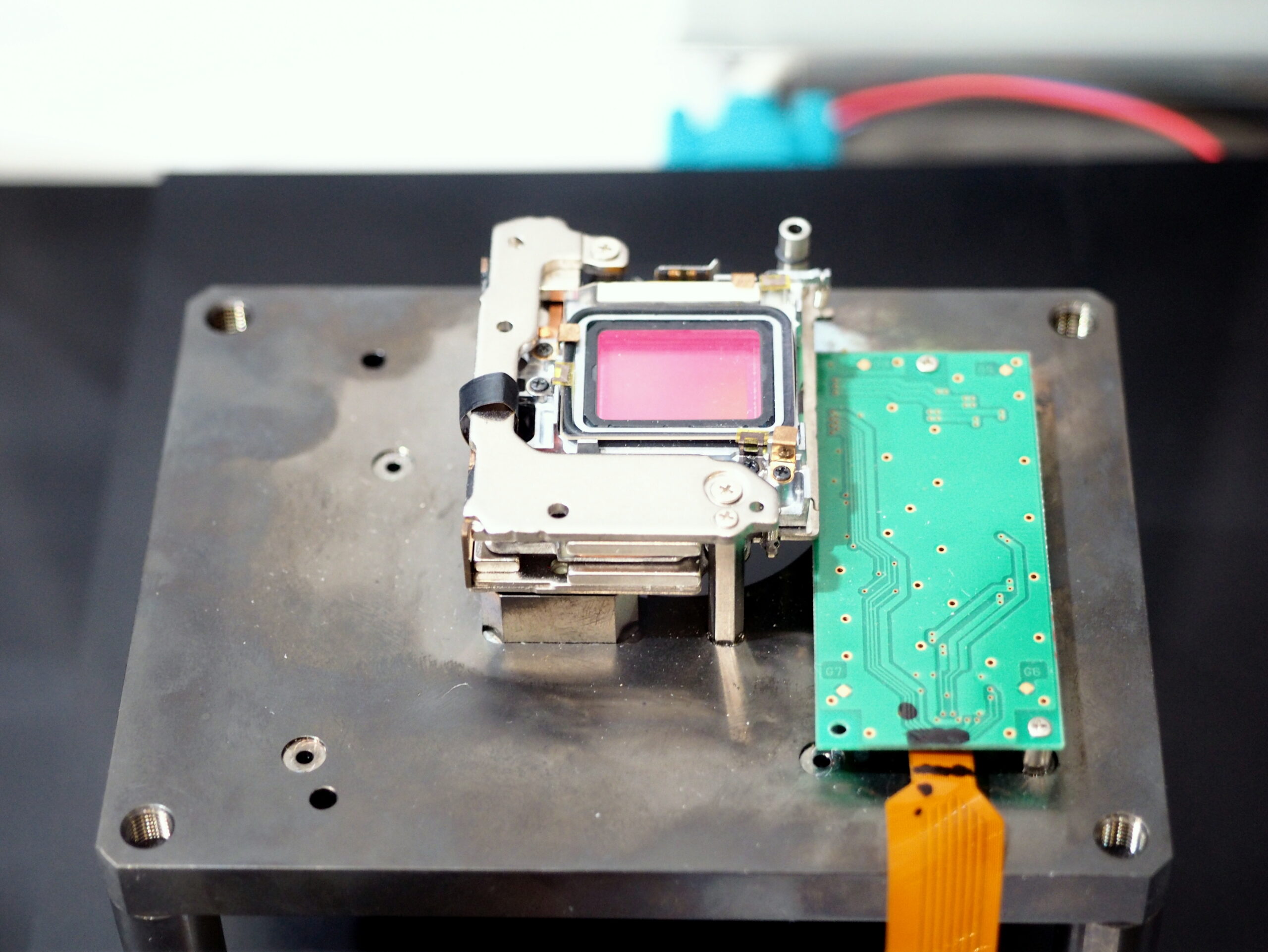
The headline benefit of IBIS is that it works with every lens, including decades-old manual glass that has no stabilization of its own. Pentax helped pioneer in-body Shake Reduction, and Sony brought the idea into the mainstream with a 2-axis full-frame system on the DSLR-A900 in 2008, then a 5-axis stabilizer on the Alpha a7 II in 2014. Today IBIS is standard across Sony, Canon, Nikon, Panasonic, Fujifilm, and OM System mirrorless cameras. Its limits are mechanical: a large full-frame sensor is heavier to move, and on a DSLR the optical viewfinder could not show the stabilized image because it reads from a mirror, not the sensor.
Dual and Sync IS — The Best of Both
Modern flagships coordinate the lens and the body together. When both systems work in tandem, the lens handles the large angular corrections while the sensor mops up the residual translation and roll. Olympus (now OM System) calls it Sync IS, claiming up to 8.5 stops on bodies like the OM-1; Panasonic markets Dual I.S. 2 at up to 8 stops, Canon calls its version Coordinated IS, and Nikon uses Synchro VR. These headline figures are lab measurements, but they are why a 500 mm lens can now be handheld at shutter speeds that would have demanded a tripod a decade ago.
Digital Stabilization for Video
Beyond optics, there is electronic image stabilization (EIS), common in phones and some video modes. Here the camera reads its gyroscope and accelerometer data and shifts a smaller crop of the frame to counter movement, sacrificing resolution and field of view in the process. The same gyro metadata can also be saved with the file so software such as Gyroflow can smooth footage in post — an increasingly popular way to stabilize action-cam and drone video without any moving parts at all.
When to Turn Stabilization Off
Stabilization is not always your friend. On a solid tripod, an active IS system can “hunt” for movement that is not there and introduce a faint blur — many modern systems auto-detect a tripod, but older ones should be switched off. When panning to follow a subject, use the panning mode (if available) so the system stabilizes only the axis you are not moving. Finally, IBIS drains battery and generates heat, so for locked-off studio or video work it is often worth disabling.
Conclusion
Image stabilization has quietly become one of the most valuable features in a modern camera. Lens OIS and in-body IBIS solve the same problem from different ends of the optical path, and synchronized dual systems now deliver six to eight stops of correction that once seemed impossible. Understanding what the systems do — and when to let go of them — is a fast way to sharper handheld photos and smoother video.
FAQ
Does IBIS stabilize every lens?
Yes. Because IBIS moves the sensor, it works with any lens you attach, including vintage manual lenses with no stabilization of their own.
Is five stops of stabilization enough?
For most people, yes. Three to five stops covers the vast majority of handheld situations; the extra stops of dual systems matter most with long telephotos and low light.
Does image stabilization hurt image quality?
Generally not when handheld. The only common trap is leaving it on with a tripod, where a hunting system can introduce slight softness.
OIS or IBIS — which is better for telephoto lenses?
Lens-based OIS tends to be more effective at very long focal lengths because it is tuned to the specific lens, but a synchronized lens-and-body system is the best of both.
Related Posts
Global Shutter vs Rolling Shutter: What’s the Difference and Why It Matters
Every digital camera turns light into an image using a…
Monochrome Sensors Explained: Why Some Cameras Only Shoot Black and White
Every digital camera you have ever used starts with the…
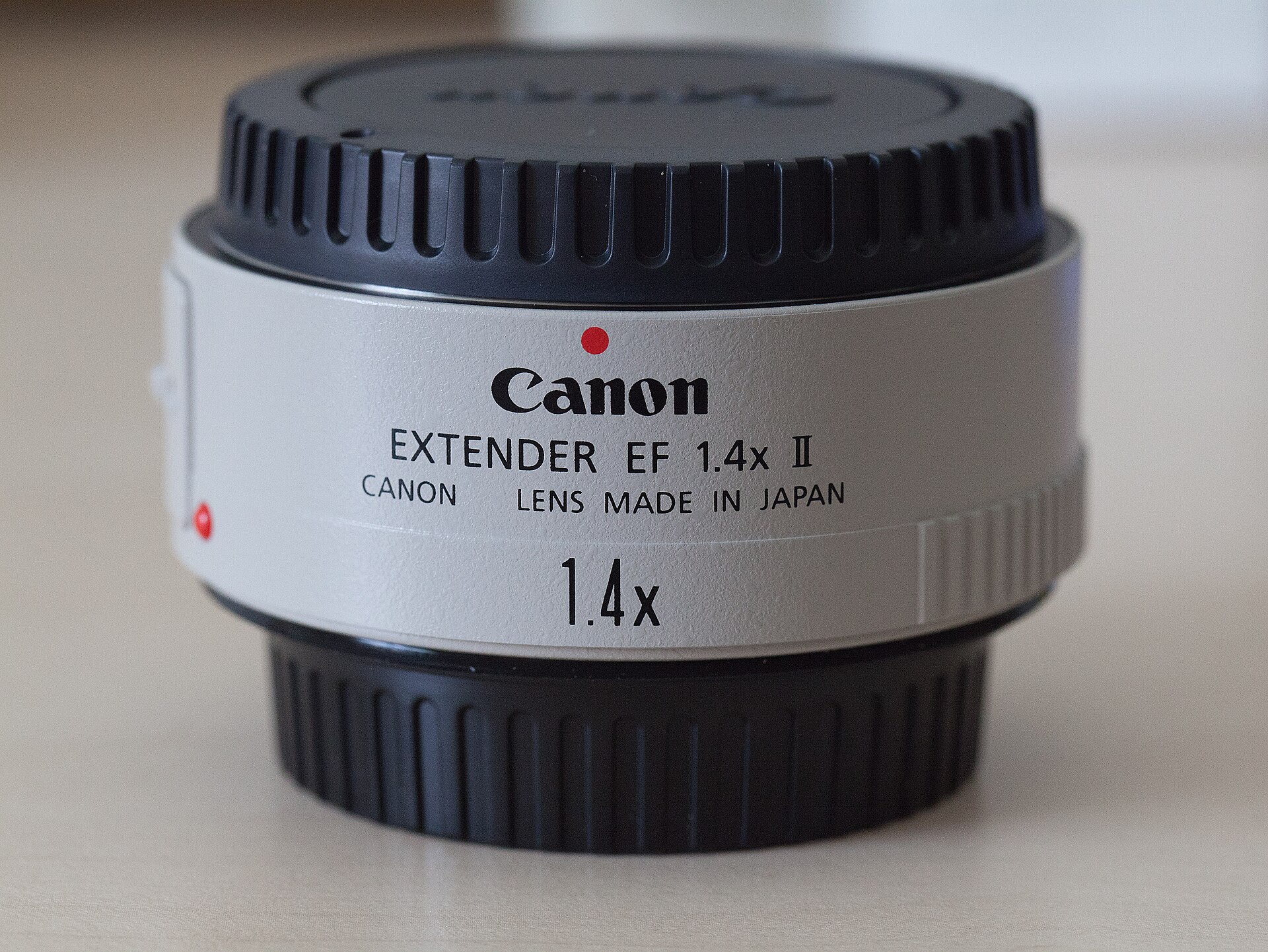
Teleconverters Explained: How 1.4x and 2x Extenders Work (and When to Use Them)
Teleconverters are among the most misunderstood accessories in photography. For…