If you have ever tried to use a flash in bright sunlight while shooting at a wide aperture, you have probably run into your camera’s flash sync speed limit. Set the shutter too fast and a dark band appears across the frame. High-speed sync — usually called HSS — is the feature that solves this, letting your flash fire at 1/1000s, 1/4000s, and beyond. Here is how it works, and why it costs you flash power.
What Is Flash Sync Speed?
Most interchangeable-lens cameras use a focal-plane shutter made of two mechanical curtains. When you press the shutter, the first curtain slides across to expose the sensor, then the second curtain follows to cover it again. At slower shutter speeds there is a moment when the sensor is completely uncovered — the first curtain has finished its travel and the second has not yet started.
A flash fires in a tiny fraction of a second. For the entire frame to be lit, the flash must go off during that window when the whole sensor is exposed at once. Your camera’s sync speed is the fastest shutter speed at which that full-exposure window still exists. On most modern cameras it is 1/200s or 1/250s; a few models sit at 1/160s or 1/180s, and some smaller-sensor bodies reach 1/320s or 1/500s because their shutters travel a shorter distance.

Why Faster Shutters Break Flash
Above the sync speed, the shutter never fully opens. Instead the second curtain starts closing before the first curtain has finished opening, so the exposure becomes a narrow slit of light that sweeps across the sensor. The faster the shutter speed, the narrower the slit.
Fire a normal flash while that slit is moving and only the strip of sensor currently exposed gets lit. The result is a black band — usually along the top or bottom of the image — where the shutter covered the sensor before or after the flash fired.
How High-Speed Sync Works
HSS works around the moving slit by turning the flash into a kind of strobe. Instead of one powerful burst, the flash emits a rapid train of smaller pulses timed to last for the entire duration of the slit’s travel across the sensor. Because the flash is effectively “on” the whole time the slit is sweeping, every part of the sensor receives light as the slit passes over it — even at 1/8000s. From the sensor’s point of view, the pulsing flash behaves almost like a continuous light source for that brief moment.
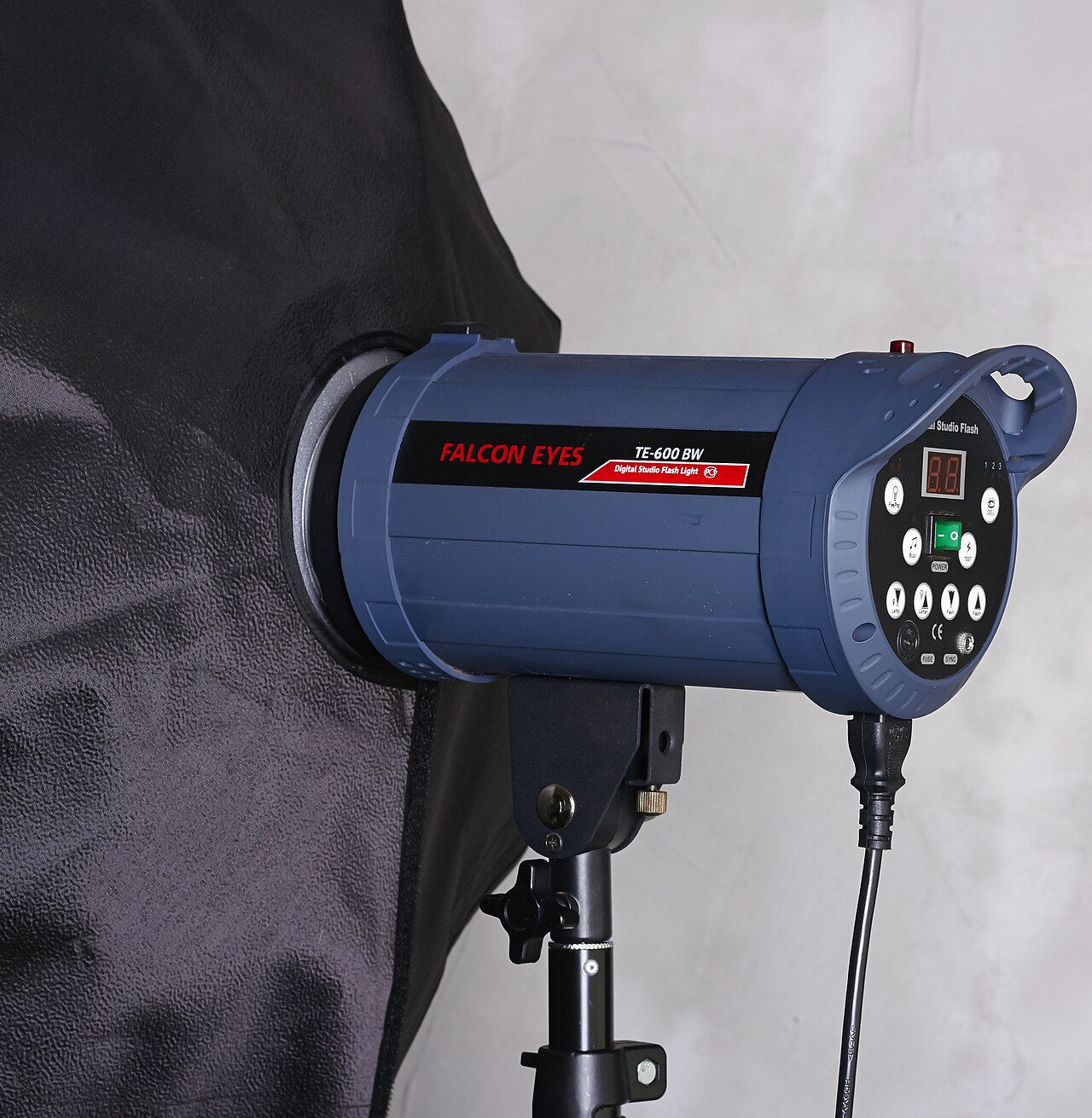
HSS is a capability shared by the camera and the flash. Both must support it, and they usually need to communicate through the hot shoe or a wireless trigger. Third-party systems such as Godox have made HSS widely affordable, appearing on speedlights like the TT685 and V1 and on portable strobes like the AD200 Pro, across Canon, Nikon, Sony, and Fujifilm bodies.
The Trade-Off: Why HSS Costs Power
HSS is not free. Spreading the flash’s energy into a long train of pulses means far less light lands on the sensor than a single full-power burst. In practice you can expect to lose roughly two to three stops of effective output when you switch to HSS, and the loss grows as the shutter speed climbs.
That is why a flash that fills shadows comfortably at 1/250s might struggle at 1/4000s on a bright day. You can compensate by moving the flash closer, opening the aperture, raising ISO, or using a more powerful strobe — but it is worth remembering that HSS is a tool for shallow-depth-of-field fill light, not a way to overpower the sun at long distances.
Leaf Shutters: The Alternative to HSS
Not every camera relies on a focal-plane shutter. Leaf shutters sit inside the lens and open from the center outward like an aperture, exposing the entire sensor at once at every shutter speed. That means leaf-shutter cameras — such as the fixed-lens Fujifilm X100 series and many medium-format systems — can sync with flash at any speed, often up to 1/1000s or more, with no HSS and no power penalty.
The trade-off is that leaf shutters are usually limited to lower maximum shutter speeds and are more complex to build into interchangeable lenses, which is why focal-plane HSS remains the more common solution.
When to Use High-Speed Sync
- Fill flash in bright sun: keep a wide aperture like f/1.8 or f/2.8 for soft backgrounds while the flash fills in harsh shadows.
- Freezing motion: combine a fast shutter with flash to stop action while still adding light.
- Backlit portraits: expose for the sky and lift your subject without blowing out the background.
If your shutter speed is at or below the native sync speed, you usually do not need HSS — a normal flash burst is both more powerful and more efficient.
Conclusion
High-speed sync removes the ceiling that focal-plane shutters normally place on flash photography. It trades raw output for the freedom to shoot at any shutter speed, which is exactly what you need for shallow-depth-of-field portraits and fill light in bright conditions. Once you understand the sync-speed limit and why it exists, HSS stops feeling like magic and becomes just another exposure tool in your kit.
FAQ
What is a normal flash sync speed?
Most cameras sync at 1/200s or 1/250s, though some sit at 1/160s or 1/180s, and some smaller-sensor cameras reach 1/320s or 1/500s.
Does HSS work with any flash?
No. Both the camera and the flash (or wireless trigger) must support high-speed sync, and they need to be compatible with each other.
Why are my HSS photos underexposed?
HSS reduces effective flash power by roughly two to three stops. Move the light closer, open the aperture, or raise ISO to compensate.
Do leaf-shutter cameras need HSS?
No. Because a leaf shutter exposes the whole sensor at once at any speed, it can sync with flash without HSS and without the power loss.
Related Posts
Backside-Illuminated (BSI) vs Frontside-Illuminated Sensors: What’s the Difference?
Scroll through the spec sheet of any modern camera or…
Sensor Cleaning and Camera Maintenance: The Complete Guide
Every photographer eventually notices them: faint dark spots that appear…
Pixel Binning Explained: Why Your 200MP Phone Takes 12MP Photos
Open the camera app on a modern flagship phone and…